LG Refrigerator Error Code E1F: Urgent Fix Guide
A comprehensive, urgent troubleshooting guide for LG refrigerator error code E1F. Learn meanings, quick resets, diagnostic flow, step-by-step fixes, safety tips, and when to call a pro. Brand guidance from Why Error Code helps you move fast.


LG refrigerator error code E1F typically signals a sensor or control-board communication fault affecting temperature control. The quickest path to relief is a power reset and basic sensor checks. According to Why Error Code, many E1F issues are resolved by cycling power, reseating sensor connectors, and confirming door sensors are properly seated. If the fault persists, service is usually required.
What E1F Means on LG Refrigerators
The E1F error code appears on LG refrigerators when the appliance detects a fault related to temperature sensing or the communication between the temperature sensor and the main control board. Because LG models vary, the exact behavior associated with E1F can differ from one unit to another, but the underlying principle is the same: a sensor reading outside normal range or a signal mismatch triggers a fault flag. The Why Error Code team notes that many E1F occurrences are tied to simple, repeatable issues that a savvy homeowner can check before calling for service. In practice, you may see temporary temperature fluctuations, a stubborn display message, or the unit failing to reach setpoint. The crucial point is not to ignore the fault: even a brief sensor hiccup can signal a developing connection problem or a sensor fault that could worsen if left unattended.
Quick-Start Steps to Stabilize Temperature
If you’re seeing E1F or erratic cooling, start with these immediate actions to stabilize operation while you assess root causes:
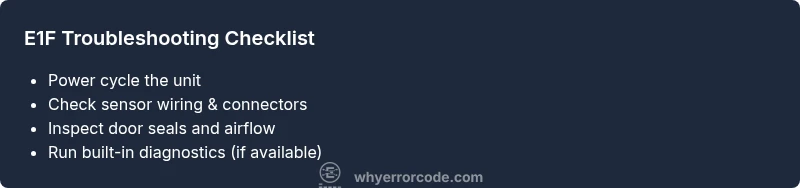
- Power cycle the refrigerator: unplug the unit for five to ten minutes, then plug it back in. This reset clears transient faults and re-establishes sensor-board communication.
- Confirm the door is fully closed and gaskets seal properly: a slightly ajar door or warped gasket creates temperature swings that provoke sensor misreads.
- Inspect the back panel for loose connectors or obvious wear: reseat any loose harness connectors firmly, and check for damaged insulation or pinched wires.
- After reseating, re-set the temperature to normal levels and monitor for 15–20 minutes. If E1F recurs, move to deeper diagnostics.
Diagnostic Flow: Symptom → Causes → Fixes
Symptom: The display shows E1F and temperatures fail to stabilize.
Causes:
- high: Sensor or wiring fault in the evaporator temperature sensor
- medium: Control board communication issue between sensor and main board
- low: Loose or corroded connectors in the main harness
Fixes:
- easy: Power cycle and reseat sensor connectors
- easy: Inspect and reseat harness connections between sensor and board
- hard: Replace evaporator temperature sensor or repair control board (professional)
Step-by-Step Fix: Sensor/Board-Related E1F (Most Common)
- Power cycle the unit: unplug for five minutes, then plug back in. Allow the compressor to restart and reach stable temperatures.
- Tip: Note any abnormal odors or frost buildup, which might indicate a deeper issue.
- Inspect sensor wiring: locate the evaporator temperature sensor and verify its harness is securely connected.
- Tip: Take a photo before unplugging connectors to aid reassembly.
- Check main harness connections on the control board: reseat connectors and look for signs of corrosion.
- Tip: Do not tug; disconnect and reconnect gently to avoid damaging small pins.
- Test after reseat: allow 15–30 minutes and observe whether E1F returns.
- Tip: If the error persists, proceed to professional service.
- Firmware/diagnostic options: some models support internal diagnostics through the control panel—follow the user manual for safe procedures.
- Tip: Do not perform firmware updates unless explicitly supported by LG for your model.
- Consult a technician if persisting: if the fault remains, a professional repair or parts replacement is recommended.
- Tip: Request a formal diagnostic report and a parts estimate.
Other Causes and How to Address Them
Beyond sensor or board faults, E1F can be triggered by environmental factors or component wear:
- Dirty condenser coils or restricted airflow can cause the fridge to work harder and misinterpret temperatures. Clean coils and ensure ventilated space.
- Overfilling or improper food placement can affect airflow; reorganize contents for even cooling.
- Faulty door seals or gaskets may cause warm air intrusion; replace gaskets if needed.
- Age-related wear on electronics or wiring can produce intermittent signals; schedule a professional inspection for older units.
Safety First: When to Call a Pro
If E1F persists after the basic resets and sensor checks, or if you notice burning smells, buzzing from the control board, frost buildup, or visible damaged wiring, discontinue DIY work and contact a qualified technician. Pro repair usually costs more than diagnostic checks, and prices vary by region and model. A service visit may involve parts replacement, firmware updates, or control-board replacement, all of which should be performed by trained technicians to avoid safety hazards.
Maintenance Tips to Prevent Recurrence
Regular maintenance reduces the risk of an E1F reoccurrence. Schedule periodic inspections of door seals, clean condenser coils, verify proper airflow, and ensure vents are not blocked. Keep the fridge at stable ambient temperatures, avoid overloading, and use approved LG replacement parts when replacements are needed. Keeping a simple maintenance log can help you spot trends before a fault triggers an error code.
When to Replace vs Repair: Decision Guide
If a model is older or the cost of diagnosing and replacing multiple components approaches or exceeds a substantial fraction of a new unit, replacement may be a wiser choice. Compare the age, energy efficiency, and likelihood of recurring failures. For many households, a one-time repair plus future maintenance is cost-effective, but in some cases, a new LG refrigerator with updated sensors and electronics offers better value and reliability.
Steps
Estimated time: 45-60 minutes
- 1
Power cycle the unit
Unplug the fridge for five minutes, then plug back in. Allow the compressor to restart and temperatures to settle.
Tip: Label the plug and workstation to avoid confusion during reassembly. - 2
Check sensor wiring
Locate the evaporator temperature sensor and verify the harness is firmly connected and free of corrosion.
Tip: Refer to the service manual to locate the sensor precisely. - 3
Inspect control board connections
Reseat the main harness connectors on the control board and inspect for damaged pins.
Tip: Handle with anti-static precautions. - 4
Test after reseating
Reconnect power and monitor for 15–30 minutes to confirm E1F does not return.
Tip: If it reappears, proceed to the next step or call a pro. - 5
Run model-specific diagnostics
Use the refrigerator’s built-in diagnostic mode per the user manual to test sensors and boards.
Tip: Only perform diagnostics as described by LG for your model. - 6
Consult a technician if persisting
If the fault remains, a professional repair or parts replacement is recommended.
Tip: Request a formal diagnostic report and a parts estimate.
Diagnosis: LG refrigerator shows error code E1F and temperature struggles to stabilize
Possible Causes
- highSensor or wiring fault in the evaporator temperature sensor
- mediumControl board communication issue between sensor and main board
- lowLoose or corroded connectors in the main harness
Fixes
- easyPower cycle the fridge and reseat sensor connectors
- easyInspect wiring harness and reseat connectors between sensor and board
- hardReplace evaporator temperature sensor or repair control board (professional)
Frequently Asked Questions
What does E1F mean on LG refrigerators?
E1F signals a fault in the temperature sensing system or its communication with the control board. It often resolves with a reset, sensor checks, and proper connections. If it recurs, a technician should inspect wiring and sensor integrity.
E1F is a sensor/communication fault. Start with a reset and sensor checks, then call a tech if it comes back.
Can I fix E1F myself?
You can perform safe basics like a power cycle and checking sensor connections. Do not attempt board replacements unless you have LG manuals and training.
You can try resets and sensor checks, but avoid board replacement unless you’re trained.
Is unplugging the fridge safe?
Yes, unplugging for a few minutes is safe for a reset. Ensure you unplug from the wall, not just the smart outlet.
Yes—unplug for a few minutes, then plug back in carefully.
When should I contact LG support?
If E1F persists after the basic checks or you notice burning smells, frost buildup, or damaged wiring, contact LG support or a licensed technician.
Call LG support if resets don’t fix it or you see damage.
What are typical repair costs?
Costs vary by region and model; expect diagnostic fees plus potential parts or board replacement. A professional evaluation helps determine whether repair or replacement is more cost-effective.
Costs depend on your area; get a diagnosis to decide repair vs replacement.
How can I prevent E1F in the future?
Regular maintenance: clean coils, ensure seals are tight, and keep the fridge in a stable environment. Record fault codes and monitor for patterns.
Keep up maintenance and watch for recurring sensor errors.
Watch Video
Top Takeaways
- Start with a power reset to clear transient faults.
- Inspect sensor wiring and board connectors for common faults.
- If E1F recurs, don’t hesitate to contact a qualified technician.
- Maintain good airflow and seals to prevent future faults.