Voltas Non-Inverter AC E6 Error Code Guide
Diagnose and fix Voltas non-inverter AC E6 error code with safe, practical steps. Learn common causes, diagnostics, and a step-by-step repair guide from Why Error Code.


Voltas E6 on a non-inverter model typically indicates a sensor or control communication fault. Start with a safe power cycle, reseat accessible connections, and verify airflow. If the fault persists, arrange professional service for accurate fault isolation and repair.
What the E6 Means on Voltas Non-Inverter AC
On Voltas non-inverter models, the E6 error code generally indicates a fault in the sensor network or the communication between the control board and sensors. This is a fault that can affect cooling performance, compressor cycling, and fan operation. Because E6 can stem from several subsystems, initial responses should focus on safe reset and quick verifications rather than invasive repairs. The goal is to confirm whether the fault is transient or persistent, so you can decide between DIY resets and professional service. In many cases, a power cycle followed by a quick self-test clears the error if it was caused by a temporary glitch or loose connection. If the code reappears, it’s a strong signal to schedule professional diagnosis to avoid further damage.
Common Causes of E6 on Voltas Non-Inverter AC
There are several plausible causes for E6, ranked by how often they appear in practice. The most common is a sensor fault, such as a thermistor or temperature sensor that reports an incorrect reading to the control board. A second frequent source is a fault in the control PCB or a communication hiccup between modules. A third possible cause is a loose or damaged wiring harness or connector in the indoor or outdoor unit. Less common are moisture ingress, a failed fan driver, or an intermittent short in the power supply to the control circuit. While these are possible, they are far less likely than sensor or PCB issues.
Safer First: Quick Checks You Can Do
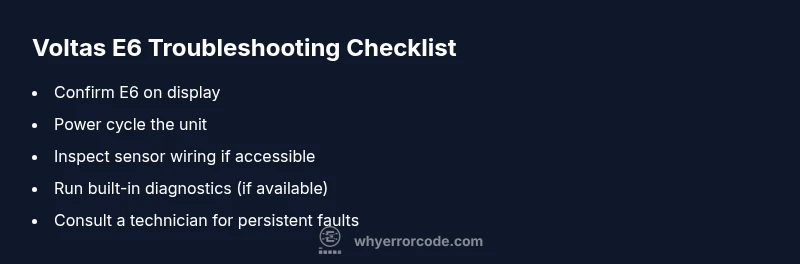
Before calling for service, perform a few non-invasive checks that can save time and money. Power off the unit at the mains, wait 5-10 minutes, then turn it back on to perform a soft reset. Check that the indoor air filters are clean and the evaporator coil is not iced over. Ensure there is clear airflow around the outdoor unit and that the condenser fins are free of debris. If you have access to the remote control's diagnostic mode, run the built-in self-test and note any additional codes. Do not open sealed enclosures or replace components unless you are trained and confident; safety comes first.
Diagnostic Approach: How to Confirm the Root Cause
A systematic approach helps separate transient glitches from genuine hardware faults. Start with power cycling and basic checks that can clear false alarms. If E6 returns, verify whether sensor readings align with actual temperatures by comparing room temperature with remote sensor feedback. Inspect connectors for corrosion, looseness, or damage, especially at the indoor unit, outdoor unit, and any visible harnesses. If accessible, test continuity of sensor lines and ensure the control board receives stable supply voltage. Document every symptom and time of appearance to share with a technician.
Step-by-Step Repair Focus on the Most Common Cause
When the root cause is a sensor or PCB-related fault, the repair typically follows a predictable path. First, safely power down and reset the system. Next, reseat or replace the sensors or connector harness if a visible issue exists. If the fault persists, the most common next step is to replace the thermistor or the control PCB. Always verify the fault code after any intervention and run a diagnostic self-test to confirm clearance. Do not attempt direct soldering or PCB replacements unless you are trained.
When to Call a Pro and What to Expect
If E6 continues after all safe checks and resets, it’s time to engage a licensed technician. A pro will typically perform a thorough inspection, measure sensor resistance, check PCB communications, and test the control board under load. Expect a diagnostic call charge and potential component replacement costs, which vary by region and parts needed. The technician will provide a fault report and a repair quote before proceeding. Regular service intervals reduce recurrence risk and extend the life of the system.
Maintenance Tips to Prevent E6 Reoccurrence
Adopt a proactive maintenance routine to minimize future E6 issues. Clean indoor filters monthly and ensure the evaporator coil is free of frost buildup. Keep outdoor units clear of debris and ensure proper clearance for airflow. Schedule professional inspections at least once a year to verify sensor calibration and PCB integrity. Maintaining consistent voltage supply and protecting the unit from power surges also helps prevent control-related faults.
Steps
Estimated time: 60-90 minutes
- 1
Power down and reset
Turn off the AC at the wall outlet or breaker, unplug if safe, and wait 5-10 minutes. Reconnect and power up to see if E6 clears. This step addresses transient faults or loose contacts.
Tip: Document whether the reset clears the error to track recurrence. - 2
Check accessible wiring and sensors
Inspect any visible sensor wiring and connectors for looseness or corrosion. Reseat connectors gently if no damage is evident. Do not force connections. This can resolve many intermittent faults.
Tip: Only touch components you can see clearly; avoid touching live terminals. - 3
Test airflow and coils
Verify indoor unit filters are clean and airflow is unobstructed. Check evaporator coils for frost or ice buildup and allow a thaw if needed. Poor airflow can trigger sensor-related fault reporting.
Tip: Clean filters monthly and ensure outdoor unit has 2-3 inches clearance. - 4
Run built-in diagnostics
If your remote provides a diagnostic mode, run it and record any additional codes. This helps narrow the fault to sensors, PCB, or wiring.
Tip: Note down exact codes and timing to share with a technician. - 5
Inspect outdoor unit basics
Check that the outdoor unit is free of debris, with fins clean and unobstructed. A dirty outdoor unit can impact sensor readings indirectly by altering system load.
Tip: Do not knock fins hard; use a soft brush if necessary. - 6
Consider professional assessment
If E6 remains after all safe checks, contact a qualified technician to test sensor resistance, PCB communications, and power supply under load.
Tip: Request a written quote and a fault report before any replacements.
Diagnosis: E6 error code displayed on a Voltas non-inverter AC; unit may not cool reliably
Possible Causes
- highThermistor or temperature sensor fault
- mediumControl PCB or communication fault
- lowLoose or damaged wiring in control circuit
Fixes
- easyPower cycle the unit and clear fault codes by disconnecting from mains for 5-10 minutes
- easyInspect sensor connections and reseat accessible connectors; replace sensor if easily accessible
- hardReplace thermistor or control PCB if fault persists after resets and connections
Frequently Asked Questions
What does E6 mean on Voltas non inverter AC?
E6 usually indicates a sensor or control communication fault. It can involve the thermistor, control PCB, or wiring. Start with safe resets and basic checks; if the fault returns, seek professional service.
E6 on Voltas generally means a sensor or control communication fault. Begin with safe resets and basic checks; if the error persists, arrange professional service.
Can I fix E6 myself?
Some basic resets and non-invasive checks are safe, but avoid disassembling sealed parts or replacing boards unless you are trained. If unsure, contact a technician.
You can try safe resets and checks, but don’t open sealed components. If in doubt, call a pro.
How long does a service visit usually take?
A typical diagnosis and repair visit lasts about 1-2 hours, depending on fault complexity and parts required.
Most service calls take about an hour or two.
Will E6 come back after a repair?
Recurrence is possible if the underlying cause isn’t fully resolved or if maintenance is neglected. Regular servicing helps reduce this risk.
If the root cause isn’t fixed, E6 can return. Regular maintenance helps lower the odds.
Are there safety risks when troubleshooting DIY?
Yes. Unplug the unit, avoid water near electrical parts, and don’t tamper with sealed components. If you feel unsure, call a professional.
There are safety risks—always unplug, avoid liquids near electronics, and seek a pro if unsure.
What information should I provide to the technician?
Provide the exact error code, time of appearance, model number, and whether it occurs in cooling or heating mode. Include any steps you tried and the outcomes.
Tell the technician the exact code, when it appeared, model, and what you tried.
Watch Video
Top Takeaways
- E6 signals a sensor or communication fault on Voltas non-inverter AC.
- Start with safe resets and non-invasive checks before service.
- Sensor/PCB faults are the most common culprits; expect part replacement if needed.
- A professional diagnosis is recommended if E6 recurs after resets.
- Regular maintenance reduces future E6 occurrences.