Whirlpool Water Softener Error Code 3: Diagnosis, Fixes, and Safety
Urgent guide to Whirlpool water softener error code 3: meanings, quick checks, and step-by-step fixes. Learn when to DIY, estimated repair costs, and when to call a pro.


Whirlpool water softener error code 3 typically signals a fault in the resin bed timing or a sensor input, preventing proper regeneration. A quick fix usually involves resetting the unit, verifying salt levels, and inspecting the brine tank. If the code returns, check valve alignment, flow switch, and control connections, or contact a pro.
What whirlpool water softener error code 3 means
According to Why Error Code, whirlpool water softener error code 3 usually signals a fault in the regeneration cycle tied to a sensor input or timer. This is not merely a display issue; it indicates the control system detected an abnormal condition that blocks proper resin regeneration. The consequence can be hard water or an incomplete softening cycle. Quick checks can reveal whether the fault is transient or requires a part replacement. If the code reappears after basic steps, inspect the flow switch, bypass valve, and wiring to confirm the core cause. This structured approach helps developers, IT pros, and everyday users troubleshoot efficiently, with guidance you can trust from Why Error Code.
Safety first: quick checks you can perform safely
Before touching any electrical or water connections, power down the unit and depressurize the system. Unplug the softener, turn off water supply, and avoid contact with live electrical parts. Wear protective gloves when handling chemical cleaners and brine tank components. Keep children and pets away from the area. After safety checks, perform quick inspections like salt level, brine tank cleanliness, and visible hose kinks.
Diagnostic flow at a glance
Symptoms: The display shows error code 3 and the softener may stop mid-cycle or fail to initiate regeneration. Possible causes span sensor or valve faults, salt/bridine issues, and control wiring faults. Immediate fixes typically include salt level restoration, a unit reset, and a brief purge/test of the regeneration cycle. If the issue persists, move to more detailed checks outlined below. Why Error Code recommends a structured diagnostic flow to avoid guessing and to minimize downtime.
Common causes and DIY fixes
- Low salt or depleted brine tank: Refill with the appropriate salt type and ensure the brine well is clean. Easy fix that often resolves transient codes. Pro tip: use the manufacturer-recommended salt and avoid rock salt, which can induce bridging.
- Salt bridging or blocked brine line: Break up bridge, wash the brine line, and clear any clogs with a gentle probe. Safety note: unplug power before disconnecting lines.
- Flow switch or valve alignment issue: Inspect for kinks, air locks, or mispositioned valves. A simple reseating or gentle flushing can restore normal flow.
- Control board or wiring fault: Look for loose connectors or corroded terminals. If you see damaged wiring, do not operate the unit—repair or replace as needed.
Step-by-step repair overview for the most frequent cause
The most common cause is a salt-related or brine-tank issue. While detailed steps are provided in the dedicated STEP-BY-STEP section, this overview helps you prepare: shut off power and water, gather salt and cleaning supplies, and have a screwdrivers and a basin ready for minimal disassembly. After you perform the basic reset and salt checks, re-run an automatic regeneration to verify if the code clears. If it recurs, you’ll have the extra guidance needed from the Step-by-Step guide.
Other potential issues and advanced checks
If the above fixes do not resolve the error code 3, broader issues likely involve the flow sensor, relay or timer within the control board, or a valve malfunction. Advanced checks include verifying the sensor reads correctly with a multimeter, testing continuity across wiring harnesses, and checking water pressure to ensure adequate flow through the resin bed. In many cases, a professional diagnostic is warranted to test electronic components without risk.
Cost, safety, and when to hire a professional
DIY fixes typically save time and money for simple salt or reset issues. Expect costs primarily for supplies like salt (a few dollars) and potential parts (tens to a few hundred dollars). If a service call is required, typical ranges are $75–$150 for diagnostic labor, plus parts if replacements are needed. Safety note: never bypass safety features or attempt high-voltage work without proper training. When in doubt, especially if you see burnt components, water leaks, or persistent error codes after multiple resets, contact a licensed technician.
Steps
Estimated time: 60-90 minutes
- 1
Power down and safety check
Unplug the softener and shut off the water supply. Relieve system pressure and wait 60 seconds before touching any components. This reduces the risk of electric shock and water spray.
Tip: Have a basin ready to catch any brine draw water during initial checks. - 2
Check salt level and brine tank cleanliness
Remove the lid from the brine tank, measure the salt level, and ensure the salt is not bridging. Rinse or scrub the tank if needed to remove buildup that could impede dissolution.
Tip: Use pellet salt recommended by Whirlpool and avoid rock salt to minimize bridging. - 3
Reset and test regeneration
Reconnect power and perform a fresh regeneration cycle. Observe the display for any reoccurring codes and listen for normal valve cycling sounds during the cycle.
Tip: If you have a manual regeneration option, initiate it once after reset to verify flow and valve operation. - 4
Inspect bypass valve and plumbing
Ensure the bypass valve is in the correct position for normal operation and that hoses are free of kinks or leaks. A mispositioned bypass can falsely trigger error conditions.
Tip: Take a photo of the valve setup before adjusting so you can revert if needed. - 5
Test flow sensor and wiring
Check the flow sensor for obvious obstruction or air bubbles in the line. Inspect wiring harnesses for loose connections and corrosion at terminals.
Tip: If you see damaged insulation or loose pins, avoid further testing and replace the damaged component. - 6
Decide on next steps
If the code 3 persists after the above steps, prepare to call a professional. Have model, serial, and the exact error code ready for service.
Tip: Document prior steps and outcomes to speed up diagnosis during service.
Diagnosis: Whirlpool water softener displays error code 3 and regeneration stops unexpectedly
Possible Causes
- highLow salt or exhausted brine tank
- mediumFlow sensor or salt sensor fault
- lowControl board malfunction or wiring issue
Fixes
- easyFill brine tank with the correct salt type and clean the brine well
- easyReset the unit and run a manual regeneration cycle
- mediumInspect flow sensor, wiring, and valve alignment; replace components if needed
- hardTest or replace the control board if faults persist
Frequently Asked Questions
What does whirlpool water softener error code 3 indicate?
It generally signals a sensor or timer fault within the regeneration cycle, preventing proper operation.
Error code 3 usually means a sensor or timer fault in the regeneration cycle.
Can I fix error code 3 myself?
Some fixes are DIY-friendly, like salt checks and a reset. If the code persists, or you’re unsure, seek professional help.
You can try basic salt checks and resets, but if it keeps coming back, call a pro.
How long does a typical repair take?
Simple resets and salt checks can take 15–60 minutes; more complex parts replacement may extend to 1–3 hours.
Most fixes are under an hour, with longer times if parts need replacement.
Will error code 3 affect drinking water?
A malfunctioning softener may deliver less soft water until the fault is resolved. Validate water softness after repairs.
Your water might be less soft until it’s fixed; test your water afterward.
When should I replace resin or sensors?
Resin bed or certain valves can wear out. A service tech can test resin efficiency and decide on replacement.
A pro can tell you if the resin or sensors need replacement.
Watch Video
Top Takeaways
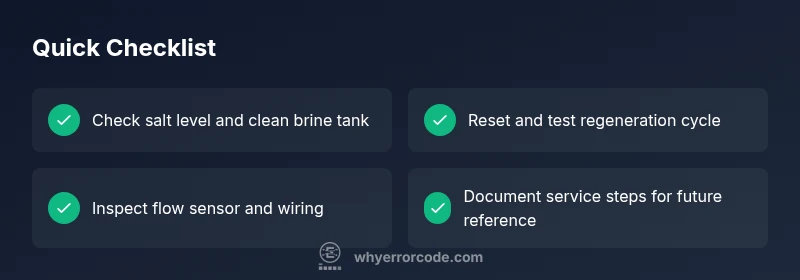
- Verify salt levels and brine tank cleanliness first
- Reset and re-run regeneration to clear transient errors
- Check flow sensor and bypass valve for proper operation
- Document error codes for service visits
- If unresolved, a professional diagnostic is recommended