Error Code Check Charging System: Urgent Diagnostics & Fixes
Urgent guide to diagnosing an error code check charging system in vehicles. Learn symptoms, quick fixes, step-by-step repairs, safety considerations, and when to call a professional.


An error code check charging system message signals the vehicle’s charging path isn’t delivering stable power. The likely culprits are the battery, alternator, or related wiring. Start with a battery health check and a quick alternator test, then inspect connections and fuses. If the warning persists, seek a professional diagnosis to prevent being stranded.
What the Check Charging System Warning Really Means
When you see a dashboard warning that mentions the charging system, it signals the vehicle’s electrical charging path is not delivering stable power. The charging system typically includes the alternator, battery, voltage regulator, and the wiring between them. In most cases, a failing alternator, a battery that can’t hold a charge, or loose/corroded connections trigger this alert. According to Why Error Code, this is a high-probability issue because most drivers report symptoms like dim lights, slow engine cranking, or a dead battery after a short drive. The objective is to verify proper alternator output (engine running, approximate 13.5–14.8V) and confirm the battery can accept and retain a charge. If the diagnosis points to the charging system, plan for component repair or replacement rather than chasing unrelated fault codes.
Common Symptoms and Early Alerts
Vehicles rarely fail silently. Expect a combination of warning lights, electrical dimming, and difficulty starting. You may notice the headlights brighten and dim with engine RPM, erratic gauge readings, or accessories that suddenly shut off. Some vehicles illuminate specific fault codes like P0562 (system voltage) or P0563 (voltage high) alongside the message. If you observe these signs, perform a baseline battery health check using a multimeter or a professional load test. A worn serpentine belt can also affect the alternator’s drive, so inspect the belt, tension, and pulley condition. If symptoms appear after installing a high-load accessory, such as a subwoofer or aftermarket amp, the extra drain may reveal a latent charging weakness. Do not drive long with this warning—early diagnosis protects the starter, ECM, and electronics. Why Error Code recommends starting with voltage verification and grounds inspection for reliable results.
Immediate Quick Fixes You Can Try
If you’re stranded or the car won’t start, avoid long road trips. Try these quick fixes first:
- Park on a level surface, turn off nonessential accessories, and set parking brake.
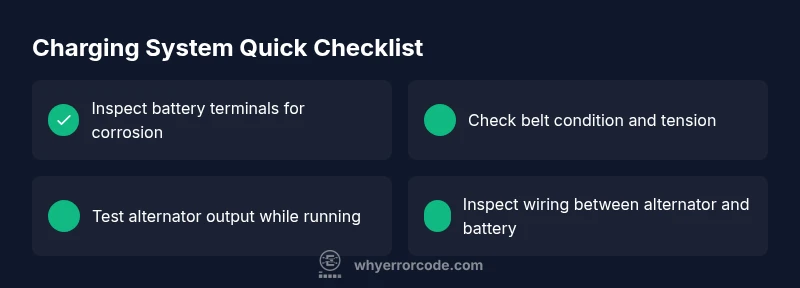
- Inspect battery terminals for corrosion; clean with a baking soda solution and ensure clamps are tight.
- Re-seat battery cables after cleaning; a loose connection can mimic a failing charging system.
- If you have a jumper pack, perform a controlled jump-start and test if the engine stays running after disconnecting the pack.
- Start the engine and measure the charging voltage with a multimeter; expected range with engine running is roughly 13.5–14.8V. If you see readings outside this, the alternator or voltage regulator may be at fault.
- Check the serpentine belt for cracks or wear and confirm it’s properly tensioned. A slipping belt reduces alternator output.
If these quick fixes don’t restore proper voltage, do not keep driving. A professional test can confirm alternator output, battery health, and wiring integrity. Remember that battery replacements and alternator repairs carry costs that vary by vehicle and region, typically in a repair range rather than a fixed price.
Diagnostic Flow: Symptoms to Causes to Fixes
Symptoms guide the troubleshooting path. A dashboard warning and dim lights point toward a charging fault; a no-start condition with a dead battery suggests insufficient charging or a drained battery. Possible causes, ordered by likelihood, include a weak or failing alternator, a battery that has reached end of life, and loose or corroded connections in the charging circuit. In some cases, a failing voltage regulator or damaged wiring can mimic common symptoms. Quick fixes focus on terminal cleanliness, battery health, and belt condition. If symptoms persist after quick fixes, proceed to a structured diagnostic flow to identify the exact cause and apply the appropriate repair or replacement. The Why Error Code method emphasizes validating voltage, then verifying the integrity of the charging path before replacing major components.
Step-by-Step Fix: Most Likely Cause (Alternator or Battery)
- Safety first: Park on a flat surface, apply parking brake, and disconnect electrical loads.
- Inspect and clean battery terminals; remove corrosion with a baking soda solution and a nylon brush. Reconnect clamps snugly.
- Perform a controlled battery test or jump-start to see if the engine runs consistently with a charged battery.
- With engine running, measure charging voltage at the battery terminals; voltage should be roughly 13.5–14.8V. If not, the alternator or voltage regulator is a likely fault.
- Inspect the alternator drive belt for wear and proper tension; replace if cracked or slipping.
- If voltage is within range but the warning persists, inspect wiring between the alternator, battery, and ECM for loose or damaged connections.
- If you confirm a faulty alternator or regulator, replace the component and retest the system.
Estimated total time: 60–90 minutes depending on access and tool availability.
Tip: Keep a bag of basic tools, a multimeter, and a set of replacement fuses handy for quick roadside diagnostics. If you’re unsure, a professional service can perform a precise load test to avoid misdiagnosis.
Other Causes and How to Address Them
Beyond a failing alternator or old battery, issues such as a damaged voltage regulator, poor ground connections, or wiring harness damage can trigger the charging warning. Corroded or loose grounds create a high-resistance path that prevents the system from delivering stable voltage. Damaged wiring between the alternator and battery can also mimic battery weakness. In some vehicles, abnormal parasitic drains from aftermarket devices or accessories can keep the battery from charging properly. In these cases, replace or repair the damaged harness, restore clean grounds, or remove unneeded draws. If you notice frequent fuses blowing in the charging circuit, or if a diagnostic scan reveals related codes, pursue professional service to prevent ECM damage.
Safety, Maintenance, and When to Call a Pro
The charging system operates under electrical load and can involve high current. Disconnecting battery cables while the engine is running is dangerous and can fry your alternator or ECU. Always work with the engine off, key removed, and use insulated tools. If you’re uncertain about testing procedures or you’re dealing with aged vehicles, contact a licensed mechanic. For some cases, a battery replacement and alternator test can be performed within standard labor windows; expect costs that depend on your vehicle year and model. If you hear grinding noises, smell burning, or notice smoke, stop immediately and seek professional help. Regular battery health checks and belt inspections can prevent most charging-system failures.
Prevention Tips and Long-Term Reliability
- Schedule annual battery health checks and replace the battery every 3–5 years depending on climate and usage.
- Inspect the alternator and drive belt at regular service intervals; replace worn belts promptly.
- Keep battery terminals clean and tight; protect against corrosion with protective sprays or dielectric grease.
- Check electrical loads added during modifications to avoid overtaxing the charging system."],
diagnosticFlow (in blockData)": {"symptom":"Warning light or dimmed headlights, engine hard to start, or erratic electrical behavior indicating charging issues","causes":[{"cause":"Weak or failing alternator/voltage regulator","likelihood":"high"},{"cause":"Battery health degraded or not holding charge","likelihood":"high"},{"cause":"Loose/corroded connections in charging circuit","likelihood":"medium"}],"fixes":[{"fix":"Test alternator output and replace regulator/alternator if out of spec","difficulty":"hard"},{"fix":"Test battery with load test; replace battery if it cannot hold charge","difficulty":"medium"},{"fix":"Clean/secure battery terminals and inspect wiring for damage","difficulty":"easy"}]},
Steps
Estimated time: 60–90 minutes
- 1
Assess safety and gather tools
Park on a flat surface, engage the parking brake, turn off all accessories, and gather basic tools, a multimeter, and safety gear. This minimizes risk and prepares you for quick diagnostics.
Tip: Wear eye protection and disconnect jewelry to avoid short circuits. - 2
Inspect and clean battery terminals
Inspect battery posts for corrosion and loose clamps. If corrosion is present, prepare a baking soda solution and a stiff brush to clean the terminals. Reconnect firmly.
Tip: Ensure clamps are tight; loose terminals can mimic a failing charging system. - 3
Test the battery health
Use a multimeter to compare battery voltage with the engine off (should be around 12.6V) and after cranking (should rise to above 13V). If readings are low, the battery may be near end-of-life.
Tip: A professional load test provides a more accurate assessment. - 4
Check the alternator output
With the engine running, measure the charging voltage at the battery terminals. If it stays outside 13.5–14.8V, the alternator or regulator may be faulty.
Tip: Some vehicles require a more advanced test equipment to verify alternator function. - 5
Inspect the drive belt
Check the serpentine belt for cracks, glazing, or fraying and ensure proper tension. A slipping belt reduces the alternator’s output.
Tip: Replace the belt if you notice wear or glazing. - 6
Inspect wiring and grounds
Visually inspect wiring between the alternator, battery, and ECM for damaged insulation or loose connections; repair or replace as needed.
Tip: Bad grounds can cause intermittent charging failures. - 7
Decide on repair or replacement
If tests confirm a faulty alternator or aged battery, plan for replacement. Coordinate parts with your vehicle’s year and model to ensure correct fit.
Tip: Budget for parts and labor; typical ranges apply by component and region.
Diagnosis: Warning light or dimmed headlights, engine hard to start, or erratic electrical behavior indicating charging issues
Possible Causes
- highWeak or failing alternator/voltage regulator
- highBattery health degraded or not holding charge
- mediumLoose/corroded connections in charging circuit
Fixes
- hardTest alternator output and replace regulator/alternator if out of spec
- mediumTest battery with load test; replace battery if it cannot hold charge
- easyClean/secure battery terminals and inspect wiring for damage
Frequently Asked Questions
What does a Check Charging System warning mean?
It signals the charging path isn’t delivering stable power. The likely culprits are the battery, alternator, or wiring. Start with a battery health check and alternator test, then inspect connections. If unresolved, seek professional diagnosis to avoid getting stranded.
The warning means your charging path isn’t delivering stable power. Start with the battery and alternator checks, then have a pro if it’s not solved.
Can I drive with a failing charging system?
Driving with a failing charging system is risky. It can leave you stranded, damage the starter, and harm sensitive electronics. If you see the warning, limit driving, test promptly, and arrange professional service if needed.
No—don’t push it. A failing charging system can strand you and damage the car electronics.
Should I replace the battery or the alternator first?
Start with testing both components. If the battery can’t hold a charge, replace the battery. If the alternator output is low, focus on the alternator or voltage regulator. A professional test helps confirm the best order.
Test both first; replace whichever shows failure in the load or voltage test.
How long does a charging-system repair take?
Simple fixes like cleaning terminals can take under an hour. Replacing an alternator or battery typically requires 1–3 hours depending on the vehicle and access.
Most fixes fit within a few hours, but complex jobs may take longer.
Is jump-starting safe for charging-system issues?
Jump-starting can provide a temporary solution but does not fix the underlying fault. Ensure proper procedure to avoid damage, then have the system tested.
Jump-starts can help temporarily, but you still need a proper charging-system test.
What are typical costs for charging-system repairs?
Costs vary by vehicle and region. A battery replacement is typically a lower-cost option, while a new alternator or voltage regulator involves higher parts and labor costs. Expect ranges rather than fixed prices and consult a shop for a precise quote.
Costs vary by part and vehicle; expect a range for batteries and a higher range for alternators.
Watch Video
Top Takeaways
- Verify charging voltage with engine running.
- Test battery health before replacing components.
- Targeted fixes save time and money.
- Call a pro if voltage tests are outside the normal range.