How to fix 88 error code ac
A practical guide to diagnosing and fixing 88 error code on air conditioners. Learn common causes, quick fixes, and when to call a pro.


88 error code AC typically signals an electrical or sensor fault in an air conditioner. Most users can clear the error with a quick reset and a few at-home checks. If the code returns, work through the diagnostic flow below. According to Why Error Code, addressing the error early reduces the risk of compressor damage and unnecessary energy waste. This guide emphasizes safety first and outlines when a professional inspection is required.
What 88 Error Code AC Means
88 on an air conditioner is a generic fault indicator that varies by brand, but the underlying message is clear: the system detected an abnormal condition that prevented normal operation. The most common categories mirror electrical issues, sensor or control-board faults, and safety interlocks triggered by overheating, refrigerant concerns, or airflow restrictions. Temporary software glitches can also generate this code and disappear after a reset. The practical takeaway: identify the symptom you observe, determine if it’s electrical, sensor-related, or safety-driven, and then apply the simplest fixes first. If the code persists after a safe reset, you’ll know to advance to deeper diagnostics or professional service—especially if you smell burning, hear unusual noises, or notice visible damage. Always shut power off before inspecting internal components and never bypass safety features.
Quick Path to a Fix (Quick Fixes)
Before diving into diagnostics, try these safe, quick actions that resolve many 88 errors without tools. First, power off the unit at the breaker, wait 60 seconds, and turn it back on. A reset clears temporary faults and resets sensor states. Check the air filters and outdoor condenser for obvious debris; clogged filters reduce airflow and can trigger safety locks. Ensure the thermostat is set correctly and the indoor fan isn't stuck on high. If your unit is remotely monitored, verify app alerts and recent firmware updates; sometimes software updates fix false error codes. If the code reappears, proceed with the step-by-step diagnostic flow below. Remember: never open the electrical housing while live power is present. If you smell gas, see exposed wiring, or hear crackling, call a professional immediately.
Diagnostic Flow: Symptoms to Solutions
Start with the symptom you observe: the display shows 88 and the system won't run the cooling cycle. Verify if the unit powers on and off normally, if there is unusual noise, if the outdoor unit is free of debris, and whether the indoor fan operates. Next, map symptoms to likely causes: electrical supply irregularities (tripped breaker, blown fuse), sensor/PCB faults, or safety interlocks triggered by overheating or low refrigerant pressure. Solutions range from the simplest (power reset, filter cleaning) to more involved repairs (thermostat recalibration or control board replacement). If the problem is electrical, confirm outlet voltage with a multimeter only if you are trained; otherwise skip to professional help. If the unit is still under warranty, contact the manufacturer for guidance on approved service centers.
Common Causes
Here are the most frequent reasons the 88 error code appears on residential ACs, ranked by how commonly they're observed in real-world troubleshooting. Electrical supply issues: fluctuating voltage, a tripped breaker, or blown fuse can trigger safety interlocks and display 88. Sensor or control board faults: a malfunctioning temperature sensor or a logic fault in the PCB can generate false or persistent error codes. Safety interlocks: high pressure, overheated compressor, or clogged condensate line can shut down the system and flash 88 to protect components. Safety interlocks: high pressure, overheated compressor, or clogged condensate line can shut down the system and flash 88 to protect components. Software/firmware glitches: older firmware or intermittent wiring faults can cause intermittent error codes that clear after reset. Refrigerant issues: low refrigerant or refrigerant leaks trigger protective shutoffs and error codes. Note that some brands tie this code to a single subsystem, while others map it to a general fault; always consult the user manual for brand-specific definitions.
Primary Fix: Safe Reset and Basic Maintenance
If this is your first time encountering the 88 error, you can perform a safe, low-risk reset and basic maintenance to clear transient faults. Start with a full power cycle, then check and replace dirty air filters and clean the outdoor coil if accessible. Confirm the thermostat is accurate and calibrated, and ensure the indoor fan can run without blockage. These actions address common root causes and can restore normal operation without tools. Do not force a repair if the unit shows signs of electrical damage, strange smells, or warmth beyond ambient conditions; in those cases, stop and seek professional service.
Safety First: When to Call a Pro
If you smell burning, see melted insulation, hear buzzing, or the unit trips the main breaker repeatedly, stop and call a licensed technician. Electrical diagnostics and PCB replacements require specialized equipment and safety precautions. If the system is under warranty, contact the manufacturer or an authorized service provider to avoid voiding coverage. For situations where you lack training or the risk is uncertain, professional inspection is the safest path.
Prevention: Keep 88 Error Codes from Returning
Regular maintenance supports reliability and reduces the likelihood of 88 reoccurrence. Schedule seasonal inspections, replace air filters per the manufacturer’s recommendations, keep outdoor coils clean and unobstructed, and address refrigerant issues promptly with a licensed pro. Maintain a log of observed codes, symptoms, and repairs to help future technicians diagnose faster. When in doubt, default to safety and seek professional guidance to avoid costly mistakes.
Steps
Estimated time: 30-60 minutes
- 1
Power down and reset
Turn off the AC at the breaker, wait 60 seconds, and restore power. This clears many temporary faults and resets sensor states. After the reset, observe whether the 88 code clears and whether the unit starts normally. If not, proceed with the next steps.
Tip: Always ensure your hands dry and you’re standing on a non-conductive surface before touching any electrical components. - 2
Check air filtration and airflow
Inspect indoor filters; replace if clogged and ensure the supply air path isn’t blocked. Clean the outdoor condenser fins if accessible and free from leaves or debris. Proper airflow helps safety interlocks reset and improves cooling performance.
Tip: Perform this step with the unit powered off and unplugged for safety. - 3
Inspect thermostat and control wiring
Verify the thermostat is set to the correct mode and temperature. Inspect visible wiring for loose connections or damage. If you see damaged insulation, avoid further handling and call a professional.
Tip: Document any error codes and recent changes to firmware or settings. - 4
Evaluate outdoor unit and refrigerant basics
Check for obstructions around the outdoor unit and ensure the fan spins freely. If you suspect refrigerant issues (sweating lines, oily residue, or obvious leaks), stop and contact a licensed technician—refrigerant work requires certification.
Tip: Do not attempt to recharge refrigerant yourself. - 5
Decide on professional service
If the 88 code persists after basic checks, or if you’re uncomfortable with any step, schedule a professional diagnostic. The tech can test sensors, PCB integrity, and perform safe electrical diagnostics that require equipment and training.
Tip: Provide the tech with your observations and a list of steps you performed to speed up repair.
Diagnosis: 88 error code AC displayed; unit won't operate
Possible Causes
- highElectrical supply irregularities (tripped breaker, blown fuse)
- mediumSensor or PCB fault
- mediumSafety interlocks triggered by overheating or airflow issues
- lowRefrigerant issues or leaks
Fixes
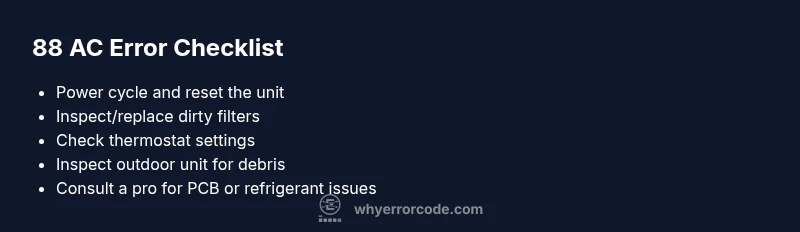
- easyPerform a safe power cycle (breaker off, wait, then on)
- easyInspect and replace dirty air filters; clean outdoor coil if accessible
- easyCheck thermostat settings and calibration; verify fan operation
- hardConsult a professional for PCB or refrigerant work
Frequently Asked Questions
What does 88 error code mean on an AC?
88 is a generic fault indicator across brands indicating a detected abnormal condition. It often points to electrical, sensor/PCB, or safety interlock issues. If it persists after a safe reset, run through the diagnostic flow or contact a pro.
88 is a general fault indicating an abnormal condition in your AC. If a reset doesn’t fix it, follow the diagnostic steps or call a pro.
Is it safe to reset the AC to fix 88?
A safe power cycle can clear transient faults. Do not operate if you detect burning smells, smoke, or visible damage. If the code returns, proceed with the diagnostic steps or professional service.
A safe reset is usually okay, but stop if you smell burning or see damage and seek professional help if the code reappears.
Can I fix 88 myself?
You can perform basic resets and maintenance if you’re comfortable with electricity, but troubleshooting circuitry or refrigerant systems should be done by a licensed technician. Prioritize safety above all.
You can do basic resets, but for PCB or refrigerant work call a pro.
How long does it take to fix 88?
Initial resets and basic maintenance can take 30-60 minutes. More complex electrical or refrigerant repairs may require several hours, depending on parts availability and service scheduling.
Simple resets take about an hour; complex repairs may take several hours with a pro.
Should I call a pro if the unit is under warranty?
Yes. If under warranty, use authorized service channels to preserve coverage and ensure genuine parts and proper warranty handling.
If it’s under warranty, contact the manufacturer or an authorized service provider.
Watch Video
Top Takeaways
- Reset first; many 88 errors clear with a power cycle
- Check filters and airflow to rule out basic causes
- Don't ignore signs of electrical damage or burning smells
- If persists, contact a licensed pro for safety and accuracy