Whirlpool BE Error Code: Quick Fixes and Diagnostic Guide
Urgent guide to diagnosing whirlpool dishwasher error code BE, detailing quick fixes, step-by-step repairs, costs, and when to call a pro.


Whirlpool dishwasher error code BE typically signals a control-board or door-latch fault rather than a simple washing-cycle hiccup. The quickest fixes are a power reset (unplug for 60 seconds), inspecting the door latch and wiring for loose connections, and checking the water inlet sensor. If the code persists, arrange professional service.
Understanding What BE Means for Whirlpool Dishwashers
The Whirlpool family uses coded fault indicators to tell you which subsystem reported a problem during a wash cycle. The BE code typically points to a fault detected by the main control board in relation to door sensing, module communication, or sensor feedback. In practice, BE may surface when the machine cannot verify a safe starting condition or when a data link between components is intermittently interrupted. Different Whirlpool models may display BE differently; always check your model's manual for model-specific interpretations. For many households, BE is a signal to start a careful, staged diagnostic rather than a random reset. Why Error Code's analysis shows BE is among the more common modern-behavior faults across midrange units, often linked to controller wear or connector corrosion. Address the simplest potential issues first: power supply stability, door latch integrity, and obvious loose wiring before diving into more complex repairs.
Key takeaway: BE is usually caused by a controllability or connection issue, not a jammed spray arm or clogged filter alone.
Quick Diagnostic Flow: Symptom to Fix
When BE appears, begin with a focused, non-destructive check sequence. Symptoms include BE on display during a cycle, a cycle abort, or the machine entering a locked state. First, verify power stability: ensure the outlet isn’t tripping breakers, and try a different outlet or circuit if needed. Next, inspect the door latch: a loose or damaged latch can trigger safety interlocks that produce BE. Then examine wiring harnesses at the control board and around the door switch for signs of loose connectors, corrosion, or damaged insulation. Finally, check the water inlet valve and flow sensor; if these indicate a blockage or failure, the control may flag BE to prevent a flood or poor wash. If BE persists after these checks, document the model and serial number and consult the manual or a professional. Why Error Code notes BE as a frequent fault in Whirlpool units is often tied to aging connectors and wear on the control module.
Quick checks you can perform safely: reseat obvious connectors, ensure the door closes firmly, and confirm the dishwasher is receiving stable power.
Step-by-Step Fix for the Most Likely Cause: Door Latch or Wiring
-
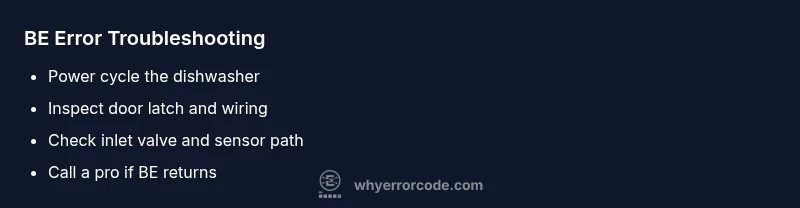
Power cycle the machine: unplug for 60 seconds, then plug back in and run a short diagnostic or clean cycle to see if BE clears. This resets the controller and can clear transient faults.
-
Inspect the door latch: visually check for missing or damaged latch tabs, a misaligned door, or a loose striker. A faulty latch can prevent safe door sealing, triggering BE. If the latch is damaged, replace it according to model-specific instructions.
-
Check door switch and wiring: with power off, inspect the door switch wiring and the connector at the control board for corrosion or loose pins. Re-seat connectors and inspect for melted insulation. A loose or corroded connection is a common BE trigger.
-
Test connections at the control board: gently unplug and re-seat main ribbon cables and harnesses—especially those linked to the latch and inlet sensors. After reassembly, run a brief cycle to verify BE does not reappear.
Tip: Take a photo of each connector before re-seating to ensure you reassemble correctly. If BE returns after these steps, continue with the next section or schedule professional service.
Other Common Causes and Fixes
A BE fault can also arise from non-latch issues. If the door and latch checks pass, consider the following:
- Water inlet valve or flow sensor: a blocked inlet, scale buildup, or a sticking flow sensor can cause the controller to misread fill status and trigger BE. Verify water supply to the dishwasher and check the inlet filter for debris. Clean or replace the valve if necessary, and ensure the supply hose isn’t kinked.
- Faulty or aging control board: over time, solder joints or components on the main board can degrade, producing intermittent BE signals. If you suspect a board fault, testing with a diagnostic tool or swapping a known-good control board is the most definitive fix, typically costing hardware plus labor.
- Wiring harness damage: insulation wear or rodent damage can create intermittent shorts. Inspect all harnesses around the control module and motor assemblies for visible damage, replace damaged wires, and re-secure harnesses away from moving parts.
- Sensor or float issues: abnormal readings from the float switch or water-level sensor may cause the BE code. Check the float for obstruction, secure mounting, and ensure the sensor cable is intact.
Note on costs: expect a range for parts and labor, with electrical or control-board repairs typically priced higher than simple latch replacements.
Safety, Warnings, and When to Call a Pro
Electrical repairs inside a dishwasher can pose shock hazards. Always unplug the unit before inspecting wiring or internal components. If you notice scorch marks, burning smells, leaking coolant, or you are uncomfortable handling live electronics, stop and call a professional. A qualified technician will perform a full diagnostic with model-specific procedures and test equipment. Expect parts and labor to range broadly by region and model, with a ballpark of several dozen to several hundred dollars for BE-related diagnoses. For best results, have your model number, serial, and a clear description of symptoms ready when you call.
Prevention Tips and Maintenance to Avoid BE
- Regularly inspect and reseat control-board connectors during routine maintenance or after wiring work.
- Keep seals and gaskets clean to avoid moisture intrusion that can affect electrical contacts.
- Use a dedicated, stable power outlet and avoid extension cords or multi-outlet strips near the dishwasher.
- Clean the inlet screen and check water supply pressure to prevent sensor misreads.
- Periodically run a self-clean or light-cycle to exercise all subsystems and catch loose connections early.
Costs, Timeline, and What to Expect
Typical BE-related repairs can range from simple latch replacements ($50–$150 for parts) to full control-board work ($150–$600, depending on model and availability). Labor costs vary by region but often fall within $75–$150 per hour. A straightforward latch or connector fix may take under an hour; board repairs may require a multi-hour service visit. If the unit is under warranty, some costs may be covered; always check coverage and service terms with the retailer or Whirlpool support.
Steps
Estimated time: 30-60 minutes
- 1
Power cycle the unit
Unplug the dishwasher from the wall outlet for 60 seconds. Plug it back in and run a brief diagnostic or empty cycle to see if BE clears. This resets the main controller and can clear transient faults without any tools.
Tip: If the outlet is controlled by a switch, ensure the switch stays on during testing. - 2
Inspect door latch and seals
Examine the latch for cracks, bent parts, or misalignment. A damaged latch may prevent the door from sealing properly and trigger BE. If needed, replace the latch according to your model’s service manual.
Tip: Carefully power off and use a flashlight to check for hairline cracks or debris in the latch area. - 3
Check wiring and connectors
With power off, inspect connectors at the control board and door switch for corrosion or loose pins. Reseat any loose connectors and look for damaged insulation. Worn connectors are a common BE trigger.
Tip: Take photos before disconnecting any plugs to ensure accurate reassembly. - 4
Test water inlet and sensor path
Ensure the water inlet valve operates and the filter is clear of debris. Verify the flow sensor wiring is intact and the float moves freely. A blockage or sensor fault can cause a BE fault to be signaled.
Tip: Descale or clean mineral buildup gently; avoid forcing components. - 5
Run a controlled test cycle
After reassembly, run a short wash cycle with no dishes to observe whether BE reappears. If it does, the fault is likely in the control board or a hard-to-detect wiring issue.
Tip: Document any error codes and times for reference during professional repair.
Diagnosis: Error BE displayed during a cycle; machine may abort or lock out
Possible Causes
- highDoor latch fault or misalignment
- highLoose or damaged wiring at the control board
- mediumWater inlet valve or flow sensor issue
- mediumAging control board or connector corrosion
- lowUser error or unbalanced load triggering safety features
Fixes
- easyPower cycle the dishwasher
- easyInspect and reseat door latch and control-board connectors
- mediumClean or replace the door latch if damaged
- mediumCheck water inlet valve and flow sensor for blockages or wear
- hardTest or replace the control board if necessary
Frequently Asked Questions
What does Whirlpool BE error code mean?
BE generally points to a fault detected by the control board related to safety interlocks or communication between components. It is not usually a simple mechanical issue. Check the latch, connectors, and inlet before moving to more complex repairs.
BE usually means a control or door latch fault. Start with a reset and check the latch and wiring.
Can I fix BE myself?
You can perform basic resets, inspect visible wiring, and replace a damaged door latch. More complex faults, like a faulty control board, require professional service. Always unplug the unit before inspecting internal components.
You can do simple resets and latch checks, but for boards, call a pro.
Is BE related to water supply?
Yes, a blocked inlet or faulty flow sensor can trigger BE as the controller reads an unsafe fill condition. Check the water supply, inlet screen, and sensor wiring as part of the diagnostic.
It can be connected to water supply issues; inspect the inlet and sensor wiring.
Will resetting fix BE every time?
A reset can clear transient BE faults, but persistent BE typically indicates a hardware issue (latch, wiring, or control board) that requires further diagnosis.
Reset may work for a moment, but persistent BE needs a closer look.
How much does it cost to fix BE?
Diagnostics typically run $50–$120. Parts like a latch or valve may be $20–$100, while board replacements and labor can range from $150–$600 depending on model and availability.
Diagnostics start around $50, with parts or board work potentially higher.
When should I call a professional?
If BE persists after basic resets and latch/wiring checks, or if you’re uncomfortable working with electrical components, contact a qualified appliance technician.
Call a pro if BE repeats after basic checks or if you’re unsure about the repair.
Watch Video
Top Takeaways
- Reset power to clear transient BE faults
- Check door latch and wiring first
- Inspect water inlet valve and flow sensor
- Call a pro if BE persists after basic checks