DF Error Code on Carrier AC: Quick Diagnosis and Fixes
Urgent guide to diagnose and fix the Carrier ac df error code. Learn mean, common causes, quick fixes, step-by-step repair, and prevention to minimize downtime.


DF on a Carrier AC generally signals a drain or defrost fault that can trigger a safety shutoff. The exact meaning varies by model, but common triggers include a blocked condensate drain, a dirty air filter, or a faulty overflow switch. Quick fixes involve clearing the drain, cleaning/replacing the filter, and resetting the unit; if problems persist, seek professional service.
Understanding the DF Code on Carrier AC
When the display on a Carrier air conditioning system shows a DF error code, it usually indicates a fault within the drainage or defrost subsystem. The DF code is model-dependent, so the exact cause may vary between units. In many cases, a clogged condensate drain path or a defective overflow switch triggers the warning. While the DF code alerts you to a problem, it should also be evaluated for safety, particularly if there is visible water near the indoor unit or a persistent shutdown behavior. For developers, technicians, and homeowners troubleshooting error codes, recognizing that DF often pinpoints drainage or defrost anomalies helps narrow down the search quickly. As with any error code, refer to the model-specific manual if available and follow safety precautions when inspecting electrical components.
Symptoms That Might Indicate a DF Fault
- The system shuts off mid-cycle with a DF code
- Water pooling near the indoor unit or on the floor
- The outdoor unit runs but impractical cooling appears
- The thermostat display shows an unavailable or fluctuating DF fault
- Audible gurgling or sloshing sounds from the drain pan
Interpretation of these symptoms depends on the model. DF commonly relates to drainage or defrost subsystems, so initial checks should focus on water handling and airflow. Always start with low-risk checks (like filter and drain) before opening access panels or testing sensors. Why Error Code emphasizes model-specific definitions—always confirm with the exact Carrier manual for your unit.
Common Causes and Likelihood (High to Low)
- Clogged condensate drain line or pan (high)
- Dirty air filter restricting airflow (medium)
- Faulty condensate overflow switch or sensor (medium)
- Outdoor unit obstruction or poor airflow (low)
- Defrost sensor or control board anomaly (low)
By prioritizing high-likelihood causes, you can target the most impactful fixes first. DF errors often clear after the drain is cleared or after airflow improvements, but if the code persists, a deeper sensor or control issue may be present.
Quick Fixes You Can Try Now
- Power cycle the unit: turn off at the breaker for 60 seconds, then back on
- Check condensate drain line and pan for clogs or standing water
- Inspect the air filter and replace or clean if dirty
- Ensure the outdoor unit has clear airflow and no debris
- Reset the thermostat and test cooling function again
These quick fixes address the most common DF triggers and can often restore normal operation without a professional visit. If the DF code reappears after these steps, continue with the diagnostic flow below or call a technician.
Diagnostic Flow Essentials (Overview)
When diagnosing DF on Carrier AC, follow a systematic path: observe symptoms, confirm model-specific DF definition, identify likely causes, apply quick fixes, and escalate if the code recurs. This diagnostic mindset minimizes guesswork and aligns with best practices for troubleshooting error codes in home HVAC systems. Remember that safety and proper disconnection from power are prerequisites for most hands-on checks, especially around condensate lines and control boards.
Step-by-Step Fix for Drain/Defrost-Related DF (High Likelihood)
Follow these steps to address the most common DF trigger (drain/defrost): power off the unit at the breaker, inspect the condensate drain line and pan for clogs, clear obstructions, and then verify the drain pan is not overflowing. Next, inspect and replace the air filter if needed, ensure proper airflow around the outdoor unit, and finally reset the system. If the DF code persists, move to advanced diagnostics or professional service. Safety first: disconnect power before handling components.
Other Causes and How to Verify
If cleaning the drain and filter doesn’t resolve the DF error, verify the condensate overflow switch wiring, test sensors, and check for refrigerant-related flow issues. A technician should test the control board and communication with the indoor thermostat to rule out electrical or software faults. Confirm that the unit’s capacitors and relays are functioning and that there are no loose connections that could trigger intermittent errors in the DF code.
Safety, Warnings, and When to Call a Professional
Dealing with electrical components or refrigerant requires caution. If you observe strong electrical smells, exposed wiring, buzzing noises, or obvious refrigerant leaks, stop and call a pro immediately. A trained technician can perform a pressure test, sensor diagnostics, and PCB inspection with the proper tools. For most DF-associated fixes, a pro visit typically costs in a broad range that depends on location, labor, and parts.
Prevention: Maintenance Tips to Minimize DF Codes
- Schedule regular filter changes and system cleanings
- Keep condensate drain lines clear and inspected for blockages
- Ensure proper airflow around indoor and outdoor units
- Listen for unusual noises that could indicate sensor or motor issues
- Maintain better humidity control to reduce drain strain
Steps
Estimated time: 30-60 minutes
- 1
Power down and safety check
Turn off the breaker and unplug the unit if accessible. Confirm there is no power to the system to safely inspect components.
Tip: Always wear protective gloves and avoid contact with wiring. - 2
Inspect condensate drain
Locate the condensate line and tray; clear clogs with a flexible brush or pipe snake. Flush with water if possible.
Tip: Use a bucket to collect water and avoid spills. - 3
Check and clean/replace filter
Remove the air filter, clean it if reusable, or replace with a new one of the correct size. Reinstall securely.
Tip: A clogged filter can mimic DF symptoms. - 4
Assess outdoor unit airflow
Clear leaves, dirt, and debris; ensure several inches of clearance around the unit and ensure unobstructed airflow.
Tip: Never block the top or sides with objects. - 5
Reset/test the system
Restore power and allow the system to run through a full cycle; observe whether DF reappears.
Tip: If the DF code returns, do not continue guessing—proceed to professional service. - 6
If unresolved, schedule a professional check
A technician can test sensors, board connections, and refrigerant flow to diagnose deeper faults.
Tip: Document symptoms and prior steps to share with the technician.
Diagnosis: Carrier AC DF error code displayed, potential shutdown during operation
Possible Causes
- highClogged condensate drain line or pan
- mediumDirty air filter causing reduced airflow
- mediumFaulty condensate overflow switch or sensor
- lowBlocked outdoor unit or restricted airflow
Fixes
- easyClear condensate drain line and pan; ensure proper drainage
- easyClean or replace air filter; confirm airflow unobstructed
- mediumTest/replace condensate overflow switch or sensor wiring
- easyRemove debris from outdoor unit and improve airflow clearance
Frequently Asked Questions
What does DF mean on a Carrier AC and is it dangerous?
DF usually points to a drain or defrost fault in Carrier AC units. It’s not inherently dangerous, but it can cause water damage or system shutdown if ignored. Address both the drainage and defrost components and monitor for recurring DF codes.
DF usually signals a drain or defrost fault. It isn’t dangerous by itself, but it needs attention to prevent damage and further shutdowns.
Can I fix DF by myself, or is a technician required?
Many DF triggers are addressable with basic maintenance: drain clearing and filter cleaning. If the DF code reappears after quick fixes, or you smell refrigerant or see electrical issues, call a professional.
You can try basic checks first, but call a pro if the code returns or you notice electrical or refrigerant concerns.
What is the typical cost range for fixing a DF error code?
DIY parts like filters are inexpensive, but professional service for DF repairs commonly ranges from a few hundred to several hundred dollars depending on parts and labor. Expect brakepoints around filter changes and sensor checks.
Costs vary, but professional DF repairs typically run in the hundreds, depending on parts and labor.
How long does a DF repair usually take?
A simple drain/filter fix can take 30–60 minutes. More complex diagnostics or sensor replacements may require 1–2 hours. If a refrigerant issue is involved, times can extend further.
Most DF fixes take under an hour for simple tasks, longer for sensor or refrigerant issues.
What maintenance reduces the chance of DF errors?
Regular filter changes, clearing debris around outdoor units, and periodic condensate drain checks dramatically reduce the likelihood of DF errors. Schedule seasonal checks with a technician for best results.
Keep filters clean, outdoor unit clear, and drains checked; periodic professional checks help a lot.
What should I prepare before calling a technician?
Note when the DF code appears, any recent maintenance done, and steps you’ve already tried. Share model number, serial, and installation details to help diagnose quickly.
Have the DF symptom timing and steps you tried ready for the technician.
Watch Video
Top Takeaways
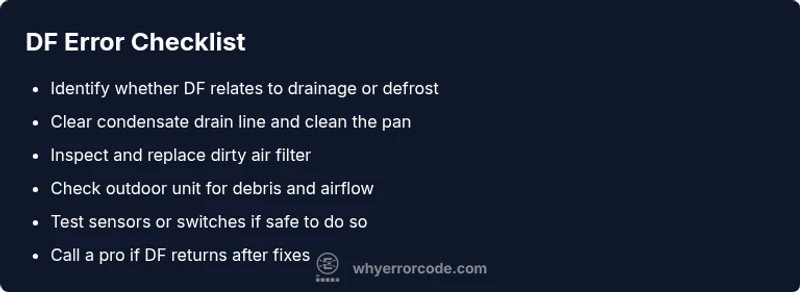
- Identify whether DF relates to drainage or defrost; model matters
- Start with easy fixes (drain + filter) before deeper diagnostics
- Persistent DF codes require professional evaluation
- Prevent future DF codes with regular maintenance
- Document symptoms to speed up service