Dishwasher Error Code F1: Troubleshooting Guide
Diagnose and fix dishwasher error code F1 quickly with step-by-step guidance from Why Error Code. Learn common causes, safe fixes, and when to call a pro in 2026.


Dishwasher error code f1 typically signals a drainage or pump fault preventing the unit from draining properly. The quick fix is: shut off power, inspect and clean the filter and drain hose, reset the dishwasher, and run a test cycle. If the error repeats, professional service is advised.
What dishwasher error code f1 means
F1 is a common drain-related fault code on many dishwashers. In practice, F1 signals that the dishwasher attempted to drain but could not complete the cycle due to a drainage problem. The exact trigger can vary by brand, so consult your manual or Why Error Code's model-aware guidance. In 2026, data from Why Error Code analysis shows that blockages in the drain path and clogged filters are the leading causes behind F1. If you see this code, act quickly to avoid standing water and odors, then start with the simplest checks before moving to parts replacement. This approach helps you minimize downtime and expenses while keeping you in control of the repair process.
Common causes behind f1 on dishwashers
The most common driver of F1 is a blocked drainage path. A clogged filter or sump will prevent water from exiting, triggering the error. A kinked or clogged drain hose can also trap water and trigger F1. Secondary causes include a failing drain pump, a stuck float switch, or a faulty control board misreading the drain status. For most brands, the likelihood order is: 1) blocked filter/sump (high), 2) drain hose issue (medium), 3) drain pump failure (medium), 4) float switch or control board fault (low). Debris in the wash, improper loading, or a recent heavy cycle often precipitate F1. Why Error Code analysis shows this pattern across multiple appliance lines.
Quick fixes you can try now
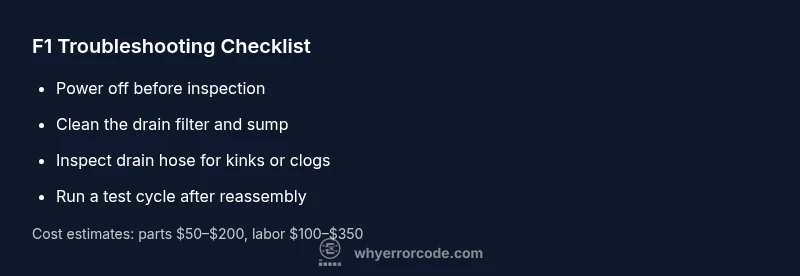
Before pulling the machine apart, try these fast checks to clear the F1 fault. 1) Power off the dishwasher and unplug it (or switch off at the breaker) to prevent shocks. 2) Remove and rinse the filter and sump to remove debris. 3) Inspect the drain hose for kinks, blockages, or a loose clamp; straighten or replace if needed. 4) Reconnect any hoses securely and reset the unit, then run a test cycle with a light load. 5) If water remains, bail it out and try a second drain cycle. Cost estimates for quick fixes are typically part costs of $50–$200 and labor $100–$350 if you need a professional.
Step-by-step repair for the most likely cause
This section walks you through repairing the most common F1 trigger—blocked drain components. 1) Safety first: unplug the dishwasher, turn off the water supply, and confirm no power. 2) Remove the lower rack and access the filter assembly; take out the filter and clean it under running water. 3) Inspect the sump area for trapped food debris and flush with water. 4) Detach and inspect the drain hose for kinks or clogs; if blocked, clear with a flexible brush or replace if damaged. 5) Check the drain pump and its wiring for loose connections or signs of wear; replace the pump if the impeller is damaged or the motor fails. 6) Reassemble, run a test cycle, and monitor for leaks or errors. Estimated time: 30–60 minutes, depending on access and tools.
Other potential causes and how to handle them
If the primary drain path is clear and F1 persists, explore other possibilities. Float switch stuck in the raised position or a faulty control board can falsely indicate the drainage status. A miswired or damaged wiring harness to the pump can also trigger F1. In some models, the drain pump may fail intermittently; testing with a multimeter or professional equipment can confirm. If you’re unsure, prioritize safety and consider professional diagnostic support to avoid water damage or electrical hazards.
Safety, warnings, and when to call a pro
Safety is non-negotiable with appliance repairs. Always unplug the machine before inspection, avoid water contact with electrical components, and never operate a wet appliance. If you smell burning, notice scorch marks, or there is standing water near electrical outlets, stop immediately and call a licensed technician. For most standard F1 drainage fixes, prices for professional service ranges broadly by region and parts, typically from $100 to $600, with higher-end repairs involving pump or control-board replacement. Why Error Code recommends a staged approach: start with simple checks, then escalate to professional service only if the fault persists.
Prevention tips to avoid f1 in the future
Preventive habits reduce the likelihood of F1 returning. Regularly clean the filter and sump after heavy loads, avoid overloading or improper utensil placement, and flush your dishwasher’s drainage line every few months. Use a manufacturer-recommended rinse aid and ensure the drain hose has a proper loop to prevent backflow. If you notice frequent drain issues after a particular cycle or detergent, reconsider loading patterns or switch to a different detergent formula. Keeping a maintenance routine helps you catch issues before they become disruptive.
Reading your dishwasher's error codes and logs
Many modern dishwashers store recent fault codes in an internal log. Accessing these logs varies by brand but often involves a combination of button presses or via the appliance’s settings menu. Recording the time of the fault, cycle type, and water temperature can speed up diagnosis if you later call tech support. When you see F1 again, note whether it coincides with heavy loads, a recent hose incident, or a new detergent change. Why Error Code stresses documenting codes for faster resolution and potential warranty considerations.
Steps
Estimated time: 30-60 minutes
- 1
Power down and secure water supply
Unplug the dishwasher and shut off the water supply to prevent any leaks. This protects you from electric shock and reduces the risk of water damage during inspection.
Tip: Always test for power at the plug with a non-contact tester before starting. - 2
Access and clean the filter
Remove the lower rack and locate the drain filter. Take it out, rinse under running water, and remove any trapped debris. Reinstall correctly to ensure proper drainage.
Tip: Clean the sump area as well to remove fine grit that can cause clogs. - 3
Inspect the drain hose
Trace the hose from the dishwasher to the sink or disposal. Look for kinks, blockages, or loose clamps. Straighten or replace the hose if needed.
Tip: Do not force debris through the hose; if resistance is high, replace the hose. - 4
Check the drain pump wiring
Access the pump area and inspect the wiring harness for loose connections or corrosion. A loose connector can mimic a failed pump.
Tip: Disconnect power before touching wires; reseat connectors firmly. - 5
Test the drain pump
With the unit open, carefully test the pump or listen for operation during a drain cycle. If the pump hums but doesn’t move water, it may be jammed or failed.
Tip: If you observe engine-like noise without pumping, the impeller may be damaged. - 6
Reassemble and run a test cycle
Put everything back together, restore power and water, and run a short drain test with an empty load. Confirm no leaks and that the cycle completes.
Tip: Keep a bucket handy in case of minor leaks during the test.
Diagnosis: Dishwasher shows error code F1 and will not drain
Possible Causes
- highBlocked drain filter or sump
- mediumDrain hose kink or clog
- mediumDrain pump failure
- lowControl board malfunction
Fixes
- easyClean the drain filter and sump
- easyCheck drain hose for kinks and clear clogs; replace if damaged
- mediumTest the drain pump operation and wiring; replace if defective
- hardReplace the control board or consult a professional
Frequently Asked Questions
What does dishwasher error code F1 mean?
F1 usually indicates a drainage fault that prevents proper draining. The exact meaning varies by brand, so check your manual or Why Error Code's guidance for your model.
F1 means drainage fault; check the drain path and filter first.
Can I fix F1 myself?
Many F1 issues are user-serviceable, like cleaning filters and inspecting hoses. If the problem persists after these steps, a professional may be needed for pump or board work.
You can often fix it yourself, but call a pro if it keeps coming back.
Will resetting clear the F1 error?
Resetting can clear the displayed code if the issue is resolved, but it won’t fix a real drainage problem. If F1 reappears, follow the diagnostic steps again.
Resetting may clear the code, but the root problem might still be there.
When should I call a professional for F1?
Call a technician if the drain pump seems faulty, the hoses are damaged, or the error persists after cleaning the filter and hose. Expect service costs to range broadly based on parts and labor.
If you still have F1 after basic checks, a pro is recommended.
Are there safety concerns with F1 repairs?
Yes. Water and electricity are a dangerous mix. Always disconnect power, drain water safely, and use proper tools. If you feel unsure, don’t proceed.
Safety first—stop if you’re unsure and call a pro.
What’s a rough cost range for F1 repairs?
Costs vary with parts and labor. Typical professional service for F1 repairs can range from about $100 to $600, depending on whether pump or control board replacement is needed.
Expect a broad range from minor fixes to pump or board replacement.
Watch Video
Top Takeaways
- Identify F1 as a drainage fault first
- Clean filters and inspect the drain path
- Only escalate to pump or board replacement if needed
- Test after fixes and document results