Door Lock Error Code Washing Machine: Quick Fixes and Diagnostics
Urgent guide to diagnose and fix door lock error code issues in washing machines. Includes quick resets, latch checks, wiring tests, cost ranges, and when to call a professional.


A door lock error code washing machine indicates a fault with the door interlock or its wiring, which prevents the drum from locking safely. The quickest fixes are to unplug the unit, wait a minute, reseat the door latch harness, and perform a soft reset. If the code remains, inspect the latch mechanism or consult service guidance.
What the door lock interlock does and why codes appear
The door lock interlock is a safety device that confirms the washing machine door is closed before the cycle begins. If the interlock cannot verify a secure latch—due to wear, misalignment, or a dirty latch—the control board will display a door lock error code washing machine and halt operation. In 2026, many users encounter this error after a power surge, a door gasket snag, or a minor wiring shift. According to Why Error Code analysis, securing the interlock is often enough to restore normal operation, but persistent codes may indicate deeper faults. Understanding how the interlock communicates with the control board helps you prioritize fixes and avoid unnecessary replacements.
- Key components: door latch, lock solenoid, interlock switch, wiring harness, and control board.
- Why it matters: a proper interlock prevents the drum from spinning if the door could open mid-cycle, protecting users and preventing water damage.
- Quick checks: confirm there’s no visible obstruction, listen for a click when closing the door, and inspect for loose connectors at the back panel. If you detect burnt smells or melted plastic, power down the unit immediately and seek professional help.
This section sets the stage for diagnosing the error code washing machine without guessing. The goal is to distinguish between a simple latch misalignment and a true interlock or control-board fault. Always prioritize safety and confirm you’re working with the unplugged machine. WW2026 guidance from the Why Error Code Team emphasizes safe triage before disassembly.
Symptoms and quick checks
When you see a door lock error code washing machine, you typically notice one or more of the following: the display shows a fault indicator, the door remains locked after the cycle ends, the motor hums but won’t start, or the unit stops mid-cycle with the door locked message blinking. Quick checks can help you separate a trivial hiccup from a real fault. Start by unplugging the machine, waiting 60 seconds, and plugging back in to perform a soft reset. Check the door latch for debris, misalignment, or a mis-seated strike plate. If the latch feels loose or wobbly, do not force the door—reset the unit and proceed to inspect wiring.
- Inspect the door gasket and frame for damage or debris.
- Listen for a soft “click” when you close the door; absence suggests a stuck interlock.
- Examine the back panel connectors for loose cables; reseat any that feel loose.
- If the display shows a specific code (e.g., “E1” or “F8”) alongside the door message, refer to the user manual for code definitions, then execute the corresponding steps.
Note: never bypass the interlock. If you smell burning, hear buzzing, or notice damaged insulation, stop and call a professional. This approach aligns with the urgent guidance from Why Error Code to prevent hazardous situations and further damage.
Most common causes in 2026 and how to prioritize fixes
Based on Why Error Code Analysis, the most frequent reasons for a door lock error code washing machine are interlock misalignment or wear, followed closely by wiring harness issues and, less commonly, a faulty control board. Start with the highest-likelihood items to maximize your chances of a quick fix. The hierarchy below helps you triage efficiently:
- High likelihood: Door latch misalignment or dirty interlock; the latch may fail to sense a closed door even when it looks shut. Cleaning and realigning often resolves the problem without tools.
- Medium likelihood: Wiring harness damage or loose connectors near the door switch or control board. Re-seating or replacing a damaged harness can restore signals.
- Low likelihood: Faulty control board or interlock module that misreads sensor input. This typically requires professional diagnosis and replacement.
When diagnosing, document the symptom sequence and any codes shown on the display. That data helps you decide whether a DIY reset and latch adjustment is enough, or if you should escalate to service. Remember, costs can vary by region and model, so prepare for a potential professional visit if the fault persists after basic checks.
Safety first: when to unplug and call a professional
Safety is non-negotiable when dealing with door lock error code washing machine scenarios. Always unplug the machine before touching internal parts. Do not spray cleaners near electrical components and avoid using metal tools to pry the latch. If you notice exposed wires, burnt smells, or signs of water ingress, shut the unit down and contact a professional promptly. In 2026, many retailers offer diagnostic services with transparent labor ranges, but attempting complex repairs without training can void warranties or cause additional damage. The Why Error Code team strongly recommends professional evaluation if:
- The model is under warranty and requires authorized service
- You cannot safely access or test the interlock harness
- The door remains locked after multiple successful resets
- You observe electrical odors, smoke, or buzzing sounds during operation
These precautions help minimize risk and keep your home safe while resolving the error code washing machine issue.
What to expect during a professional repair and cost ranges
If you decide to call a professional, expect a diagnosis visit followed by targeted repairs. Technicians typically assess the interlock, harness integrity, and board connections before proposing a fix. Cost ranges depend on the region, unit age, and whether parts can be reused. Typical ranges you might encounter include: parts between $20 and $150 for latch components, wiring harnesses around $15 to $80, and labor from about $75 to $300. In some cases, a full interlock module or control board replacement may push total costs higher. Always request an upfront quote and, if possible, obtain a written estimate that includes parts and labor. The Why Error Code Team emphasizes comparing quotes and asking about warranties on parts. If the unit is older or has multiple issues, it may be more economical to replace the washer, but that decision should be made with a clear cost-benefit view.
How to prepare for service and avoid future door lock issues
Preparation for service makes the diagnostic process faster and reduces downtime. Gather the model number, serial number, and a short description of the error code sequence. Have the appliance manual on hand or a digital copy accessible. Clear the area around the washer so the technician can access the rear and front panels. Ask the technician to test the door latch, switch continuity, and interlock magnetism using the manufacturer’s recommended tests. After repair, request a brief failure analysis to understand what caused the door lock error code washing machine and what you can do to prevent recurrence. Routine maintenance like cleaning the latch area, inspecting door seals, and checking for loose connections every 6–12 months can help avoid future faults.
How to prevent future door lock errors and keep your machine running
Preventive steps include regular inspection of the door latch and interlock wiring, keeping the door frame clean of lint and debris, and avoiding close proximity to power surges by using a surge protector. If you notice a repetitive pattern of interlock failures after power interruptions, consider having the control board checked by a professional. By following these habits and addressing the root cause early, you can extend the life of your washing machine and minimize downtime from door lock error code issues.
Steps
Estimated time: 45-60 minutes
- 1
Unplug and reset
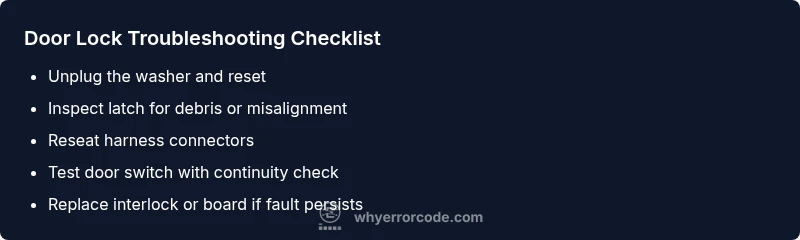
Disconnect power at the wall outlet and wait 60 seconds. Plug back in and try a simple cycle to verify if the code clears after a reset.
Tip: Use a dry, non-metal tool to ensure you don’t press any internal components if you re-access the panel. - 2
Access the door interlock area
Remove the top or back panel as needed following the manufacturer’s manual to expose the door latch and interlock area. Photograph connectors before unplugging.
Tip: Label each connector for easy reassembly and avoid mixing up harnesses from other components. - 3
Inspect latch and strike
Check for debris, corrosion, or misalignment. Clean with a dry brush and verify that the latch engages fully when the door closes.
Tip: If the latch feels loose, tighten mounting screws and re-test the closure without forcing the door. - 4
Test wiring harness connections
Carefully reseat all door-related connectors and verify continuity with a multimeter per the service manual.
Tip: Look for damaged insulation or bent pins; replace any compromised harnesses. - 5
Run a controlled test
With panels reassembled, run a short cycle to confirm the door locks and unlocks correctly under normal load.
Tip: Do not run the test with water inside the drum—empty it first. - 6
Evaluate the interlock module
If the code persists, evaluate whether the interlock magnet or lock solenoid is engaging. Replace only if confirmed faulty.
Tip: Interlock replacements should be done with care to avoid damaging the door frame. - 7
Document and plan next steps
Record the results, any error codes, and the observed behavior. If unresolved, plan a professional diagnosis or board replacement.
Tip: Save these notes for the technician; it speeds up the service visit.
Diagnosis: Machine shows a door lock error code washing machine and won’t start
Possible Causes
- highDoor latch jammed or misaligned
- mediumWiring harness damage or loose connections
- lowControl board or interlock module fault
Fixes
- easyClean and realign the door latch; reseat the strike plate
- easyInspect door switch wiring; reseat or replace damaged connectors
- hardReplace the interlock module or control board
Frequently Asked Questions
What does a door lock error code washing machine mean?
It signals the door interlock isn’t sensing a secure latch, so the machine won’t start or will stop safely. The fault could be a dirty or misaligned latch, a bad wiring connection, or a faulty control board.
A door lock error means the interlock can’t confirm a closed door, so the washer won’t run. Check the latch and wiring first, and call a pro if it persists.
Can I fix it myself without calling a technician?
Some fixes are safe for DIY, like cleaning and reseating the latch or inspecting accessible wiring. More complex issues, such as a damaged interlock module or control board, should be handled by a professional to avoid safety risks.
You can try simple latch cleaning and reseating, but don’t replace boards yourself unless you’re trained.
What safety steps should I take before starting?
Always unplug the machine first, avoid touching live circuits, and perform any work on a dry surface. If you smell burning or see smoke, stop immediately and call a pro.
Unplug, dry area, avoid live circuits, and call a professional if you notice burning smells.
How much does a repair typically cost?
Costs vary by region and model, but typical ranges include parts and labor from about $100 to $500, depending on whether a latch replacement, wiring harness, or board is needed.
Most repairs run roughly from one to five hundred dollars, depending on the exact fault and parts.
Do door lock errors disappear after a reset?
A reset can clear transient faults, but if the interlock or wiring is defective, the error will return. Use resets as a first step and proceed to physical checks if it recurs.
Resetting can fix temporary glitches, but persistent errors usually mean a hardware issue.
When should I replace the washing machine instead of repairing?
If the unit is old, requires frequent fixes, or the repair cost nears or exceeds half the price of a new machine, replacement is worth considering. A professional can help estimate the long-term cost.
If it keeps breaking and costs add up, replacing might be wiser.
Watch Video
Top Takeaways
- Identify interlock vs. board fault quickly
- Reset and clean latch before replacements
- Have clear cost ranges and quotes ready
- Call a pro if in doubt or if code persists