How to Get Rid of AE Error Code on LG Dishwasher
Urgent guide to diagnose and fix AE error on LG dishwashers. Learn the meaning, quick fixes, step-by-step repairs, safety notes, and prevention tips to get the machine draining again.


AE on LG dishwashers usually signals a drainage fault that prevents proper water removal, stopping the cycle. The quickest path is a power reset, then inspect the drain filter, hose, and pump for blockages. If the error persists, inspect the sump and consider professional service. This Why Error Code guide helps you diagnose and fix AE quickly and safely.
What AE Means on LG Dishwashers
AE on LG dishwashers is a diagnostic code used by many LG models to flag a drainage problem. When AE appears, the dishwasher detects that water cannot evacuate from the tub, leaving the cycle incomplete. The message is not a generic fault; it points to the drain pathway, the pump, or a sensor that monitors flow. Because drainage is essential for safe operation, addressing AE quickly reduces the risk of water damage and mold growth inside the cabinet. This guide from Why Error Code explains what AE means in practical terms, how to perform safe checks, and when it’s time to call a professional. By understanding the most common failure modes, you can triage effectively and avoid unnecessary part replacements.
Quick Self-Check: Immediate Actions You Can Take
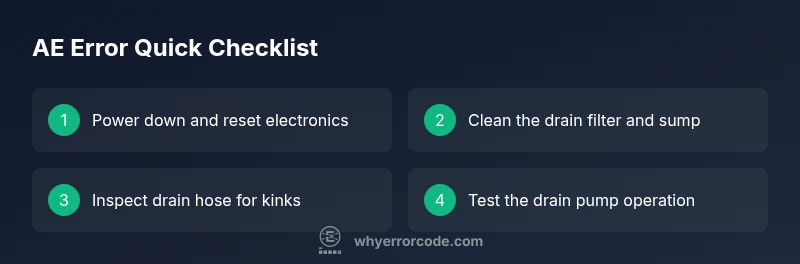
Immediate actions you can take without tools are designed to deliver a fast 'reset' while keeping safety in mind. First, unplug the unit or switch it off at the circuit breaker, then wait 60 seconds to reset the control board. Reconnect and start a short wash cycle to see if AE reappears. Next, inspect the visible drain path: remove the lower rack, locate the sump area, and check for obvious debris or foreign objects that could block the pump. Clean the coarse filter and microfilter if present, as a clogged filter can mimic a failed drain. Inspect the drain hose for kinks or flattening and detach the hose from the disposal or sink to test water flow. If you notice standing water or a blocked hose, clear it and reassemble before testing again.
Diagnostic Flow: Symptoms, Causes, and Quick Verifications
When AE appears, note whether water remains in the tub after a cycle, whether the pump hums but won’t move water, or if the display flashes AE repeatedly. Common signs include standing water, a pungent odor from stagnation, and repeated AE on successive cycles. These symptoms help narrow down whether the issue is a clogged filter, a kinked hose, a faulty pump, or a sensor/control problem. Start with the simplest checks first and move to components that are more involved. Record your findings to guide any service visit and reduce diagnostic time.
Common Causes: What to Inspect First
Most AE failures are caused by (1) a clogged drain filter or sump debris, (2) a blocked or kinked drain hose or improper siphon path, (3) a failing drain pump or impeller, and (4) a faulty drain sensor or control board. Begin with the filter and hose, which are the easiest and cheapest fixes, and then test the pump if needed. If the problem persists despite these steps, the fault likely lies with a sensor or the control board, which often requires professional service.
Safety and Professional Help: When to Call a Pro
If you observe electrical smells, exposed wires, or water leaks beyond the cabinet, stop immediately and call a professional. Do not run cycles with a compromised power connection or if you suspect a faulty pump wiring. For most AE cases that don’t involve obvious damage, a trained technician can test the drain pump, sensor circuits, and control board to identify the exact fault and perform a safe replacement.
Prevention: Keeping AE at Bay with Routine Care
Regular maintenance reduces the chances of AE reappearing. Clean the filter and sump monthly, check the drain hose for kinks, ensure the dishwasher is level, and run a rinse cycle with a short drain if signs of slow draining appear. Use the recommended dishwasher detergent and avoid overloading the unit, which can increase strain on the pump and filters.
Steps
Estimated time: 20-40 minutes
- 1
Power down the unit
Unplug the dishwasher or switch off the circuit breaker. Wait 60 seconds to reset the electronics, then plug back in and run a short cycle to verify if AE reoccurs.
Tip: Safety first: ensure the area is dry before touching any components. - 2
Access the drain filter
Remove the lower rack and locate the drain filter or sump cover. Take out debris, rinse the filter, and reinsert securely.
Tip: Use a flashlight to spot small debris in the sump. - 3
Inspect the drain hose
Trace the hose from the tub to the sink or disposal. Look for kinks, clogs, or elevated loops that impede drainage. Detach and test flow if possible.
Tip: Do not crush the hose beyond its natural bend radius. - 4
Check the air gap (if present)
Some models have an air gap or high loop to prevent backflow. Ensure it is clear of obstructions and correctly positioned.
Tip: Do not bypass the air gap; it protects the plumbing. - 5
Test the drain pump
With the hose disconnected, run a drain test or cycle and listen for the pump operation. If you hear only a hum or no movement, the pump may be failing.
Tip: If you can access the impeller, check for hair or debris that binds the blades. - 6
Reassemble and test
Reconnect all hoses, filters, and the sump cover. Run a full cycle and observe whether AE returns.
Tip: Always dry your hands before reassembling electrical components. - 7
Inspect for leaks
During the test cycle, check for any leaks around the door gasket or hose connections. Tighten clamps if needed.
Tip: A small leak can indicate a loose connection that needs reseating. - 8
Decide on next steps
If AE persists after these checks, schedule a service call for advanced diagnostics such as sensor or control board testing.
Tip: Record cycle failpoints and any abnormal noises to share with the technician.
Diagnosis: AE error code appears, water not draining completely or cycle stops prematurely
Possible Causes
- highClogged drain filter or sump debris
- mediumBlocked or kinked drain hose / improper siphon path
- mediumFaulty drain pump or impeller
- lowSensor or control board fault
Fixes
- easyClean the drain filter and sump area
- easyInspect drain hose for kinks and clear any blockages
- hardTest or replace the drain pump if it does not move water
- mediumReset the control board and re-test; replace sensor/control board if needed
Frequently Asked Questions
What does AE mean on an LG dishwasher?
AE generally indicates a drainage fault or pump issue that prevents the tub from emptying. It points to the drain path, pump, or related sensors. Start with simple checks and move to pump testing if needed.
AE on an LG dishwasher usually means there is a drainage fault. Begin with basic checks and then test the pump if necessary.
Can I fix AE myself?
Yes for straightforward tasks like cleaning the filter and hoses. More complex fixes, such as a faulty drain pump or control board, should be handled by a professional.
You can fix simple items like filters and hoses yourself; for pumps or boards, consider a pro.
How long does a typical AE repair take?
A basic cleaning and hose check can take 20-40 minutes. More involved pump or board replacements may require a service visit lasting 1-2 hours depending on model.
Basic fixes are under an hour; more extensive repairs may take a couple of hours with a technician.
What safety steps should I follow before troubleshooting?
Always unplug the unit and drain residual water before opening panels. If you smell burning or see exposed wires, stop and call a professional.
Unplug the unit first and avoid touching live circuits; call a pro if you notice damage.
Will AE recur after a fix?
AE can recur if debris is left behind, hoses are not correctly positioned, or a failing pump or sensor is not replaced. Regular maintenance reduces recurrence risk.
AE may come back if you don’t address the root cause, so complete the recommended repair and maintenance.
Should I replace the dishwasher if AE keeps showing up?
Replacement is usually a last resort. If a major component like the pump or control board fails repeatedly, consult a pro about the cost-benefit of repair versus replacement.
If repairs exceed a practical cost, consider replacement after a professional assessment.
Watch Video
Top Takeaways
- AE signals a drainage problem; start with simple checks
- Clean filters and inspect hoses before calling a pro
- If AE persists, suspect pump or control board and seek service
- Maintain regular cleaning to prevent future AE codes