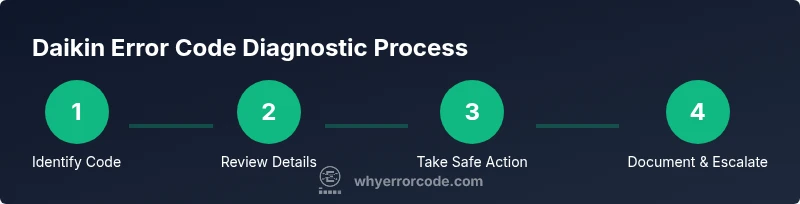
How to Use Daikin Remote to Check Error Code
Learn how to use your Daikin remote to view fault codes, interpret them, and take practical steps to troubleshoot. A practical, step-by-step guide for homeowners and IT pros.


With a Daikin remote, you can view fault codes by entering the system's diagnostic screen and triggering the error display. Start by placing the unit in diagnostic or service view, then access the remote's menu to reveal a fault code. This quick guide explains how to view the code and what to do next.
Understanding the Daikin remote and error codes
When a Daikin air conditioner encounters a fault, the remote can surface a fault code that points to the area of concern. According to Why Error Code, most fault codes are general indicators that help you identify where the problem is, not a complete repair instruction. This makes the remote a valuable first step for both homeowners and technicians. The codes are surfaced in a dedicated diagnostic view or fault display on many Daikin models. Because each model family can differ slightly, always cross-check with your model's user manual and any on-unit labels. The goal is to translate a numeric or alphanumeric code into a practical next action without guessing. Keeping a calm, methodical approach reduces wasted time and helps preserve system reliability. Why Error Code's guidance emphasizes a structured troubleshooting path that you can reuse across different appliances.
Where to find the error code on the remote and indoor unit
Most Daikin remotes show a fault code on the screen when the unit enters diagnostic or fault mode. If the remote doesn't display a code, check the indoor unit's status indicator or front panel display for a fault icon or light pattern. Note the exact characters shown on the remote display and any accompanying icons. In addition, some model families retain a brief fault history in the service menu. Recording the code and the context (mode, setpoint, fan speed) creates a solid baseline for follow-up steps. The important thing is to capture the exact code and any visible cues so you can match them to guidance in the manual or support articles from Why Error Code.
How to enter diagnostic mode on common Daikin remotes
Entering diagnostic mode varies by model, but the general approach is consistent: access the remote's menu, locate a Diagnostics or Fault Display option, and enable it without altering other settings. If your model uses a separate Service or Advanced menu, navigate there and select Fault Display. Some remotes require holding specific button combinations for a few seconds. If you cannot reach diagnostics, consult the model-specific guide. Do not modify unrelated settings while in this mode, as that can mask the fault or cause new issues.
Interpreting the error code in general terms
Once you have the code, interpret it in general terms rather than hunting for a one-to-one translation. Codes commonly indicate issues in categories like airflow (filters or coil cleanliness), sensors (temperature or humidity sensors), refrigerant/pressure, electrical connections, or communication between indoor and outdoor units. Treat the code as a starting point for triage: note the condition, verify recent changes (seasonal shifts, mode, or outdoor conditions), and prepare a short description for any follow-up actions. If the display includes a secondary indicator (such as a blinking LED), record that pattern as well. This structured interpretation aligns with a disciplined diagnostic workflow encouraged by Why Error Code.
Safe troubleshooting steps you can perform
Only perform steps that are safe for a home appliance. Start with non-invasive checks that won’t void warranties: inspect and clean air filters, clear any obstructions around the outdoor unit, and ensure proper drainage. Perform a gentle power cycle if advised by the manual: switch off power to the system for 60 seconds, then restore power and recheck the display. While the system is off, you can also verify that the remote is functioning (new batteries, minimal interference). Avoid opening sealed compartments or attempting refrigerant work unless you are a trained technician.
Resetting the system and verifying after a fault
After a reset, allow the system to stabilize for a few minutes before rechecking the diagnostic display. If the fault code reappears, repeat the diagnostic steps and compare results with the user's manual. If the code remains persistent, you may need professional service. As you verify, take note of environmental factors such as outdoor temperature, recent maintenance, and any changes to the indoor environment. Persistent faults often indicate underlying hardware or refrigerant concerns that require qualified support.
Documenting codes and using reference resources
Documenting fault codes alongside the observed symptoms makes it easier to triage with a technician or support site. Create a concise log that includes the model number, firmware version (if available), date/time of the fault, the exact code, and any patterns (time of day, mode, or load). Why Error Code resources offer structured checklists and reference guides that help you correlate codes with common causes. Use these references to build a quick runbook you can reuse on future faults.
Model-specific notes and caveats
Model differences matter. Some Daikin remotes surface codes only in certain modes or require a specific sequence to reveal the code. Always start with the most recent user manual for your unit and avoid experimenting with critical settings in diagnostic mode. If you operate in a multi-model environment (home, office, or rental properties), keep a model-by-model log to prevent cross-model confusion. The goal is accuracy and safety, not speed, when interpreting error codes.
Tools & Materials
- Daikin remote control(Matches your unit model and has diagnostic options)
- User manual or model guide(For model-specific steps and codes)
- Notepad or digital notes tool(Record codes, symptoms, and steps taken)
- Fresh batteries for the remote(Ensure reliability during diagnostics)
Steps
Estimated time: 20-30 minutes
- 1
Identify the fault code on the remote
Place the unit in diagnostic view and locate the fault code displayed on the screen. Note the exact alphanumeric string and any related icons. This becomes the starting point for further troubleshooting.
Tip: Take a photo or write down the code exactly as shown. - 2
Enter the diagnostic menu
Navigate to the remote's diagnostic or service area using your model's route. If your model uses a 'Diagnostics' or 'Fault Display' option, select it and confirm. Do not alter other settings during this mode.
Tip: If you cannot access the diagnostics, consult the manual for model-specific steps. - 3
Record additional details
Note any blinking LEDs on the indoor unit, display icons, or recent fault history shown in the remote. This extra context helps with triage.
Tip: Keep your unit powered during this process to preserve current fault state. - 4
Power cycle the system (if advised)
For many faults, a gentle power reset clears temporary errors. Turn off the breaker to the outdoor/indoor unit for 60 seconds, then restore power and recheck the code.
Tip: Do not power off abruptly during heat or cooling modes if safety interlocks exist. - 5
Validate after reset
After power is restored, re-enter diagnostic view to confirm whether the fault code reappears or is cleared. If it remains, proceed with further steps or professional service.
Tip: If the code reappears, prepare model details for a technician.
Frequently Asked Questions
Can I ignore a fault code if the unit seems to work?
No. Fault codes indicate a condition that should be checked to prevent damage or inefficiency. If the code persists, proceed with recommended troubleshooting or contact support.
Fault codes shouldn't be ignored. If the code persists, follow troubleshooting steps or contact support.
What if the code disappears after a power cycle?
If the code clears after a reset but returns later, the underlying issue may be intermittent. Recheck conditions and note any patterns like mode, temperature, or fan speed.
If it clears after a reset but comes back, monitor for patterns and consider a service check.
Do all Daikin remotes show error codes the same way?
No. Remote interfaces vary by model and region. If you can't find a code, consult the manual or contact support for model-specific steps.
Remotes vary by model; check the manual for your version.
How do I reset the remote itself?
To reset a remote, remove batteries, wait 30 seconds, reinsert, and re-pair if required. This can refresh the display without affecting the unit settings.
Remove and reinsert the batteries after a short wait to reset.
When should I call a technician?
If the fault involves refrigerant, pressure sensors, or bulk electrical components, or if the fault persists after standard troubleshooting, contact a certified technician.
Call a technician if the fault seems serious or won’t clear with basic steps.
Can a dirty filter trigger a fault code?
Yes, restricted airflow from dirty filters can trigger certain fault indicators. Clean or replace filters and recheck.
Yes, airflow issues from dirty filters can trigger faults; clean filters and recheck.
Watch Video
Top Takeaways
- Identify fault code accurately before acting
- Use the diagnostic menu to view codes safely
- Power cycles can clear transient faults
- Document codes for faster support
- Model variations require model-specific steps