What is error code E15 on a Bosch dishwasher
A comprehensive guide to understanding E15 on Bosch dishwashers, its causes, safe troubleshooting steps, and prevention tips. Learn how to diagnose, perform quick fixes, and know when to call a professional.


E15 on a Bosch dishwasher signals an overflow condition, usually water in the base pan caused by a leak or overfill. It activates flood protection and stops the cycle. The fastest path is to unplug the unit, dry the base, inspect hoses and seals for leaks, and address any obvious faults before retrying a cycle.
What E15 Means on a Bosch Dishwasher
The E15 error code is Bosch’s way of signaling an overflow condition. When the machine detects water in the base tray or sump beyond a safe level, flood protection is activated and the cycle is halted to prevent electrical damage or flooding. In practical terms, E15 usually points to a leak or an overfill in the tub, a pinched drain hose, or a faulty sensor that misreads the water level. If you’re seeing E15, you should treat it as a potential leak risk and begin a careful diagnosis. According to Why Error Code Analysis, these faults often trace back to water entering the base from either a supply-side issue or a defect in the tub seal. This is why your first steps focus on dry-out, leak detection, and verifying that input and drainage paths are clear.
Understanding E15 is not an indictment of your machine’s overall reliability. It’s a safety-driven fault code that protects both your home and the appliance. By staying methodical—start with the simplest checks and progress to more involved inspections—you can often restore operation without replacement parts. The Why Error Code Team recommends documenting any signs of moisture and taking note of when the error occurs (e.g., after specific cycles or loads) to help pinpoint the root cause more quickly.
wordCountInBlock": NULL}
Common Causes of E15 Overflow
E15 commonly appears when water accumulates in the base pan, tripping the dishwasher’s overflow protection. The top contributors are usually straightforward, but the exact cause can vary by model and installation. A leaking door seal or tub gasket is a frequent culprit because even a small gap can allow water to seep into the base during cycles with higher water usage. A malfunctioning float switch or faulty level sensor can also trigger a false overflow reading, especially if mineral buildup or debris interferes with the sensor’s contact. In some cases, an overfilled tub from a stuck inlet valve or a kinked drain hose can push water into places it shouldn’t go. Finally, clogged filters or a blocked sump can impede proper drainage, resulting in water backing up and triggering E15. Each of these causes has a practical fix, and understanding their likelihood helps you triage more efficiently.
If you’re dealing with E15, the most important thing is to verify that water is not actively leaking onto the floor. If you notice active leaks, stop using the machine and address the leak source first. Why Error Code’s analysis shows that many E15 instances stem from easy-to-fix issues like a blocked filter, a loose hose, or an overfull sump rather than an expensive electronics fault. With a calm, methodical approach, you can usually isolate the problem without expensive service calls.
wordCountInBlock": NULL}
Quick Fixes You Can Try Safely
Before diving into disassembly, try these safe, fast steps that address the most common E15 triggers. First, unplug the dishwasher and switch off the water supply to prevent any accidental sprays. Remove the bottom access panel if your model has one and dry the sump area with towels or a small siphon. Check the door seal for cracks or gaps, and inspect the inlet and drain hoses for kinks, clogs, or loose clamps. Clean any visible debris from the filter and sump area—this often resolves drainage issues that contribute to E15. If you have a float switch access, gently test the switch for smooth operation and clean away mineral buildup. Finally, dry everything thoroughly and reset by reinserting fuses or reconnecting the plug, then run a test cycle with the dishwasher empty. If E15 reappears, move to the more involved checks, as the fault may be deeper in the system.
Safety note: never operate the unit with standing water near electrical components. If you’re unsure about any step, it’s safer to stop and call a pro. The quickest fixes typically involve cleaning and reseating connections rather than replacing parts. Remember that in some cases a simple adjustment to an overflow sensor can resolve the issue without replacing hardware.
wordCountInBlock": NULL}
Step-By-Step Repair for the Most Common Cause
This section walks you through a focused repair for the most frequent E15 trigger: water remaining in the base due to a leak from seals or hoses.
- Power down and unplug the machine; turn off the water supply. Ensure the area around the dishwasher is dry before manual inspection. This reduces shock risk and keeps you safer during the repair. Tip: Have a towel ready to catch any residual moisture.
- Empty and dry the base area. Use towels or a siphon to remove standing water from the sump, then wipe the base clean and dry. A dry base helps you better observe any ongoing leaks after the repair. Tip: Photograph the base condition so you can compare after fixes.
- Inspect door seals and tub gasket for damage. Look for cracks, tears, or gapping that could let water escape into the base. If you find worn seals, replace them according to manufacturer instructions. Tip: When replacing, ensure the gasket sits flush and is properly seated at all corners.
- Check input and drain hoses. Confirm clamps are tight and hoses are free of kinks or pinches. If you spot a damaged hose, replace it; if you see a clamp that’s loose, tighten it. Tip: Run a small amount of water through the hose by hand to feel for leaks.
- Dry and test sensors. If your model uses a float switch, ensure it moves freely and isn’t stuck in the raised position. Clean any buildup around the sensor area and reassemble. Tip: After reassembly, run a short, empty cycle to observe behavior.
- Run a diagnostic test cycle with no dishes. If the E15 reappears, the issue may be more complex (valves, pumps, or the control board) and it’s time to consult a professional. Cost estimates for professional service (parts and labor) typically vary by region and scope of repair, often ranging from mid hundreds to upward of a few hundred dollars for component replacements.
wordCountInBlock": NULL}
Other Potential Causes and How to Address Them
Beyond the obvious leaks, several other factors can trigger E15. A partially blocked drain pump or a clogged filter can slow drainage enough to spawn an error if water remains in the base after a cycle. Debris buildup in the sump or around the filter screen can also cause inconsistent water levels that confuse the sensor. A miscalibrated water inlet valve can overfill the tub in some cycles, especially if the valve owner’s manual indicates a fault or aging component. Float switch malfunctions can mimic overflow without a visible leak. Finally, an improper installation—such as an out-of-level unit—can lead to splash and momentary water in the base that triggers E15. Each of these scenarios has practical remedies: clean filters, verify valve operation, check installation leveling, and if needed, replace the faulty hardware. If you suspect a defective control board or sensor, you’ll likely need professional testing with specialized equipment.
wordCountInBlock": NULL}
Safety, Warnings, and When to Call a Professional
E15 is a safety-specific fault; addressing it promptly is important, but safety must come first. Always unplug the machine before inspecting internal components and never work with a wet surface around powered devices. If you detect active leaks or pooling water near an outlet, stop the repair and call a professional. In some regions, repair costs can range significantly based on the exact fault, with common E15 fixes (like seal replacement or hose replacement) typically costing less than more extensive repairs such as valve or pump replacements. If you’re not comfortable disassembling panels or dealing with water exposure, seeking professional service is the prudent choice. The Why Error Code Team emphasizes that diligent diagnostics and safe practices reduce the risk of electrical hazards and can save both time and money in the long run.
wordCountInBlock": NULL}
Prevention Tips to Avoid E15 in the Future
Prevention is better than cure. Regularly inspect door seals, gaskets, and hoses for signs of wear. Use the dishwasher as recommended by the manual, avoiding overloading which can stress seals and tripping sensors. Keep the filter and sump clear of debris by performing routine cleans after every few cycles. If your model supports a diagnostic mode, run it periodically to catch sensor drift early. Ensure the unit is level on the floor; improper leveling can cause water to pool in areas that trigger the overflow protection. Finally, document any error events along with the cycle type and load size to help service technicians diagnose recurring E15 patterns more quickly. By following these steps, you reduce the likelihood of E15 returning and extend the life of your Bosch dishwasher.
wordCountInBlock": NULL}
Troubleshooting Checklist and Resources
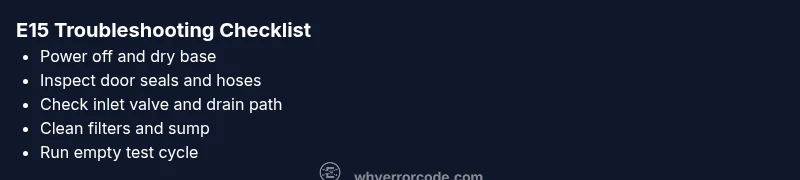
Use this quick-reference list to guide your troubleshooting journey. Start with the simplest checks and progressively move to more involved diagnostics if the error persists:
- [ ] Confirm power is off before any inspection
- [ ] Dry the sump area and inspect for visible leaks
- [ ] Check door seals and hoses for damage or kinks
- [ ] Inspect the water inlet valve and drain pump for operation
- [ ] Clean filters and sump to ensure proper drainage
- [ ] Run an empty test cycle to verify E15 behavior
- [ ] If unresolved, contact a certified technician
For more structured guidance, see the full step-by-step guide and the Why Error Code resources for E15-specific diagnostics and safety precautions.
wordCountInBlock": NULL}
Steps
Estimated time: 60-120 minutes
- 1
Power down and safety check
Unplug the dishwasher and shut off the water supply before any inspection. Ensure the area around the unit is dry to reduce slip hazards and electrical risk.
Tip: Safety first—verifying power and water off prevents shocks during inspection. - 2
Inspect for visible leaks
Remove the bottom panel (if present) and check for damp areas, pooled water, or crusted mineral deposits around hoses and seals. Look closely at the door seal and tub gasket for damage.
Tip: Take photos of any cracked seals to reference during replacement. - 3
Dry the sump and base
Siphon or wipe out standing water from the base pan. Ensure the sump is completely dry before resealing or operating again to observe fresh leakage patterns.
Tip: A dry sump makes leak detection easier after reassembly. - 4
Check inlet and drain paths
Inspect the inlet valve for debris and ensure water supply lines are unobstructed. Examine the drain hose for kinks or clogs and clear the filter/sump area.
Tip: Remove mineral buildup with a soft brush and mild cleaner recommended by the manufacturer. - 5
Test sensors and seals
Gently move the float switch to ensure it travels freely and isn’t sticking. Re-seat or replace seals if you find any gaps or wear.
Tip: Sensor drift is common with hard water; recalibration may be needed after replacement. - 6
Run a test cycle
With no dishes inside, run an empty cycle to verify if E15 recurs. If it does, escalate to professional service for deeper diagnostics.
Tip: Document cycle behavior to share with the technician.
Diagnosis: Bosch dishwasher displays E15 and stops mid-cycle
Possible Causes
- highOverflow in base due to leak or overfill
- mediumWater inlet valve stuck open or overfilling
- mediumBlocked drain path or faulty drain pump
- lowFaulty float switch or level sensor
Fixes
- easyDry the base and inspect for leaks around seals and hoses
- easyInspect and, if needed, replace inlet valve or fix water supply
- mediumClear drain path and clean sump and filter; verify drainage
- hardReplace faulty float switch or sensor if diagnosed
Frequently Asked Questions
What does E15 mean on a Bosch dishwasher?
E15 indicates an overflow condition with water in the base pan, triggering flood protection and stopping the cycle. It usually points to a leak or overfill in the tub, a blocked drain, or a faulty sensor.
E15 means the dishwasher detected overflow in the base and stopped; it’s often from a leak or overfill.
Can E15 be caused by a leak outside the dishwasher?
Yes, leaks around the door seal or hoses can lead to water entering the base and triggering E15.
Leaks around seals or hoses can cause E15 by flooding the base.
Is it safe to troubleshoot E15 myself?
Basic checks like drying the base and inspecting hoses are safe if you unplug the unit and avoid risky disassembly. Do not attempt complex repairs unless you’re confident.
You can do basic checks, but don’t do risky repairs if you’re unsure.
When should I call a professional for E15?
If water remains in the base after cleaning, leaks persist, or E15 recurs after basic steps, contact an appliance technician.
Call a pro if water stays or E15 keeps coming back after your fixes.
Does my Bosch warranty cover E15 repairs?
Warranty terms vary by region and model; check your user manual or contact Bosch support for coverage details.
Check your warranty terms with Bosch support.
Watch Video
Top Takeaways
- Identify E15 as overflow risk and act quickly
- Dry the base and inspect seals for leaks
- Check inlet and drain for blockages or faults
- If E15 persists, contact a professional
- Prevent future E15 with routine maintenance checks