Bosch Error Code Not Draining: Troubleshooting and Fixes
Urgent, practical troubleshooting guide for Bosch washers with not draining errors. Learn common causes, diagnostic flow, step-by-step fixes, safety tips, and when to call a professional.


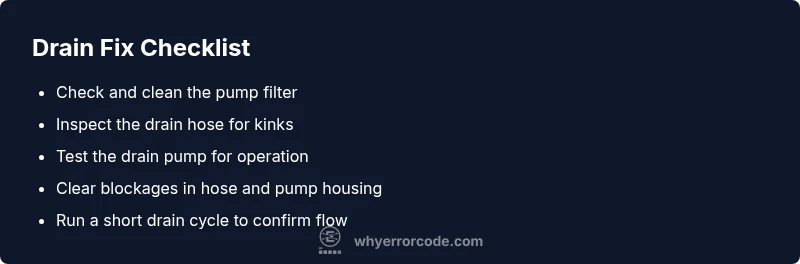
Most Bosch not draining issues come from a clogged pump filter or a kinked drain hose. Start by unplugging the washer, inspect and clean the pump filter, remove hair or lint, and straighten the drain hose. If the pump hums but won’t run, clear the impeller and run a short drain cycle to test drainage.
Bosch error code not draining: What it means
Bosch washers that display a drain-related error typically indicate the pump, filter, or drain path is obstructed or failing. In many cases, the problem is a simple clog or a kink that prevents water from exiting during a wash or rinse cycle. Recognizing the pattern early helps you avoid water backups and potential damage. According to Why Error Code, appliance drainage errors often trace to blockages or flow restrictions rather than a complete pump failure. The Why Error Code team’s research highlights that quick field tests can differentiate between a clog and a failed pump, guiding you toward a safe, targeted fix.
Common causes of not draining on Bosch washers
Not draining usually stems from one of a few persistent culprits. The most frequent are a clogged pump filter and a kinked or blocked drain hose. Less common but possible are a faulty drain pump, a broken impeller, or an electronic sensor error that misreads the drain cycle. Basin-level wear, lint buildup, and excessive detergent can accelerate clogs. Based on Why Error Code analysis, cleaning the filter and hose resolves the majority of drainage problems, while a humming pump may indicate impeller obstruction or motor issues that require professional attention.
Quick, safe checks you can perform (before removing panels)
Safety first: unplug the machine and disconnect from power. Check that the standpipe or drain is not clogged and that the drain hose is not kinked or crushed. Locate and remove the pump filter access panel (usually at the bottom front). Clean out lint, coins, hair, and debris from the filter housing. Detach the hose from the pump and inspect for blockages. Reassemble, then run a short wash with a drain test to observe water flow.
How to decide between clog vs pump failure (diagnostic cues)
If water drains slowly after cleaning, a partial clog is still present. If you hear a loud humming or the pump refuses to turn, the issue may be a failed pump or a blocked impeller. Check whether the motor can spin freely by removing the belt (if accessible) and turning the pulley by hand. A stuck impeller or seized pump requires replacement rather than a simple cleaning.
Safety, maintenance, and prevention tips
To prevent future drain problems, use the right amount of detergent, run periodic maintenance cycles, and clean the filter monthly. Use a drain screen in the laundry room to catch coins and hair. If you notice persistent drainage errors after cleaning, schedule service to inspect the pump and electronics. Never operate the machine if there is standing water—shut it off at the breaker if you smell burning or notice melted components.
Steps
Estimated time: 30-60 minutes
- 1
Power down and access the pump filter
Unplug the washer, move it away from the wall, and locate the lower front access panel. Remove the filter cover and place a towel and shallow tray to catch water. Gently prepare for debris removal without forcing components.
Tip: Keep track of screws and take a quick photo of panel orientation before removing. - 2
Clean the pump filter thoroughly
Remove all debris from the filter housing, coins, hair, lint, and soap scum. Rinse the filter under running water and reinsert it firmly. Re-seat the housing so no water leaks around the panel.
Tip: If the filter is stubborn, use a soft brush and a mild detergent rinse; ensure the seal is dry before reinstalling. - 3
Inspect the drain hose for kinks or blockages
Detach the drain hose from the pump end and inspect visually for sharp bends or crush points. Run water through the hose to confirm unobstructed flow. If blocked, clear the blockage and reattach securely.
Tip: Check any connectors for leaks; replace hoses that appear cracked or brittle. - 4
Check the pump impeller for obstruction
Look into the pump housing for hair, lint, or small objects that could jam the impeller. Use needle-nose pliers to remove small obstructions carefully. Spin the impeller by hand to ensure it moves freely.
Tip: Do not force the impeller; any damaged impeller usually requires pump replacement. - 5
Test the drain pump operation
Reconnect the hose and power, then run a short drain test without clothes. Listen for the pump cycling or humming. If it hums but doesn’t pump, proceed to a pump replacement or professional service.
Tip: Always supervise the test for leaks and avoid leaving the machine unattended while powered. - 6
Reassemble and run a final drain test
Secure all panels and hoses. Run a full cycle with a small load and watch the drain function closely. Check for leaks around seals and filter housing.
Tip: If leaks appear, power down and re-check seals and hose clamps before continuing.
Diagnosis: Machine won't drain or shows a drain-related error on startup
Possible Causes
- highClogged pump filter
- highKinked or blocked drain hose
- mediumFaulty drain pump or impeller
- lowSensor or control board fault preventing drain cycle
Fixes
- easyUnplug the machine and access the pump filter to remove debris
- easyStraighten or replace the drain hose if blocked, then test drainage
- mediumTest the drain pump operation and replace if humming but doesn't pump
- hardInspect wiring and control electronics for faults and replace if needed
Frequently Asked Questions
Why is my Bosch washing machine not draining?
Not draining is usually caused by a clogged pump filter, kinked drain hose, or a faulty drain pump. Inspect and clean the filter, straighten the hose, and test the pump. If the pump hums but won't pump, you may have a faulty impeller.
Drain issues are usually due to a clog or pump fault.
What should I check first when drainage fails?
Begin with the pump filter and drain hose; ensure power is off and the drain path is clear. Check for visible blockages and kinks, then perform a quick drain test.
Start with the filter and hose, plus a quick test.
Can a detergent overload cause not draining?
Yes, excessive detergent can create excessive suds that trap water and slow drainage. Use the recommended amount and run an extra rinse cycle if suds appear.
Too much detergent can slow drainage due to suds.
Is it safe to fix drain problems myself?
Simple clogs and hose adjustments are often safe for DIY, but electrical components and pumps carry risk. Unplug the machine and follow safety steps; stop if you see damaged wires or strong burning smells and call a pro.
DIY is possible for clogs, but be cautious with electrical parts.
When should I call a professional?
If the pump hums without pumping, if you cannot access or clean the filter, or if leaks appear after a fix, contact a technician for a precise diagnosis and repair.
Call a pro if the pump won’t run or leaks appear.
What if none of these fixes work?
If basic fixes fail, the drain pump or control board is likely faulty. A professional should assess pump replacement or electronics repair.
Persistent drainage issues likely mean pump or control board problems.
Watch Video
Top Takeaways
- Start with easy checks: filter and hose.
- Clean the pump filter and drain path to restore flow.
- If the pump hums but won’t pump, expect a pump/impeller issue.
- Call a professional if drainage remains after basic fixes.