Goodman AC Error Code 6: Urgent Diagnostics and Fixes
Urgent guide to diagnose and fix Goodman AC error code 6. Learn common causes, safe quick fixes, step-by-step repair details, and prevention tips to restore cooling quickly.


Goodman AC error code 6 indicates a fault detected by the control system related to airflow or sensor input. The quickest path to relief is a safe power cycle, checking for obvious obstructions, and performing a controlled reset. If the code persists, avoid risky fixes and contact a qualified technician to prevent compressor or wiring damage.
Understanding Goodman AC error code 6 and what it signals
According to Why Error Code, goodman ac error code 6 typically indicates a fault detected by the control logic related to airflow, sensor input, or outdoor unit communication. In many models, the code appears when the system cannot confirm proper refrigerant flow or when a safety interlock blocks startup. The intent is to prevent further damage by stopping the compressor and prompting a diagnostic sequence. For technicians and proactive homeowners, this means you should inspect for obvious issues first, then narrow down the fault using the diagnostic steps described below. This error is more about symptoms than a single failed component, so treat it as a process of elimination rather than a one shot fix.
Common causes behind the code
The most frequent sources of Goodman AC error code 6 are related to airflow and sensor input. A clogged indoor air filter or blocked outdoor condenser can restrict airflow and trigger protective shutdowns. A failing outdoor fan, a loose or burned wiring connection, or a faulty temperature or pressure sensor can also produce this code. In some cases a miscommunication with the thermostat or control board can lead to a spurious read that looks like code 6. By prioritizing airflow and sensor health, you can usually narrow the problem quickly.
Quick checks you can perform safely
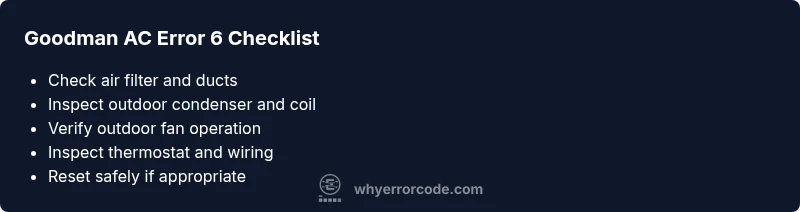
Before you touch any electrical components, power down the system at the main disconnect. Inspect the outdoor unit for debris, leaves, or dirt that could impede airflow, and make sure the condenser coil is clean. Check indoor air filters and the supply vents to ensure air can move freely. Visually inspect the thermostat wiring at the wall and the outdoor unit wiring terminals for obvious loose connections. If you notice damage or scorching, stop and call a pro. These checks are designed to identify clear obstruction or wiring issues without specialized tools.
How sensors and airflow interact to trigger code 6
Error code 6 often arises when the system cannot confirm adequate airflow or when a sensor reports out of range data. Dirty filters, clogged coils, or a blocked return duct reduce airflow, causing pressure and temperature readings to diverge from expected values. Similarly, a faulty sensor or a slipping belt in the outdoor fan can create false readings that the control board treats as a fault. Understanding this interaction helps you target the most common culprits first.
When to reset and when not to reset
A controlled reset can clear transient glitches that trigger code 6, but it is not a substitute for diagnosis. If a reset reappears the same code, it indicates an underlying issue that needs targeted testing. Repeated resets without addressing root causes can mask faults and may allow damage to progress. Always document when you reset and observe whether the code returns after power restoration.
Diagnosis flow for the top suspected cause (airflow)
If airflow restriction is suspected, start with a visual inspection of filters, ducts, and the outdoor coil. A clean filter and unobstructed coils often resolve the issue quickly. If airflow improvement does not clear the code, move to verify sensor readings with a multimeter or factory service tool by a trained technician. This phased approach minimizes unnecessary part replacements and focuses on the most probable causes first.
Safety and professional help considerations
Working near high voltage or refrigerant lines carries risk. If you smell refrigerant, hear hissing, or see oil traces, stop and call a licensed tech. The most common safe path is to perform surface-level checks and request diagnosis from a pro when the code persists beyond basic cleaning and resetting. In warranty scenarios, professional service can protect coverage and ensure proper refrigerant handling.
Cost considerations and warranty notes
Repair costs for Goodman AC error code 6 vary with the chosen path. A basic diagnostic visit may be described in broad terms as a service call, with potential costs tied to parts and labor. If a component replacement becomes necessary, expect costs to scale with the replaced part and installation time. Always verify whether your model and warranty status affect coverage, and avoid unnecessary fixes that do not address the root cause.
Prevention tips to reduce recurrence
To minimize future instances of code 6, commit to regular preventative maintenance. Replace filters every 1–3 months during active seasons, schedule condenser coil cleaning, and keep the outdoor unit free of debris. Maintain proper airflow by opening supply vents and ensuring return paths are clear. Pair these practices with periodic professional inspections to catch sensor or board issues before they trigger the code.
Next steps if code persists after checks
If the code 6 persists after surface checks and a safe reset, the next steps involve a professional diagnostic using advanced tools. Technicians will test sensors, measure refrigerant pressures, and inspect the control board and wiring harnesses. Depending on the findings, you may face sensor replacement, fan motor service, or board repair. The critical point is to stop guessing and pursue a structured diagnostic to prevent further damage.
Steps
Estimated time: 45-60 minutes
- 1
Power down and verify safety
Turn off power at the main disconnect and at the thermostat. Wait a couple of minutes to discharge capacitors before touching any components. This reduces the risk of electrical shock and damage.
Tip: Label any handles or wires you disconnect to avoid confusion later. - 2
Check air filtration and airflow paths
Inspect both indoor and outdoor airflow paths. Replace clogged filters and remove obstructions from return ducts and the condenser area. Ensure outdoor clearance around the unit for efficient operation.
Tip: Clean filters restore airflow quickly; do not run with a visibly dirty filter. - 3
Inspect outdoor unit and coils
Look for dirt, leaves, or debris on the condenser. Gently brush debris away and rinse with low-pressure water if safe. Ensure the unit can pull air freely without obstruction.
Tip: Do not use high-pressure water that can bend fins. - 4
Test basic fan operation
With power restored (briefly for testing only), listen for the outdoor fan motor running smoothly. If it stalls, wobbles, or makes unusual noises, the fan may require replacement or bearing service.
Tip: Never touch moving parts while powered on. - 5
Check thermostat and wiring connections
Inspect thermostat wiring and outdoor unit connections for loose or corroded terminals. Tighten as needed and confirm thermostat communicates with the outdoor unit.
Tip: Ensure the thermostat is set to the correct mode and temperature. - 6
Run a controlled test cycle
After confirming basic health, run a short cycle to observe whether the unit starts, runs, and stops normally. Note any repeated faults or abnormal behavior.
Tip: If the code reappears, document the exact sequence for the technician.
Diagnosis: AC unit displays error code 6 and may not start or run normally
Possible Causes
- highAirflow restriction from dirty filter or blocked condenser
- mediumFaulty outdoor fan or motor
- lowSensor / thermostat input issue or control board fault
Fixes
- easyClean or replace the air filter; ensure outdoor coil is clear
- easyInspect outdoor fan and wiring connections; test fan operation
- mediumReset breakers and inspect control board connections; if persists, call a pro
Frequently Asked Questions
What does Goodman AC error code 6 mean?
Error code 6 generally signals a fault detected by the system related to airflow, sensor input, or control communication. It is a symptom-based alert rather than a single failed component.
Error 6 means there is a fault in airflow or sensors detected by the control system.
Can I fix code 6 myself
You can perform safe checks like cleaning filters and clearing obstructions, but avoid electrical testing or component replacements beyond basic steps if you are not trained. If the code remains, call a qualified technician.
You can do some safe checks, but persistent codes need a professional.
Should I reset the system to clear the code
Resetting can clear a transient fault but does not address underlying issues. If the code reappears after a reset, schedule a diagnostic with a pro.
Resetting may clear it temporarily, but the problem will likely come back without a proper fix.
What parts are commonly replaced for code 6
Commonly affected parts include sensors, outdoor fan components, or control boards. Replacement depends on the diagnosed fault and warranty coverage.
Sensors, the fan, or control board are common culprits, but diagnosis guides replacement.
How long does Goodman AC repair take
Repair timing varies with access and parts. A basic diagnostic visit may take 1–2 hours; major parts replacement could require several hours.
Most repairs take a few hours, depending on what needs to be replaced.
Is there warranty impact if I ignore code 6
Ignoring symptoms can affect warranty coverage if the issue worsens. Check your model warranty and consult the docs before acting.
Ignoring it can risk warranty coverage; always verify with your documentation.
Watch Video
Top Takeaways
- Diagnose Goodman AC error code 6 methodically
- Prioritize airflow and sensor health first
- Avoid risky fixes; call a pro if the code persists