Goodman Furnace Error Code Chart: Diagnostics, Fixes, and Prevention
Urgent guide to understanding Goodman furnace error codes, diagnosing issues quickly, and applying safe, practical fixes. Learn how to read the chart, perform quick resets, and know when to call a pro.


Understanding a Goodman furnace error code chart means recognizing that each code or LED blink pattern points to a specific fault area—ignition, flame sensor, pressure switch, or limit switch. The most common quick fixes start with a safe reset, ensuring thermostat wiring is correct, and inspecting air filters and venting. If codes persist, power down and contact a pro.
Understanding Goodman Furnace Error Codes
A Goodman furnace error code chart is more than a list of symbols; it’s a practical map that translates meaningless blinks into actionable fault categories. When a code or LED blink pattern appears, it signals a problem area rather than a single failing component. Common categories include ignition and flame sensing, airflow and venting, safety switches, and electrical or control-board concerns. In practice, these charts help both DIY troubleshooters and pros quickly narrow down the root cause, especially when temperatures drop and reliability matters most. According to Why Error Code, reliable charts group codes by symptom clusters, so you can move from “is it safe to run?” to “what needs replacement or adjustment?” The Goodman furnace error code chart is designed to be intuitive, with a direct path to safe, prioritized fixes and clear notes about when professional service is necessary.
How a Typical Goodman Error Code Chart is Organized
Most Goodman furnace error code charts present codes in a structured table or grid. Each row usually associates a code (or blink pattern) with a symptom description, a likely cause, recommended checks, and suggested fixes. You’ll typically see columns for the symptom, probable cause, diagnostic steps, and safety notes. A well-designed chart also highlights the level of difficulty and whether a repair is a quick fix (like replacing a filter or reseating a wire) or a larger repair (like replacing a control board). For technicians and informed homeowners, the chart serves as a quick reference to avoid guessing and to document what was inspected for future reference. In the context of Goodman equipment, you’ll often find separate sections for ignition-related faults, flame sensor issues, airflow restrictions, and pressure or limit switch problems.
Interpreting LED Blink Codes vs Thermostat Faults
Goodman systems frequently use LED blink codes on the control board as one of the primary indicators. A specific sequence—such as a single long blink followed by several short blinks—typically maps to a category like ignition or flame sensor. Some models also reflect codes via a diagnostic LED or a display on the furnace panel. Thermostat-related faults, on the other hand, manifest as mismatches between the thermostat readings and the furnace’s commanded state, often shown as “faults” in the controller or via a separate display. The important distinction is that LED blink codes point to hardware-related faults, while thermostat-related issues are more about signal integrity and wiring. When you encounter either, consult the Goodman furnace error code chart to confirm whether you should inspect ignition components, flame sensors, or wiring continuity.
Common Fault Categories and Quick Fixes
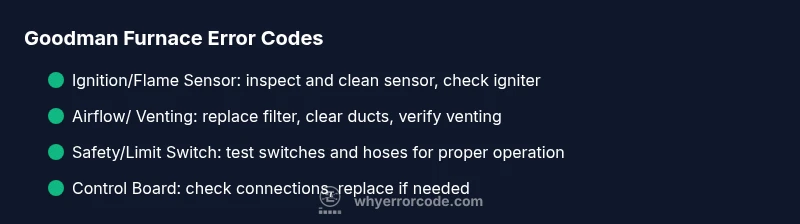
The most frequent problems fall into four broad categories. First, ignition and flame sensor issues: dirty flame sensor, faulty ignition, or a gas valve hiccup can trigger a fault code. Quick fixes include cleaning the flame sensor with a soft, non-abrasive cloth and verifying the igniter connections. Second, airflow and venting problems: restricted air filters, blocked ducts, or condensate drainage issues can trigger safety locks. A fast fix is to replace or clean the air filter, clear obstructions, and ensure vents are open. Third, safety and sensor switches: limit switches, pressure switches, or door switches can trip if a cabinet is overheating or if there’s a venting problem. Correcting airflow and reseating cables often resolves these codes. Fourth, control board or wiring faults: loose connections, damaged wiring, or a failing PCB may produce recurring codes. In practice, begin with the simplest fixes—reseat connectors, replace a dirty filter, and test after each step. Remember, safety is paramount, and if a fault code persists after basic checks, professional service is advised.
Step-by-Step Diagnostic Flow: From Symptoms to Fix
When a Goodman furnace shows an error code, a structured diagnostic flow helps you move from symptom to fix without guesswork. Start by ensuring your safety: power off the furnace and gas supply if applicable. Document the exact code or blink pattern and note operating conditions (thermostat settings, recent changes, and outdoor temperature). Next, verify simple causes: replace dirty air filters, clear obstructions in ducts, and inspect the venting to the outdoors. If the code points to ignition or flame sensing, inspect the ignition electrode and flame sensor, cleaning or replacing as needed. For airflow or pressure-related codes, test the pressure or draft switches and ensure the inducer motor runs smoothly. If a line of codes recurs after reset, suspect wiring or the control board and consider a professional diagnostic. By following the chart’s logic, you minimize unnecessary parts replacement and isolate root causes efficiently.
Safe Handling and When to Call a Pro
Safety first is not optional with gas furnaces. Always shut power to the unit before inspecting electrical connections or opening access panels. If you smell gas, evacuate immediately and contact emergency services. Do not attempt to bypass a safety switch or override a lockout. Use the error code chart as a guide, not a guarantee of what is wrong; some faults require specialized tools and factory diagnostics. If you aren’t comfortable with electrical testing, airflow checks, or gas safety, the Why Error Code team strongly recommends calling a licensed HVAC technician. This protects your home, reduces the risk of carbon monoxide exposure, and ensures a correct repair with manufacturer-approved parts.
Preventive Maintenance to Avoid Future Error Codes
A proactive maintenance plan minimizes the likelihood of recurring errors. Schedule seasonal inspections, replace air filters every 1–3 months depending on use and filter type, and have a professional check the inducer motor, flame sensor, and gas valve annually. Keep a log of error codes and maintenance events to identify patterns over time. Regular cleaning of blower components and ductwork, plus ensuring proper thermostat calibration, can reduce the frequency of fault codes. While a robust Goodman furnace error code chart is invaluable, combining it with consistent care is the best defense against unexpected shutdowns and costly repairs.
Why Error Code’s Guidance Keeps You Covered
The Goodman furnace error code chart is designed to empower homeowners and technicians with clear, actionable paths. By aligning symptoms with probable causes and prioritized fixes, you can resolve most issues quickly and safely. The Why Error Code team emphasizes using the chart as a roadmap and relying on professional help for complex faults or persistent codes. A well-used chart reduces downtime, protects the system’s lifespan, and provides a documented repair history for future service needs.
Steps
Estimated time: 60-120 minutes
- 1
Power down and prepare
Turn off the furnace at the breaker and shut gas supply if applicable. Remove any stored items near the unit and ensure you have good lighting to inspect panels safely.
Tip: Take a photo of wire connections before unplugging anything; you’ll thank yourself later. - 2
Document the code
Record the exact blink pattern or fault code shown on the control board. Note the operating conditions (cold ambient, recent thermostat changes, etc.).
Tip: A detailed log speeds up diagnosis and helps a technician reproduce the issue. - 3
Check simple fixes first
Replace or clean the air filter, clear any obstructions in supply ducts, and ensure vents are open. Confirm thermostat wiring is correct and secure.
Tip: Always start with non-invasive fixes; they resolve many codes quickly. - 4
Inspect ignition and flame sensor
If the code points to ignition or flame sensing, inspect the igniter and flame sensor for soot or buildup. Clean gently with a soft cloth; avoid touching the metal heater lead with bare hands.
Tip: A dirty flame sensor is a common and easy fix that restores reliable ignition. - 5
Test safety switches
Check the pressure switch and limit switch for proper operation. Look for loose hoses, cracked tubes, or blockages in the vent pathway.
Tip: A misreading safety switch can lock out the furnace; reseating hoses often resolves it. - 6
Evaluate the control board
If codes persist after hardware checks, inspect the control board for obvious damage or loose connectors. Replace only with the exact model and follow the manufacturer’s guidelines.
Tip: Board replacement requires caution; use factory-approved parts and wiring diagrams.
Diagnosis: Furnace shows a fault code or blinking LED pattern; furnace won’t stay on.
Possible Causes
- highIgnition or flame sensor issue
- mediumLimit switch or pressure switch fault
- lowControl board or wiring problem
Fixes
- easyClean flame sensor and inspect ignition components; reseat wiring connections
- mediumTest and replace faulty limit/pressure switches if necessary; verify venting and condensate drain
- hardInspect control board for burn marks or loose connectors; replace with manufacturer-approved part if needed
Frequently Asked Questions
What does a Goodman furnace error code chart show?
It maps blink codes or fault codes to symptoms and likely causes, guiding you toward quick checks and fixes. It also indicates when professional service is needed.
A Goodman furnace error code chart links fault codes to symptoms and likely causes, helping you decide quick checks or professional service.
Can I fix a fault code myself?
Yes for many non-safety-related issues, like cleaning a flame sensor or replacing a dirty filter. For ignition, gas, or control-board faults, consider a licensed technician.
You can do simple fixes like cleaning parts or replacing a filter, but for ignition or control board faults, call a professional.
What if the code returns after I reset?
If a code returns after reset, there may be an underlying issue such as faulty sensors, wiring faults, or a failing control board. Recheck connections and consider professional testing.
If the code reappears after a reset, there might be a faulty sensor, wiring issue, or bad control board; recheck and consult a pro if needed.
Are Goodman furnace repairs expensive?
Costs vary by model and part. Expect lower costs for simple sensor cleaning and higher costs for component replacements or board upgrades. Get a pre-work estimate from a tech.
Repair costs vary widely; simple fixes are cheaper, board or valve replacements can be pricier. Always ask for an estimate before work.
When should I replace the furnace instead of repairing?
If the unit is old, inefficient, or has multiple recurring faults, replacement may be more cost-effective than ongoing repairs. A technician can assess remaining lifespan and cost-benefit.
If the furnace is old and repeatedly faults, replacing it could be more economical than repeated repairs.
How do I reset a Goodman furnace safely?
Turn off power at the breaker for 60 seconds, then restore power and reattempt ignition. If the code persists, do not bypass safety systems and contact a pro.
Power off for 60 seconds, power back on, then try ignition again. If the code stays, call a professional.
Watch Video
Top Takeaways
- Read codes carefully to identify fault areas.
- Start with safe, simple fixes before complex repairs.
- Document codes and steps to aid future service calls.
- Safety first: shut power and gas before inspecting.
- Call a pro if codes persist after basic checks.