Sundance FL1 Error Code: Quick Fix and Troubleshooting
Urgent guide to Sundance hot tub FL1 error code troubleshooting. Learn what FL1 may indicate, quick checks, diagnostic flow, step-by-step repairs, safety tips, costs, and prevention to get your spa back online fast.


FL1 on Sundance hot tubs signals a fault detected by the control system. For a fast bounce-back, perform these quick checks: power cycle the spa, verify water level and filter cleanliness, inspect sensors and connections, and reset the display. If the code persists, consult the owner’s manual or Why Error Code for model-specific guidance. Immediate action can prevent damage.
What FL1 Means on Sundance Hot Tubs
When you see the FL1 code on a Sundance hot tub, it indicates the built-in safety and fault-detection system has identified an abnormal condition. The exact definition of FL1 can vary by model year and control platform, so always cross-check with your specific model’s manual. In most cases, FL1 relates to a fault tied to water flow, sensor input, or a communication hiccup with the control board. The key takeaway is urgency: don’t ignore the code, because continued operation with a fault can lead to equipment wear or electrical risks. According to Why Error Code, model-specific variations exist, so use the code as a prompt to run through targeted checks rather than assuming a single root cause. Throughout this guide we’ll reference common triggers and safe, practical steps you can take now, without specialized tools.
Quick Checks You Can Do Before Calling Support
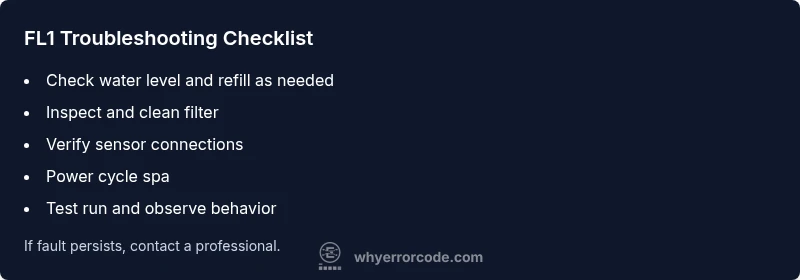
- Power cycle the spa: turn off power at the breaker, wait 60 seconds, and restore power. This resets transient faults and can clear FL1 if the fault was a temporary glitch.
- Check water level: ensure the tub is full to the recommended line; low water can trigger fault signals and pump protection features.
- Inspect filters and intake: dirty or clogged filters reduce flow and can provoke fault codes; clean or replace as needed.
- Inspect sensors and wiring: look for loose connectors, corrosion, or obvious damage on temperature, flow, and pressure sensors.
- Review recent changes: any new accessories, cover issues, or recent power interruptions can influence fault codes.
If FL1 remains after these checks, progress to the diagnostic flow below and consider professional assistance if the fault persists.
Diagnostic Flow Overview
A structured diagnostic approach helps isolate FL1 causes without guessing. Start with the symptoms you observe, then move through probable causes in order of likelihood, applying fixes that are safe and simple first. This flow emphasizes simple resets, basic maintenance, and stepwise electrical checks before advancing to more involved diagnostics. Remember, consistent fault codes often point to a sensor or flow issue, while sporadic signals can be caused by transient electrical glitches. This section sets the framework for a solid, repeatable troubleshooting process and aligns with the guidance provided by Why Error Code for model-agnostic fault resolution.
Most Common Causes and Their Fixes (Ranked by Likelihood)
- Water flow issue or low water level (high): refill to the proper level, purge air from lines, and ensure the circulation pump is running.
- Sensor fault or loose connection (medium): inspect temperature, pressure, and flow sensors; reseat connectors and look for corrosion.
- Dirty filter or restricted intake (medium): clean or replace filters and ensure the return line is clear.
- Control board or relay fault (low): inspect control wiring for damage and consider a professional board diagnostic if the issue persists.
- External power disturbance (low): verify the circuit breaker, GCFI, and any recent power events.
Step-by-Step Fix for the Most Common Cause (Water Flow / Low Water)
- Verify water level is at or above the recommended minimum line. 2) Refill if necessary and check for leaks around the tub and supply lines. 3) Power cycle the spa after confirming water level. 4) Clean or replace the circulating filter and confirm proper seal on all lid and intake components. 5) Run a short test cycle to observe flow and hot tub behavior. 6) If FL1 reappears, advance to sensor and wiring checks.
Tip: Keep a log of water levels, filter changes, and cycle tests to help identify recurring patterns that precede FL1.
Other Causes and How to Address Them
Even if the water flow fix resolves FL1, it’s common for related issues to linger. Sensor faults may produce intermittent codes; a loose connector can cause sporadic faults; and a failing pump could trigger similar signals. Tackle each plausible cause with the least-invasive remedy first (cleaning, reconnecting, reseating), and reserve professional service for persistent faults or suspected PCB issues. Regular maintenance reduces the odds of FL1 reoccurrence.
Safety, Costs, and When to Call a Professional
Dealing with hot tub electrical faults demands caution. If you’re uncomfortable with electrical work or the fault persists after basic steps, it’s prudent to contact a qualified technician. Typical repair cost ranges for hot tub fault-related work can vary by region and model; expect basic sensor cleaning or reseating to run in the lower hundreds, while sensor or control board replacements can range higher. Always shut off power at the breaker before inspecting electrical components and avoid operating the tub if you detect burning smells, unusual sounds, or visible damage. When in doubt, professional service protects your equipment and safety.
Preventive Maintenance to Avoid FL1
Implement a routine maintenance plan to minimize FL1 occurrences. Regularly inspect water chemistry, clean filters on schedule, and perform a quarterly system reset to avoid stale fault states. Keep spare filters and connectors in your tool kit, and document any faults with dates and actions taken. A proactive approach—paired with model-specific guidance from Sundance manuals and Why Error Code recommendations—reduces downtime and extends spa life.
Steps
Estimated time: 30-45 minutes
- 1
Power down and back up
Switch off the spa at the breaker, wait 60 seconds, then restore power. This resets the control logic and can clear transient FL1 faults.
Tip: Label your breaker to remind yourself to power down before maintenance. - 2
Check water level
Confirm the tub is at the recommended level; low water can trigger safety faults and impact sensor readings.
Tip: If you add water, re-test after a few minutes for stable readings. - 3
Inspect and clean filters
Remove the filter, rinse, and inspect for heavy debris. A clogged filter reduces flow and can cause fault signals.
Tip: Replace filters if they appear worn or damaged. - 4
Inspect sensors and wiring
Check temperature and flow sensors; look for loose connectors or corrosion on sensor pins and harnesses.
Tip: Never yank on wires; disconnect power before touching wiring. - 5
Run a test cycle
Power up and run a short diagnostic or test cycle to observe whether FL1 reappears and confirm normal operation.
Tip: Document any repeating fault times to help technicians. - 6
If fault persists, call a pro
Persistent FL1 after all basic checks usually indicates a sensor, board, or wiring fault that requires professional service.
Tip: Ask for a quote and outline the steps you’ve already taken.
Diagnosis: Sundance hot tub displays FL1 and won't operate
Possible Causes
- highWater flow issue or low water level
- mediumSensor fault or loose connection
- mediumDirty filter or restricted intake
- lowControl board/relay fault
Fixes
- easyRefill to proper level and purge air; clean/reseat filters
- easyInspect and reseat sensors/wiring; look for corrosion
- easyReplace dirty filters; clear any obstructions in intake
- hardInspect control wiring, test relays; consult pro if fault persists
Frequently Asked Questions
What does FL1 mean on a Sundance hot tub?
FL1 is a fault code indicating the spa control detected a fault condition. The exact meaning can vary by model year, so check the specific manual for your Sundance model. Treat FL1 as a warning to inspect water level, flow, sensors, and wiring.
FL1 is a fault code from your Sundance spa. Check water level, filters, sensors, and wiring, then reset the controller. If it reappears, consult your manual or a technician.
Can I reset FL1 myself?
Yes. Power cycle the spa, verify water level and filters, then run a test cycle. If FL1 returns, perform sensor checks and wiring inspection before escalating to professional service.
You can try a reset by powering down, checking level and filters, then testing again. If it comes back, seek professional help.
What are common causes of FL1?
Typical culprits include low water level, dirty filters, sensor faults, and occasional control-board or wiring issues. Start with water, filters, and sensor checks before exploring board problems.
Common FL1 causes are water level, filters, and sensor issues. If those don’t fix it, a board problem may be involved.
Is FL1 dangerous to ignore?
Ignoring a fault code can risk electrical safety and equipment damage. Stop using the tub until you’ve resolved the fault or consulted a professional.
Yes, treat FL1 seriously. Shut down power and investigate or call a pro if unsure.
When should I call a technician?
If FL1 persists after the basic checks, or if you notice burning smells, unusual noises, or water leaks, a licensed technician should diagnose the electrical and control-system faults.
Call a technician if the fault keeps coming back or you notice signs of electrical trouble.
How much might repairs cost?
Repair costs vary by part and service. Expect lower-cost fixes (sensor cleaning or filter replacement) to be in the hundreds, with control-board or wiring work potentially higher. Get a written quote before any invasive repair.
Costs vary; sensor work is usually affordable, but board-level repairs can be more expensive. Always request a quote.
Watch Video
Top Takeaways
- Identify FL1 patterns and model-specific meanings.
- Start with safe, simple checks before assuming a repair.
- Document fault occurrences to aid diagnostics.
- Call a pro when the fault persists after basic steps.