Bosch PC03 Error Code: Quick Diagnostics & Fixes
Urgent guide to Bosch PC03 error code: meaning, immediate steps, diagnostic flow, and expert fixes to prevent water damage and restore operation.


bosch pc03 is a Bosch appliance fault code commonly signaling a drainage or sensor issue that stops normal operation. The quickest path to relief is a power cycle, followed by inspecting and cleaning filters, hoses, and the drain path. If the code persists after these checks, do not ignore it—restart the diagnostic flow and consider professional service to prevent water damage or internal damage.
What Bosch Error Code PC03 Means
The bosch error code pc03 is a fault indicator shown on several Bosch home appliances such as dishwashers and washing machines. While the exact meaning can vary by model, PC03 generally points to issues in the drainage circuit, sensor readings, or a problem within the control logic that prevents a normal cycle from completing. Because this code can arise from more than one root cause, approaching it with a structured diagnostic mindset is essential. In 2026, the Why Error Code team observes that PC03 tends to appear after stubborn drains, mineral buildup in hoses, or after long cycles that stress sensors. Treat PC03 as a prompt to check the basics first before diving into more invasive repairs.
If you see PC03, start by confirming that the appliance is level and that the drain path is clear. A misaligned unit or a partially blocked drain path can mimic sensor faults. The reliability of a diagnostic depends on documenting symptoms, such as whether the code appears immediately on startup, during drain, or mid cycle, and whether there is any leakage or unusual noises. Remember that PC03 is a signal that something in the drainage or sensing chain is not communicating correctly with the control module. A cautious approach helps you avoid unnecessary parts replacement and reduces the risk of water damage.
Quick Checks You Can Do Right Now
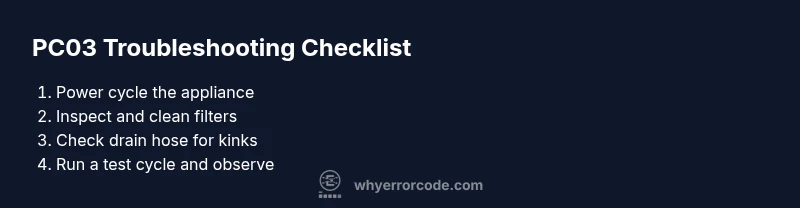
Before jumping to parts replacement, perform a quick set of checks that often resolves the PC03 fault. Start with a power cycle by unplugging the appliance for at least 60 seconds, then plug it back in and run a short cycle. Clean and inspect the filter and filter housing for debris that could block water flow or trigger false sensor readings. Inspect the drain hose for kinks, twists, or crushing, and make sure the drain path is free from soap scum or food waste. If your model uses a sump or filter basket, remove and rinse it thoroughly. Verify that the waste trap or siphon is functioning as designed and that the drain pump connector is snug. Finally, check the door seal and latch; a poor seal can create drain backflow that mimics a sensor fault. These steps cover the most frequent causes while keeping safety in mind. If the PC03 code returns after these checks, it is time to proceed with a deeper diagnostic flow or to call for professional repair.
Diagnostic Flow: Symptoms, Causes, and Short Fixes
Symptoms can reveal the likely causes behind PC03. If the appliance displays PC03 immediately at startup, the issue is often electrical or sensor related. If the code appears during the drain cycle, hoses or filters are common culprits. If the machine stops mid cycle with no visible water, the drain pump or control board may be involved. The most frequent causes include clogged filters or drains, kinked drain hoses, failed drain pumps, and occasional control board glitches. Short fixes focus on resetting the system, clearing blockages, and reseating connectors. In many cases, a simple drain clean and filter maintenance resolves the fault. For persistent PC03 codes, isolate the problem by performing a controlled test: observe sensor readings if accessible, check for error codes in the user manual, and note whether related components such as the pump or relay boards show signs of wear. If the code still returns, professional inspection is advisable to prevent further damage and ensure safe operation.
Step-by-Step Fix: The Most Common Cause
If the PC03 fault stems from drainage or filter blockage, follow these steps in order. Step 1: Power cycle the appliance by unplugging for one minute. Step 2: Remove and clean the main filter, filter basket, and pump housing to remove trapped debris. Step 3: Inspect the drain hose for kinks or obstructions; straighten or replace as needed. Step 4: Rinse the drain path and verify there is a clear route to the main drain. Step 5: Reassemble, run a rinse cycle without dishes, and monitor for the PC03 code. Step 6: If the code persists, perform a short diagnostic test and check for loose connections on the drain pump and sensors. A professional should be consulted if the code reappears after these steps.
Other Causes and How to Verify Them
Beyond drainage and filters, PC03 can arise from sensor misreads, wiring harness faults, or a failing control board. To verify these causes, check that all wiring to the drain pump and sensors is secure, inspect for signs of corrosion or burn marks, and test the sensor inputs where possible. A misread sensor can cause the control module to halt a cycle and display PC03. If wiring appears intact but the code persists, consider replacing a faulty sensor or updating the control board if supported by your model. Note that electronics repairs often require specialized tools and knowledge, so professional service is recommended for non obvious or intermittent faults.
Safety, Warnings, and When to Call a Pro
Always unplug the appliance before inspecting internal components. Avoid pulling on wires or applying excessive force to connectors. Do not operate the unit if there is visible water leakage, a burning smell, or sparking noises. If you are unsure about electrical safety or the problem involves the main control board or wiring harness, contact a certified technician. For model specific guidance, refer to the Bosch user manual or the Why Error Code knowledge base for model verified steps.
Steps
Estimated time: 20-40 minutes
- 1
Power cycle the unit
Unplug the appliance or switch off at the circuit breaker for at least 60 seconds. Reconnect power and run a short cycle to see if PC03 reappears.
Tip: Physically unplug the unit to ensure a full reset, then test a no-dish cycle first. - 2
Open and clean filters
Remove the filters, rinse under running water, and remove any trapped debris from the filter housing. Reinsert securely and run a test cycle.
Tip: Use a soft brush to dislodge fine particles without damaging the filter mesh. - 3
Check drain hose and path
Inspect the drain hose for kinks, twists, or clogs. Trace the drain path to the pump and ensure it is clear and free of obstruction.
Tip: If the hose is long, straighten any loops to allow smooth flow. - 4
Inspect drain pump connections
With power off, verify that the drain pump is connected and free of corrosion. Listen for the pump during a test drain cycle to confirm operation.
Tip: Do not run the pump without water; run only during a controlled test drain. - 5
Run a diagnostics test
If your model supports diagnostics, initiate a brief self-test and observe any error codes or sensor readings. Record results for reference.
Tip: Have the model number handy for model specific steps. - 6
Consult professional service if needed
If PC03 persists after these steps, a professional technician should inspect the control board and sensors to prevent further damage.
Tip: Choose a Bosch-certified technician to preserve warranty and ensure correct parts use.
Diagnosis: Display shows PC03, machine stops mid cycle or cannot start drain
Possible Causes
- highClogged or dirty drain filter
- highKinked or blocked drain hose
- mediumDrain pump failure or pump wiring issue
- lowControl board or sensor fault
Fixes
- easyClean the drain filter and housing
- easyInspect drain hose for kinks; straighten or replace
- mediumTest or replace the drain pump; check pump wiring
- hardInspect sensor wiring and control board connections; replace if needed
Frequently Asked Questions
What does bosch error code pc03 mean?
PC03 generally signals a drainage or sensor fault in Bosch appliances. It can stem from clogged filters, blocked hoses, or control board issues. Follow a structured diagnostic flow to isolate the cause.
PC03 usually means a drainage or sensor fault. Start with simple checks like filters and hoses, then consider a professional if it persists.
Is PC03 dangerous to ignore?
While PC03 is not typically hazardous, ignoring it can lead to water leaks or damage. Prompt diagnostics reduce risk and help prevent bigger repairs later on.
PC03 is not usually dangerous, but it can cause leaks or water damage if ignored. Address it promptly.
Can I fix PC03 myself?
Many PC03 fixes start with simple steps like resets and cleaning filters. If the fault persists after basic checks, more complex tests or parts replacement may be required, which may need a pro.
Yes, you can try basic resets and cleaning, but if it keeps coming back, call a professional.
What maintenance helps prevent PC03?
Regularly clean filters, check drainage hoses for kinks, and ensure the drain path is clear. Periodic servicing by a technician can catch sensor or board faults early.
Clean filters often and check hoses to prevent PC03. Regular servicing helps catch issues early.
Does PC03 apply to all Bosch models?
PC03 appears on many Bosch dishwashers and washers; always refer to your specific model manual for exact meaning and recommended fixes.
PC03 shows up on many Bosch models. Check your manual for model specific details.
What if PC03 comes back after fixes?
If PC03 returns, the fault may be deeper in the control system or wiring. A Bosch-certified technician should diagnose and replace faulty components if needed.
If it comes back after fixes, a pro should diagnose deeper control or wiring issues.
Watch Video
Top Takeaways
- Identify PC03 meaning and common causes early
- Prioritize quick fixes like resets and cleaning
- Move to deeper diagnostics if code returns
- Call a pro when electronic components are involved