Buderus Boiler 6A Error Code: Troubleshooting Guide
Urgent guide to diagnose and fix Buderus boiler 6A error code with a structured flow, step-by-step fixes, safety tips, and when to call a pro.


6A on a Buderus boiler generally signals an ignition or flame signal failure that triggers a safety lockout to stop the burner. This means the boiler detected no flame during ignition or a flame signal fault. The quickest actions are a safe reset, verifying gas supply and venting, and inspecting the ignition electrodes and flame sensor before proceeding with deeper testing.
What the 6A Error Code Means for Buderus Boilers
The 6A error code on a Buderus boiler typically signals an ignition or flame signal problem that prevents the burner from staying lit. It triggers a safety lockout to stop fuel delivery, protecting you from a potentially unsafe flame. Quick reality check: if you see 6A, you should assume the system detected a failed flame or no flame during ignition. Start with basic checks, then move to targeted diagnostics if the issue persists.
In many homes, the root causes are a dirty flame sensor, a faulty ignition electrode, or irregular gas supply. Environmental factors such as drafts around the venting, improper airflow, or recent power interruptions can also trigger a spurious flame failure. While 6A is common across Buderus models, the exact procedure to clear the lockout varies by model year and control module. Always consult your manual for model-specific sequences before performing advanced testing.
Quick Fixes You Can Try Safely
Before you touch the boiler, switch off power at the breaker and shut off the gas if accessible. Do a simple reset by turning the unit off, waiting 60 seconds, then turning it back on. Check for obvious issues like dirty flame sensor or carbon buildup on the burner. If you notice loose connections, corrosion, or signs of gas odor, do not proceed—call a technician immediately. After a safe reset, listen for a steady ignition sequence and observe the flame for consistent operation. If the flame extinguishes or the 6A code reappears, proceed to the diagnostic steps below or contact a pro. Also verify that the venting system is unobstructed and that there is adequate combustion air in the room.
Quick Diagnostics to Identify the Likely Cause
A few symptoms to note:
- Burner fails to ignite or repeatedly locks out with 6A
- Occasional spitting or irregular flame
- Visible dirt on the flame sensor or electrodes
Possible causes (likelihood):
- Dirty or faulty flame sensor (high)
- Worn or misaligned ignition electrodes (high)
- Gas supply interruption or valve issue (medium)
- Control board fault or relay issue (low)
Common fixes (difficulty):
- Clean the flame sensor and ignition area (easy)
- Inspect ignition electrodes and replace if damaged (medium)
- Verify gas supply and valve operation (easy)
- Reset or service the control board (medium)
What to Check First If 6A Persists
If the 6A code remains after a basic reset, perform a focused check:
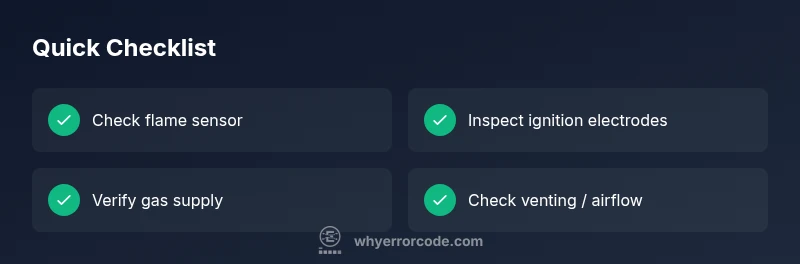
- Inspect and clean the flame sensor; look for oxidation or buildup and reseat its wiring.
- Examine ignition electrodes for wear, cracks, or misalignment; replace if necessary.
- Confirm gas supply is uninterrupted: valve fully open, regulator functioning, and there’s no odor.
- Verify venting is clear of obstructions and there’s adequate combustion air in the room.
- Review recent power events or water leaks that could affect the control board.
- If the issue still isn’t resolved, do not bypass safety features—schedule professional service.
Other Causes and Their Fixes
Beyond ignition and flame-signal faults, several other issues can trigger 6A:
- Dirty or damaged flame sensor wiring leading to intermittent readings; fix by cleaning or replacing sensor wiring.
- Faulty control board or safety relay that misreads the flame signal; this often requires professional diagnosis and possibly a replacement module.
- Condensation or water ingress in the control compartment causing intermittent sensor faults; dry and reseal as needed.
- Combustion air restriction due to blocked intake or poorly vented exhaust; clear obstructions and ensure proper airflow.
Fixes vary from simple sensor cleaning (easy) to board replacement (hard) or professional gas line checks (professional-only). Always document symptoms and service history for future reference.
Safety, Costs, and When to Call a Pro
Safety should never be compromised with gas appliances. If you smell gas, hear hissing, see a yellow flame, or if any step feels unsafe, stop and call a licensed technician immediately. For non-emergency cases, expect cost ranges that cover parts and labor, with variations by model and region: basic sensor cleaning or replacement might be on the lower end, while ignition control board replacement or gas valve work tends toward the higher end. The exact price can only be determined after a technician confirms the fault and required parts.
Additionally, if your boiler is older or previously had multiple lockouts, ongoing 6A issues may indicate broader system degradation that merits a full service and possible component upgrades.
Prevention: Keeping 6A Out of Your Future
Regular maintenance is your best defense against 6A lockouts. Schedule annual professional boiler inspections, clean the burner and flame sensor during service visits, and replace worn ignition parts on schedule. Keep the combustion air intake clear, ensure venting is unobstructed, and monitor for gas odors or unusual burner sounds. Maintaining a consistent service history helps technicians diagnose recurring issues faster and reduces the risk of unexpected shutdowns.
Steps
Estimated time: 45-75 minutes
- 1
Power Down and Safety Check
Turn off the boiler and cut power at the breaker. If you smell gas, evacuate and call emergency services. Wait 60 seconds to allow any residual gas to clear before proceeding.
Tip: Always ensure you have adequate ventilation and no open flames nearby. - 2
Verify Gas Supply
Check that the gas valve is fully open and that the regulator is delivering pressure consistent with your system's specifications. If you’re unsure about gas pressure, contact the utility or a licensed technician.
Tip: Do not test gas pressure with improvised equipment; use proper gauges or professional service. - 3
Inspect Flame Sensor and Electrodes
Remove any buildup from the flame sensor and ignition electrodes using a soft brush and lint-free cloth. Re-seat wires and inspect for signs of wear, corrosion, or cracks in the electrodes.
Tip: Handle components gently; damaged parts can worsen ignition reliability. - 4
Reset and Re-Test
Power the boiler back on and initiate a cold start. Listen for a clean ignition sequence and observe the flame stability for at least one full cycle. If the 6A code returns, record the sequence and prepare for professional service.
Tip: If the flame goes out during initial startup, stop and call a pro—do not attempt further DIY tests. - 5
Escalation to Professional Service
If the problem persists after the basic checks, schedule a service visit. The tech will test the control board, gas valve, combustion air, and venting with specialized tools.
Tip: Provide service history and recent changes to help the technician diagnose faster.
Diagnosis: Buderus boiler shows 6A error code and burner fails to stay lit
Possible Causes
- highDirty or faulty flame sensor
- highWorn or misaligned ignition electrodes
- mediumGas supply interruption or valve issue
- lowControl board fault
Fixes
- easyClean the flame sensor and ignition area; reseat wiring
- mediumInspect ignition electrodes; replace if damaged or worn
- easyVerify gas supply, valve operation, and regulator health
- mediumReset the control board or test for faults with a professional diagnostic
Frequently Asked Questions
What does 6A mean on a Buderus boiler?
6A generally indicates an ignition or flame signal fault that triggers a safety lockout. It means the boiler detected no flame during ignition or an unreliable flame signal. You should perform safe basic checks and follow the diagnostic flow if the error persists.
6A means the boiler detected a flame fault and shut down for safety. Start with a safe reset and basic checks, then proceed with diagnostics if needed.
Can I reset a Buderus boiler 6A myself?
Yes, you can perform a safe reset after turning off power and gas, waiting a minute, then restarting. If 6A returns, avoid further DIY testing and contact a licensed technician.
You can reset, but if it repeats, don’t push further. Seek professional help.
Is a 6A error dangerous to ignore?
Ignoring a 6A error can lead to repeated lockouts and potential gas-related hazards. Treat it as a fault requiring proper diagnosis and safe repairs before normal operation.
It’s a safety lockout—don’t ignore it. Get it checked to prevent hazardous situations.
How much does a 6A repair typically cost?
Repair costs vary widely based on the fault and parts required. Expect a broad range for parts and labor, typically from a low hundreds to mid-range hundreds, depending on whether sensor, ignition, or control board work is needed.
Costs vary; expect a few hundred dollars for sensor or ignition work, more for board replacements.
What should I check first if 6A appears again?
Check for a loose wire, dirty flame sensor, or buildup on the burner. Verify gas supply and ensure venting is clear. If in doubt, call a pro rather than attempting risky fixes.
Do quick sensor and gas checks, then call a pro if it still happens.
When is urgent professional service required?
If you smell gas, hear gas leakage, or the boiler repeatedly locks out with 6A, seek emergency assistance and a licensed technician as soon as possible.
If gas is detected or the issue repeats, call a pro urgently.
Watch Video
Top Takeaways
- Identify 6A as an ignition/flame fault and treat as a safety lockout.
- Start with a safe reset and basic sensor checks before advanced testing.
- Follow a structured diagnostic flow to isolate the root cause.
- Call a pro promptly if symptoms persist after initial fixes.
- Maintain annual service to prevent future 6A errors.