Dishwasher Error Code UP: Quick Diagnosis and Repair Guide
Urgently troubleshoot dishwasher error code UP with a clear diagnostic path, practical quick fixes, and cost ranges. Learn when to DIY and when to call a pro—brought to you by Why Error Code.


Dishwasher error code UP means the appliance detected an unresolved fault during the wash cycle and halted progress. UP typically points to a door interlock or latch issue, a load imbalance, or sensor troubles that keep the unit from advancing. Quick fixes include ensuring the door closes securely, redistributing dishes, and restarting. If the code persists, deeper diagnostics may point to a faulty door switch or control board.
What dishwasher error code UP means
In the world of dishwashers, UP is not a universal power-up signal. When your machine shows UP, it usually indicates the cycle was interrupted by a fault detected in or around the door interlock, latch, or a load imbalance that confuses the sensors. According to Why Error Code Team, UP is often a safety-driven halt, designed to prevent water leakage or damage from an uncontrolled wash. While UP can stem from minor nuisances like a partially closed door, it can also reflect more systemic issues with the door switch or the control board that governs cycle progression. Understanding this distinction helps you triage quickly and reduce downtime in your kitchen.
Because UP is commonly related to what you physically interact with—the door and the rack configuration—many fixes are low-risk and can be completed with basic tools. Start with the simplest checks, like door alignment, then move to component tests if those don’t resolve the problem. Early actions save time and money, and they’re often enough to keep the dishwasher from reverting to UP on the next cycle.
Common triggers and symptoms
The UP code can appear in a variety of symptom combinations. Look for signs such as the door not latching firmly, a beep or digital blink before UP appears, or water pooling at the base of the tub. You might notice a dish rack loaded unevenly, which can trigger a sensor or float switch. In some cases, a partial power cycle (unplugging for a minute) resets minor sensor glitches that cause UP to reappear. If UP accompanies a noisy pump or unusual odors, those are red flags pointing to deeper hardware issues. Consistent UP across repeated cycles usually means a fault in a critical component rather than a one-off misalignment. Why Error Code analysis shows that most users regain normal operation after addressing loading and door issues, but persistent UP often requires component testing.
Typical symptoms to document: door won’t latch, dishwasher stops mid-cycle, water remains in the tub, or digital indicators flash UP in sequence. Collecting these signals helps you communicate the scope of the fault if you end up talking to a professional.
Quick fixes you can try now
Before unpacking the internal electronics, start with the simplest remedies. These quick fixes are designed to work in many cases and require no special tools:
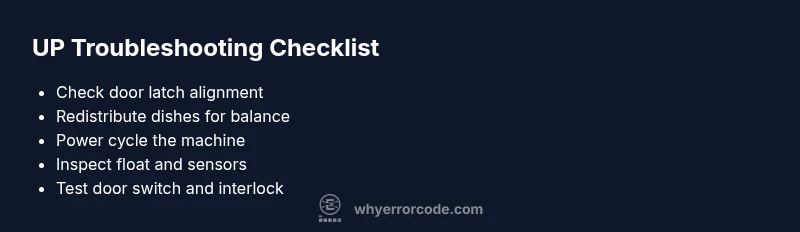
- Check the door latch: Make sure the door is fully closed, latched, and not obstructed by a dish or cutlery.
- Redistribute the load: Uneven stacks can trigger sensors. Reorganize the rack so heavy items are balanced and locked in place.
- Power cycle the machine: Turn off the breaker for 60 seconds and restart to reset control logic.
- Inspect seals and gaskets: A warped door seal can fool the interlock. Replace if damaged.
- Run a test cycle with no dishes: This isolates the problem to the door/interlock rather than the spray arms or filtration. If UP persists after these actions, it’s time to move into deeper diagnostics where you’ll test switches, sensors, and the control board.
Deeper diagnostics and tools
If the quick fixes don’t resolve UP, you’ll need to test components that are not user-serviceable on most models. Start with the door interlock and switch: listen for a click when you close the door, and use a multimeter to verify continuity if you’re comfortable. Check the float switch for freedom of movement and proper operation, ensuring it rises and falls with water level rather than sticking. Inspect the wiring harnesses at the door latch, control board, and sensors for loose connectors or damaged insulation. A failing control board or sensor can mimic simple latch issues, so be methodical: verify power supply to the control module, test corresponding wires, and consult your model’s service manual for exact pinouts.
Document all findings and consider replacing any components with visible wear or burn marks. If you’re uncomfortable performing electrical tests, this is the point where professional service saves you time and reduces the risk of further damage.
When to consider repairs vs replacement and cost ranges
Many UP-related repairs fall into a cost spectrum that depends on the faulty component and the model you own. Simple fixes like replacing a worn door latch or reseating connectors are typically on the lower end of costs, while door interlock assemblies and control boards can push the price higher. As a rough guide (in USD, ranges only): door latch replacement can cost roughly $60–$150, the door interlock or switch might be $80–$200, and a control board replacement can range from $120–$500 depending on the machine and region. Pumps, sensors, or wiring harnesses fall between these tiers. Why Error Code Team notes that many UP issues don’t require full replacement if diagnosed early, but some models with integrated controllers may require professional parts and calibration.
Safety, maintenance tips, and when to call a professional
Safety first: unplug the machine before opening access panels, and avoid touching live components. Regular cleaning of the filter and spray arms reduces buildup that can trigger sensors. Ensure proper drainage by checking the drain hose for kinks or blockages, and keep the floor dry to avoid slip hazards when testing components. If the UP code reappears after performing the basic checks and a controlled power cycle, or if you encounter sparking, burning smells, or visible damage to wiring, call a certified technician. For certainty and to prevent warranty voids, professional service is advised when dealing with control boards or electrical components.
Steps
Estimated time: 45-60 minutes
- 1
Power down and unplug
For safety, disconnect the machine from power and water supply. Wait 60 seconds to reset the control board, then reconnect and attempt a test cycle with no dishes.
Tip: Use a flashlight to inspect the inside without leaning over the open door. - 2
Inspect door latch and interlock
Check that the latch engages fully and the strike plate isn’t bent. Listen for a distinct latch click during closure. If there’s any looseness, tighten screws or replace the latch.
Tip: A loose latch can fool the interlock; fix it before testing further. - 3
Check door seals and gasket
Look for bent or damaged seals around the door. A compromised seal may prevent proper door closure and trigger UP. Replace if needed and re-test.
Tip: Use a damp cloth to wipe the seal and ensure a clean, level surface. - 4
Redistribute the load
Arrange heavy items evenly; avoid tall items that block spray arms. Re-run a short cycle to see if UP reappears.
Tip: Place tall items in the back only if your model allows this; otherwise adjust accordingly. - 5
Test float and sensors
Inspect the float for freedom of movement. If it’s stuck, gently free it; test with a small amount of water to confirm a correct level signal.
Tip: Do not force the float; use gentle movement and verify it returns to the resting position. - 6
Call a professional if unresolved
If UP persists after these steps, a pro should test the door switch, wiring harness, and control board for faults or calibration needs.
Tip: Provide the technician with a quick log of symptoms and attempted fixes.
Diagnosis: Dishwasher displays UP during a cycle and stops
Possible Causes
- highDoor interlock or latch fault
- mediumLoad imbalance triggering sensor confusion
- lowFaulty door switch or control board
Fixes
- easyInspect and reseat door latch; ensure door closes firmly and retry
- easyUnload and reload dishes to balance the load and run a test cycle
- hardTest or replace the door switch; inspect wiring and control board as needed
Frequently Asked Questions
What does dishwasher error code UP mean?
UP generally indicates a fault that halts the cycle, most often related to the door interlock or latch, but it can also involve a load imbalance or sensor issue. Start with door checks and load adjustment.
UP means the cycle was halted by a door or load issue. Start with the door and load checks, then test sensors if needed.
Can UP be fixed at home?
Many UP issues can be resolved at home with simple fixes like reseating the door latch, redistributing dishes, and performing a power reset. If the problem persists, deeper diagnostics may require a professional.
Yes, many UP issues can be fixed at home with basic checks, but persistent cases may need a pro.
How long does a repair take?
Simple door-related fixes can take 15–30 minutes, while more complex repairs like replacing a door interlock or control board can take 1–3 hours, depending on model and access.
Simple fixes take under an hour; complex repairs can take a few hours.
When should I call a professional?
If the UP code returns after basic fixes or you encounter electrical symptoms, a certified technician should inspect wiring, sensors, and the control board to avoid further damage.
Call a professional if the issue persists after basic fixes or you see electrical signs.
What are typical repair costs?
Costs vary by part and model. Example ranges, in USD, are roughly: door latch $60–$150, interlock $80–$200, control board $120–$500. Labor may add to the total depending on the shop.
Repair costs vary; part ranges can be from about $60 to $500, plus labor.
Will UP void my warranty?
Interventions by a licensed technician or manufacturer-approved service typically preserve warranty coverage. Unauthorized repairs can void warranties, so follow official guidance if your unit is still under warranty.
Warranty depends on the service performed; use authorized technicians when under warranty.
Watch Video
Top Takeaways
- Identify UP as a cycle-interruption fault, usually door-related.
- Start with door latch, load balance, and power cycle before deeper tests.
- If unresolved, test or replace door switch and control board; expect cost ranges.
- Ask a pro if you’re unsure about electrical tests or sensors.