Error Code 2800 Generac: Urgent Troubleshooting Guide
Urgent troubleshooting guide for Generac error code 2800. Learn the meaning, quick fixes, diagnostic steps, and when to call a professional to minimize outage and protect equipment.


Error code 2800 Generac signals a general fault flagged by the generator's control system, often triggered by safety interlocks, self-test failures, or sensor anomalies. It is a warning that safe operation may be compromised, and quick, cautious action is required. Start with a safe reset, verify power sources, and review the manual. If the code persists, stop operation and contact a qualified technician.
What error code 2800 generac means
Error code 2800 on Generac generators is a general fault that the control system flags when something in the safety, self-test, or monitoring circuit detects an anomaly. It does not point to a single failed component; instead, it indicates that the unit's protective logic has detected a condition that could compromise safe operation. In practice, this often appears after a routine self-test, a load transfer attempt, or during a startup sequence when sensors report out of range values. The urgency comes from the fact that continuing to operate with this fault could place people or equipment at risk, or shorten the generator's life if ignored. The first step is not to guess; consult the manual for the exact interpretation of the 2800 code for your model, review recent changes to the setup, and perform cautious, monitored testing. For most users, addressing 2800 quickly means validating power sources, ensuring interlocks are seated, and performing a clean reset as a starting point. If the code persists after a safe reset and basic checks, it is time to escalate to a professional technician. Remember: safety-first troubleshooting is essential, not guesswork.
Why the 2800 appears now (urgent reasons)
There are multiple situations that can trigger Generac error code 2800, and several are more likely to require urgent attention. A stale or weak battery can cause voltage dips that the controller interprets as abnormal during a self-test, leading to 2800. A loose or corroded connection in the battery, starter, or main power cable can produce intermittent faults that show up during startup or load changes. Environmental factors such as high ambient temperature, dust and moisture can affect sensor readings and push the system into protective shutdown. Overload scenarios—where the generator is asked to handle more load than its rating—can trigger 2800 if the protective circuits sense excessive current. A recently installed accessory or a wiring modification can also create a mismatch detectable by the controller. These issues are not always dangerous, but they demand timely attention to avoid unexpected outages, equipment damage, or warranty voiding. The underlying theme is that 2800 is a safety-forward signal: treat it as urgent, perform checks, and proceed methodically.
Immediate safety-first checks you can perform
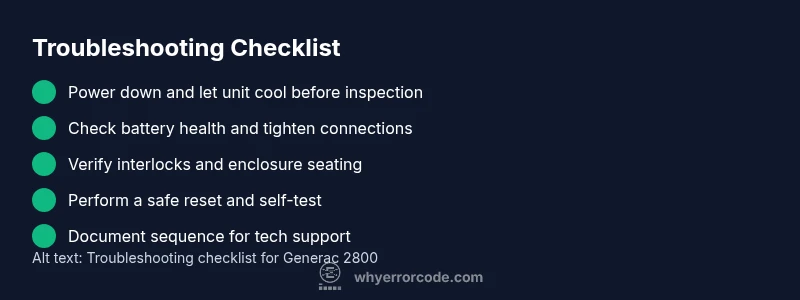
Before touching any electronics, ensure everyone is safe and the unit is powered down. Then perform these checks in order:
- Verify the unit is completely off and cooled; disconnect from any load to prevent backfeed or unexpected energization.
- Inspect battery health and connections; a loose terminal or corroded contact can cause voltage drops that trigger 2800. If in doubt, use the manual's guidance to test battery voltage with a basic meter.
- Check all safety interlocks and enclosure latches to confirm they are properly seated; a misaligned panel can trigger protective faults.
- Look for obvious signs of damage, such as burned smell, loose wires, or fuel leaks; if any are present, stop and call a pro.
- Perform a controlled reset from the control panel, then run a manual self-test according to the manual. If the 2800 reappears, record the exact sequence and times to share with a technician.
These steps are designed to be safe and straightforward; do not bypass interlocks or force the unit into operation while fault indicators remain active.
Diagnostic flow overview
When you see 2800, start with the symptom, then map likely causes and fixes. Typical progression:
- Symptom: Unit refuses to start or shuts down under load.
- Likely causes (order of frequency): battery or power supply issues, safety interlocks or enclosure problems, control board faults, sensor calibration issues.
- Fixes (from quick wins to deeper work): reset controller, verify battery voltage, tighten or replace wiring, ensure interlocks are engaged, and escalate to a professional if the fault persists.
Following a structured diagnostic path helps isolate root causes quickly and safely, reducing downtime and the risk of further damage.
Step-by-step repair: most common fix overview
The most common fix often starts with a controller reset and a battery check. This section provides a practical narrative of the repair flow, what you should observe, and how to verify that the fault is cleared. It is not a substitute for the official service manual, but it helps you prepare for the actual hands-on work and communicates clearly with a technician if needed.
Other possible causes and how to rule them out
If the basic checks and common fixes do not resolve the issue, explore alternative explanations such as a control board fault, sensor calibration drift, or a wiring problem. Inspect the control board indicators, review self-test diagnostics if available, and verify that all sensors are within spec. Examine grounding paths and insulation for damage. If you lack the proper diagnostic tools, a professional service call is recommended to avoid misdiagnosis.
Maintenance, prevention, and replacement considerations
To reduce future 2800 events, establish a preventive maintenance routine that includes battery health checks, terminal cleaning, interlock inspection, and cooling system cleanliness. Replace the battery on a typical cycle of 3–5 years, or sooner if voltage sags under load. Keep intake paths clear, and service transfer switches regularly. For critical applications, consider extended service plans with a qualified technician. Proactive maintenance minimizes downtime and extends unit life.
Steps
Estimated time: 60-90 minutes
- 1
Power down and secure the unit
Shut off the generator, disconnect from all loads, and allow it to cool. This reduces the risk of electric shock or fuel hazards during inspection.
Tip: Always wear PPE and keep the work area clear of bystanders. - 2
Inspect interlocks and enclosure
Verify that all latches and doors are fully closed and seated. Misalignment can trigger fault logic and safety interlocks.
Tip: A quick realignment can resolve non-electrical Fault codes. - 3
Check battery health and connections
Inspect terminals for corrosion, clean if needed, and ensure tight connections. Measure voltage to confirm it is within the recommended range.
Tip: A weak battery is a common root cause for 2800 events. - 4
Reset controller and perform self-test
Follow the manual to perform a full controller reset, then run a self-test and note any repeating codes.
Tip: Document any sequence or timing so the technician has context. - 5
Evaluate load and wiring
If safe, try a light load to verify stability; inspect main wiring for wear or damage and reseat connectors if necessary.
Tip: Do not exceed recommended load during testing. - 6
Escalate if the fault persists
If 2800 returns after these steps, schedule professional diagnostics. Faults may require board or sensor replacement.
Tip: Prepare a fault dossier with times, readings, and photos.
Diagnosis: Error code 2800 Generac appears during startup or under load
Possible Causes
- highBattery health or power supply issues
- mediumSafety interlocks or enclosure problems
- lowControl board fault or sensor error
- lowWiring or grounding issues
Fixes
- easyPerform a safe reset and run self-test
- easyCheck battery voltage and replace if needed
- mediumInspect interlocks, seals, and enclosure seating
- mediumInspect wiring and grounding; repair or replace as needed
- hardReplace control board or sensors if fault persists
Frequently Asked Questions
What does error code 2800 mean on Generac?
It signals a general fault flagged by the controller, typically involving safety interlocks, self-test, or sensor readings. It requires diagnosis and methodical fixes.
Error 2800 means a controller fault that needs diagnosis and a careful fix. Follow the guide for steps.
Is error code 2800 dangerous or a safety risk?
The code indicates a safety or protection fault. Do not operate the unit; perform checks and reset only if you are confident in safety procedures.
It signals a safety fault, so stop operation and investigate or call a pro.
Can I reset the Generac to clear 2800 myself?
A reset can clear transient faults, but if the code returns, avoid continued operation and proceed with the full diagnostic steps or professional service.
Yes, you can reset, but if it comes back, don’t run it; get professional help.
What are the typical repair costs for 2800?
Costs vary by root cause. Battery replacement, wiring checks, or sensor replacement can range from basic service fees to higher parts costs; professional service may range broadly depending on labor and parts.
Repair costs vary; expect a range depending on the root cause and service needed.
When should I call a professional for code 2800?
If the fault persists after basic checks and a safe reset, or if you detect leaks, overheating, or electrical hazards, a certified technician should diagnose.
If it persists or you detect hazards, call a pro.
Watch Video
Top Takeaways
- Start with a safe reset and basic checks
- Battery health is a common root cause for 2800
- Do not bypass safety interlocks
- Document steps and share with a technician
- Regular maintenance reduces recurring faults