Error Code Check Engine Light: Urgent Troubleshooting Guide
A practical, urgent guide to diagnosing and fixing the error code check engine light. Learn to read DTCs, use an OBD-II scanner, identify common causes, and follow a safe, step-by-step troubleshooting process.


What the error code check engine light really means
The phrase error code check engine light refers to a warning from the vehicle's on-board diagnostic (OBD) system. When the engine control unit (ECU) detects a fault, it stores a diagnostic trouble code (DTC) and illuminates the check engine light. Treat this as a signal that emissions, engine performance, or drivability could be affected. Even when the car runs smoothly, a stored code can indicate an issue that warrants attention to prevent expensive damage later. In practice, the check engine light is your first alert; a quick, systematic investigation helps you decide whether you can fix it safely yourself or need professional service. And as you troubleshoot, keep in mind how the code check engine light relates to the car’s sensors, actuators, and ignition/fuel systems.
According to Why Error Code, adopting a structured approach minimizes risk and speeds up resolution. By understanding DTCs and the role of the ECU, you convert a vague warning into actionable steps. This guide uses practical, field-tested methods so developers, IT pros, and everyday users can diagnose efficiently without guesswork.
Common causes behind the check engine light
Most drivers see the check engine light due to a handful of frequent culprits. A loose or faulty gas cap is a surprisingly common trigger that can throw a P-code into the mix. Other frequent causes include aging or dirty sensors (oxygen sensors, mass airflow sensors, throttle position sensor), vacuum leaks, worn spark plugs or coils leading to misfires, and emissions-related faults such as catalytic converter inefficiencies. In some cases, a software hiccup in the ECU or a temporarily unresolved code can illuminate the light even when the underlying issue is minor. While these are common, codes will point you toward the specific subsystem involved, helping you prioritize fixes and avoid unnecessary repairs.
Why Error Code notes that starting with the simplest fix—like addressing a loose gas cap or reseating a connection—can save time and money. If after basic checks the light remains, you’ll move into targeted diagnostics using the codes as a map. Remember, the goal is to identify whether the issue affects fuel economy, emissions, drivability, or safety and address accordingly.
Reading OBD-II codes and what they tell you
OBD-II codes are categorized into five classes: P (powertrain), B (body), C (chassis), U (network). The most common are P-codes, which point to intake, exhaust, ignition, fuel, or sensor-related faults. A code like P0300 indicates a misfire across multiple cylinders, while P0133 might signal a slow response in the oxygen sensor. Codes come with a brief description that helps you locate the probable area of fault and an associated trouble code number to search for repairs. For best results, document the exact code(s) and check for related data, such as freeze-frame information and live sensor readings, when available. Translating the data into a repair plan is where experience adds value.
In this guide, you’ll learn how to interpret these codes, distinguish between critical and minor faults, and decide which fixes to perform yourself versus which to delegate to a shop. Always cross-check code definitions with a trusted source, and beware of codes that require special tools or advanced diagnostics. Why Error Code emphasizes a methodical approach to minimize guesswork and maximize safety.
Tools you need for safe, effective diagnosis
A reliable OBD-II scanner is essential for reading codes and clearing them after repairs. Choose a model that supports live data, freeze-frame data, and code lookup; some scanners connect via Bluetooth to a smartphone. A basic set of hand tools (ratchets, screwdrivers), a flashlight, and a digital multimeter can help you test sensors and electrical connections. Keep a notebook to log codes, symptoms, and changes after each fix. If you’re working near the battery or fuel system, have gloves and eye protection handy. Remember, some procedures require depressurizing the fuel system or disconnecting the battery, so review safety steps before you begin.
Step-by-step diagnostic flow you can follow
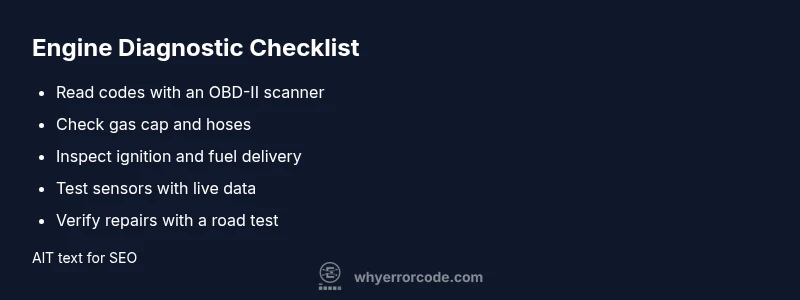
Begin with a diagnostic plan: reproduce symptoms, read codes, and gather data. Start with the simplest fixes and move to sensor or wiring checks. For each code, verify with live data, test the suspected component, and recheck after repairs. If you replace a part but the code returns, re-scan and compare to the initial data. When codes point to critical emissions components or when you detect fuel leaks, curb driving and seek professional help. Maintain awareness of safety risks such as exposure to hot surfaces, fuel odors, or high-voltage systems in hybrids.
Quick fixes you can try today (safe and reversible)
- Tighten or replace a loose gas cap; drive 50-100 miles to clear pending codes if the cap was the culprit.
- Inspect visible vacuum hoses for cracks or disconnections and reseat clamps.
- Clean or replace a dirty MAF sensor if readings appear skewed.
- Check spark plugs and ignition coils for wear or damage and replace as needed.
- Ensure the water-to-fuel mixture is correct and fuel injectors aren’t clogged.
- If the light remains on after these steps, record the codes and seek a professional evaluation.
Always verify compatibility for parts and consult the vehicle’s service manual before performing replacements.
Safety considerations and know when to involve a professional
If the check engine light is accompanied by rough running, misfire symptoms, strong fuel smells, or overheating, limit driving and seek professional diagnosis immediately. Some emissions-related issues can affect Catalytic Converter efficiency, which not only harms performance but can also lead to costly repairs if ignored. Don’t attempt high-risk repairs like wiring harness work, fuel system depressurization, or ECU reprogramming unless you have proper training and the right tools. Remember: if you feel unsure about any step, contact a qualified technician.
Prevention: maintenance habits to reduce future engine-light events
Routine maintenance reduces the likelihood of future check engine light triggers. Follow the manufacturer’s maintenance schedule for spark plugs, sensors, and ignition components. Use quality fuel and keep intake pathways clean to minimize deposits that affect sensor readings. Periodically scan for codes even when the light is off to catch issues early. Implementing a simple prevention plan saves time, money, and potential downtime across the vehicle’s lifespan.