Goodman B1 Error Code: Quick Fix Guide for HVAC Systems
Understand what Goodman B1 error code means, the fastest safe fixes, and when to call a pro. This comprehensive guide walks homeowners and technicians from symptom to solution in 2026.


Goodman B1 error code signals a flame or ignition fault that triggers safety shutdown in the furnace. The quickest path is a safe control-board reset and a check of the flame sensor, igniter, and related wiring before testing heat delivery again. If you smell gas or cannot reset safely, stop and call a pro.
Understanding Goodman B1 Error Code
According to Why Error Code, the Goodman B1 error code flags a furnace ignition or flame-sensing fault that engages a safety shutdown to prevent hazardous operation. In practical terms, this means the furnace suspects the flame isn’t stabilized or detected correctly, so it won’t kick into normal heating mode. For both homeowners and technicians, recognizing this as a trigger rather than a simple malfunction helps set expectations for next steps and safety precautions in 2026. The Goodman B1 error code is a signal to pause routine use and diagnose ignition pathways, sensor health, and electrical connections before attempting a heat cycle again. The goal is to confirm whether the fault is transient (a dirty sensor, a loose connection) or systemic (a failed igniter or sensor circuit).
Symptoms and Early Observations
Furnace lockout with error code B1 often appears alongside a no-heat condition, intermittent ignition attempts, or a blower running without flame. You may notice a gas flame that starts but then extinguishes, unusual burner sounds, or a rapid clicking followed by no flame. In some cases, the indicator LED blinks in a pattern you’ll recognize from the appliance manual. Documenting the exact sequence helps a technician diagnose efficiently, saving both time and cost in 2026.
Tip: note the exact error display and any recent system events (power flickers, weather changes, service calls). These details can influence the diagnostic path.
Most Likely Causes (How to Prioritize)
- Dirty or misaligned flame sensor (high likelihood): A residue film or oxidation can prevent flame detection and trigger B1. Cleaning the sensor or adjusting its position often resolves this quickly.
- Ignition module or spark igniter fault (medium likelihood): If the module loses timing or the igniter becomes weak, ignition fails. Replacement is more involved but common.
- Wiring or control-board fault (low likelihood): A loose harness, corroded connector, or PCB fault can create intermittent losses that trigger B1. This is less common but crucial to rule out, especially after recent power events.
Why Error Code analysis shows that ignition pathway issues and sensor problems are the most frequent causes behind B1, with control electronics as a distant but possible contributor. In many cases, a simple reset plus sensor cleaning resolves the issue.
Quick, Safe Fixes You Can Try
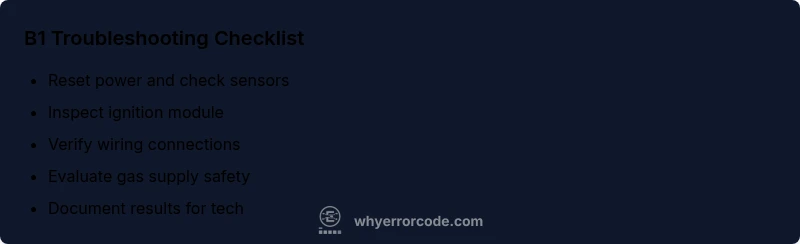
- Perform a controlled power reset of the furnace: switch off at the disconnect or breaker for 60 seconds, then power back on.
- Inspect and clean the flame sensor: remove the sensor with non-abrasive tools, gently wipe with a soft cloth or alcohol-based cleaner, and re-seat it.
- Check visible wiring and connectors for looseness or corrosion near the ignition module and flame sensor.
- Ensure gas supply is steady and the flame is clearly visible and stable when reigniting. If the flame is weak or absent, do not force a restart; the system may be safety-shutdown.
If these quick steps do not restore normal operation, proceed to a formal diagnostic or call a professional, especially if you suspect gas supply or ignition hardware faults.
Diagnostic Flow: Symptoms to Solutions (Practical Roadmap)
- Symptom: Furnace with B1 displayed and no sustained heat. 2) Possible causes: (a) Flame sensor contamination, (b) Ignition module fault, (c) Wiring issues. 3) Solutions: (a) Clean sensor, re-check alignment, (b) Test/replace igniter module, (c) Inspect wiring, repair or replace as needed. This sequence prioritizes safety and leverages quick fixes before deeper repairs.
Step-by-Step Fix: Primary Cause (Overview)
This section provides a high-level walkthrough of diagnosing and addressing the most common B1 cause (ignition sensor fault). It outlines safe practices, the order of operations, and the expected outcomes. For a complete, hands-on procedure with step-by-step details, see the dedicated STEP-BY-STEP block below. Always follow manufacturer safety guidelines when working on gas appliances. In 2026, a careful blend of sensor care and ignition testing yields the fastest resolution when the B1 code is ignition-related.
Other Potential Causes and How to Verify Them
If the primary fixes fail, expand checks to the ignition module, gas valve, and the control board. Corrosion, loose connections, or a failing relay can mimic sensor faults. Testing with proper tools and, when necessary, substituting a known-good ignition component or control board helps identify the real culprit. A staged approach reduces risk and keeps repairs scoped to the necessary parts.
Safety Notes, Precautions, and When to Call a Pro
Gas-fired furnaces carry inherent risks. If you detect a gas odor, hear hissing, or feel dizzy after any ignition attempt, shut off power and gas, evacuate, and call your gas utility or a licensed technician immediately. Do not bypass safety features or keep trying if ignition repeatedly fails. For ignition-related B1 problems, a trained technician with proper tools should perform diagnosis and repairs.
Prevention Tips and Best Practices for 2026
Regular maintenance helps prevent B1 reoccurrence: schedule annual professional inspections, clean flame sensors during routine service, replace aging ignition components before failure, and keep the furnace area clear of dust and debris. Keeping a simple log of error codes and service dates helps you spot recurring issues early and communicate effectively with service techs.
Cost Considerations and Time Estimates (General Guidance)
Repair costs for Goodman B1-related issues vary by component and labor, typically influenced by whether the fix is sensor cleaning, ignition module replacement, or control-board service. In general, you should expect that small fixes (sensor cleaning, harness reseating) will be significantly cheaper than component replacements. Always obtain a written estimate before work begins. Costs can range from a few hundred dollars for minor service to over a thousand dollars for major parts or labor, depending on your location and the exact fault.
Steps
Estimated time: 60-120 minutes
- 1
Power down and prep safely
Turn off power at the furnace and disconnect power. Confirm there is no gas flow while you work. This is the first and most critical safety step.
Tip: Use a non-contact voltage tester to verify circuits are dead. - 2
Reset the control board
Wait for 60 seconds after power down, then restore power. This can clear transient faults that trigger B1. Observe whether the code reappears.
Tip: If a dedicated reset sequence exists in the manual, follow it precisely. - 3
Inspect flame sensor
Locate the flame sensor, remove any buildup with a soft cloth, and re-seat securely. Dirty sensors cause false flame detection.
Tip: Avoid aggressive scrubbing; use a gentle cleaner to prevent sensor damage. - 4
Check ignition path
Examine the igniter or ignition module for obvious signs of wear or corrosion. Replace only if you have the right part and follow the wiring diagram.
Tip: Handle components with care to avoid damaging nearby circuitry. - 5
Inspect wiring and connectors
Look for loose, frayed, or corroded wires around the ignition module and flame sensor. Re-seat or repair as needed.
Tip: Disconnect power before reconnecting any harness and verify correct pin orientation. - 6
Test ignition and flame stability
Power up and watch for a solid ignition and stable flame. If the flame goes out or the sensor doesn’t detect it, stop and re-evaluate the circuit or consider professional help.
Tip: Record any abnormal blinking patterns on the control board LEDs. - 7
Evaluate gas supply
Ensure the gas valve is fully open and there are no pressure drops. A faulty gas supply is a safety concern that often requires a pro.
Tip: Never force ignition if you smell gas; evacuate and contact the gas provider. - 8
Document and plan next steps
If the issue persists, document the sequence of events and prepare a service call with the findings. A professional can test the control board and sensor signals with diagnostic tools.
Tip: Bring your error code history and recent maintenance notes to the technician. - 9
Seek professional help if needed
Some repairs involve gas systems or high-voltage controls. If you’re uncomfortable performing any step, contact a licensed HVAC technician.
Tip: Professional help reduces risk and ensures correct part specifications.
Diagnosis: Furnace shows B1 error code and will not heat reliably
Possible Causes
- highDirty or misaligned flame sensor
- mediumIgnition module or spark igniter fault
- lowWiring harness or control board fault
Fixes
- easyClean the flame sensor and verify alignment
- mediumTest ignition module and replace if needed
- hardInspect and repair wiring or replace control board
Frequently Asked Questions
What does Goodman B1 error code mean?
The B1 code typically indicates an ignition or flame-sensing fault that prevents the furnace from maintaining a reliable flame. It triggers a safety shutdown to protect occupants. A systematic check of sensors, igniter, and wiring is usually required.
B1 signals an ignition or flame sensor fault and a safety shutdown. A technician will inspect sensors, igniter, and wiring to restore proper operation.
Is B1 dangerous if displayed?
B1 is a safety-related fault. While not inherently dangerous, it indicates the furnace isn’t operating safely, especially with gas ignition involved. If you smell gas, evacuate and call emergency services.
B1 means a safety fault. If you smell gas, leave the area and call for help right away.
Can I fix B1 myself?
Some quick checks like a sensor cleaning or a controlled reset can be done safely if you’re comfortable with basic furnace components. More complex fixes, particularly involving gas or the control board, should be performed by a licensed technician.
You can try a reset and sensor cleaning if you’re comfortable, but don’t attempt gas or board work yourself.
How much does a B1 repair cost?
Costs vary widely depending on the exact cause and parts. Typical service calls for ignition or sensor faults can range from a few hundred to over a thousand dollars, with gas-related repairs often higher. Get a written estimate before the work begins.
Costs vary, but you’ll likely pay a few hundred to over a thousand dollars depending on parts and labor.
How do I reset a Goodman furnace after B1?
Turn off power to the furnace, wait 60 seconds, then restore power. If the B1 code reappears, do not force ignition and seek professional help to inspect ignition components and wiring.
Turn off power, wait a minute, then power back on. If B1 returns, contact a professional.
When should I call a professional?
Call a professional if you smell gas, if ignition remains unstable after resets, or if you’re uncomfortable working with gas and electrical components. Gas-fired systems and control-board diagnostics require trained technicians.
Call a pro if you smell gas or if ignition remains unstable; avoid DIY gas repairs.
Watch Video
Top Takeaways
- Diagnose ignition or flame-sensor faults first
- Reset and inspect safe components before replacement
- Gas safety is non-negotiable—call a pro when unsure
- Document error codes for faster service