LG Washer US Error Code: Quick Diagnosis and Fix
An urgent, practical guide to understanding the LG washer US error code, quick fixes, a diagnostic flow, and step-by-step repairs. Learn when to DIY and when to call a pro for reliable results.


LG washer US error code means the washer detected an imbalance during spin or a sensor fault that blocks the cycle. The quickest fix is to pause, redistribute the load, and run a spin test with a lighter, evenly distributed load. If the error persists, check leveling and suspension, then perform a calibration or call a technician. Acting fast prevents damage and reduces downtime.
What the lg washer us error code Means
The lg washer us error code typically signals that the washer detected an imbalance during spin or a sensor mismatch that prevents proper unbalanced protection from finishing the cycle. This fault halts operation to protect the drum and gearbox. The issue is most often triggered by a bulky or uneven load, items wrapped together, a loose footing, or a drum obstruction. Understanding this code helps you act quickly to restore normal cycling without risking further damage. Repeat cycles after adjustments help confirm if the problem is cosmetic or persistent. According to Why Error Code, accurate diagnosis hinges on both mechanical balance and electronics feedback. This means you should inspect both the physical load distribution and the sensor signals feeding the control board. By focusing on balance first, you can often resolve the US code without invasive repairs.
Quick Fixes You Can Try Now
Before proceeding to deeper diagnostics, attempt these safe, fast fixes. They are designed to address the most common real-world triggers for the US code on LG washers. Always unplug the unit if you need to move it or access internal components. If the machine is connected to a long power cord, avoid pulling or tugging the cord. If you have a front-load model, ensure the door is closed securely before testing.
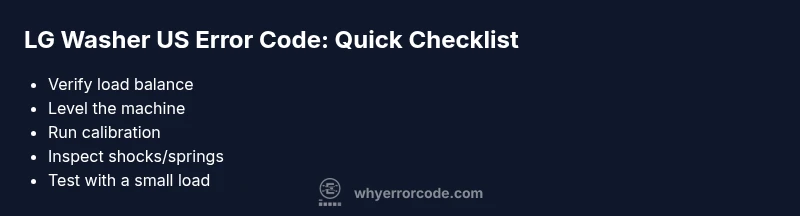
- Pause and redistribute the load: Stop the cycle, open the drum, and spread clothes evenly. Large bulky items should be placed around the drum, not clumped in one area.
- Level the washer: Check the level front-to-back and side-to-side. Adjust leveling feet until the bubble on a built-in level sits centered.
- Run a calibration spin: After rebalancing, run a calibration cycle if your model supports it. This helps the sensors re-sync with the drum.
- Inspect for obstructions: Remove any foreign objects from the drum and inspect the gasket for fabric caught between the drum and tub.
- Check the suspension: Look for visibly worn shocks or springs. If you notice excessive movement or oil on the shock, replacement may be needed.
- Test with a small load: Try a light, even load (tills, towels) to see if the error recurs. If it does, move to more in-depth checks.
Common Causes in Order of Likelihood
Based on practical experience and the Why Error Code framework, the most common cause is an uneven or oversized load that prevents proper spin balance (high likelihood). The next frequent issue is worn or damaged suspension components that fail to keep the drum centered (medium). A less common but possible factor is a control board or sensor fault that misreads the load condition (low). Understanding this order helps you prioritize steps and avoid unnecessary repairs.
Step-By-Step Fix (Most Common Cause)
Here is a focused, user-safe sequence to address the most common cause (unbalanced load while spinning) and restore operation without professional help for minor cases. Follow in order, testing after each step.
- Power cycle the washer: Unplug for 60 seconds, plug back in, and start a quick rinse cycle with a small, even load. This resets sensors and clears transient faults.
- Redistribute the load: Open the drum and re-distribute clothing so heavy items are spread evenly around the circumference. Avoid stacking items in one corner.
- Level the machine: Place a spirit level on the top panel and adjust feet until the level is centered. If the floor is sloped, consider using a shimming solution or anti-vibration pads.
- Run a calibration spin: If available, run the machine’s calibration/diagnostic spin to re-align the drum speed and sensor readings.
- Re-test with a modest load: Load towels or a similar medium-weight mix, then run a standard wash/spin cycle. Observe whether the US code reappears. If it does, proceed to deeper checks or professional service.
Other Causes and Their Fixes
If the quick fixes don’t resolve the US error code, consider these alternate causes and remedies. Each scenario has a practical fix you can perform or verify quickly. Safety first: disconnect power before inspecting internal components.
- Worn suspension components: Replace damaged shocks or springs to restore drum balance. Expect a mid-range repair cost depending on model and labor.
- Sensor or control-board fault: Inspect wiring and connectors for loose pins, then consider a firmware update or replacement if persistent. This is typically a medium-difficulty repair.
- Drum or belt wear: Inspect the drive belt for cracks or wear and the drum for warping. Replacement may be necessary and is typically harder to complete without a technician.
Tips & Warnings
Safety notes and best practices to minimize risk when diagnosing the US error code:
- Always unplug the washer before inspecting interior areas or removing panels.
- If you’re unsure about electrical work, stop and call a pro rather than risk electric shock or water damage.
- Do not continue washing with a persistent error, as repeated spin faults can stress bearings and seals.
- If you hear unusual noises (clunking, grinding), shut down the machine and seek professional help to avoid further wear.
- Consider professional service for suspected suspension damage or a faulty control board. Cost ranges vary widely by region and model; get a written estimate before approving work.
Key Prevention Tips to Avoid Future US Errors
- Balance loads consistently and avoid oversized items that can unbalance the drum.
- Periodically inspect leveling feet and re-level the unit after moving it or replacing flooring.
- Run regular calibration cycles if your model supports them to keep sensors aligned.
- Schedule routine maintenance to check suspension components and wiring connections.
Steps
Estimated time: 25-40 minutes
- 1
Power cycle the washer
Unplug the machine for 60 seconds to reset electronics. Plug back in and run a short wash with a small, even load to see if the US code clears itself.
Tip: A cold restart can clear transient faults without tools. - 2
Redistribute the load
Open the drum and spread items evenly around the circumference. Avoid bulky items clumped in one area.
Tip: Place the heaviest items in alternate positions for balance. - 3
Level the washer
Check both side-to-side and front-to-back levels. Adjust the feet until the built-in level is centered.
Tip: If the floor is uneven, use shims or anti-vibration pads to maintain balance. - 4
Run calibration
If your model supports a calibration cycle, run it to re-sync the sensors with the drum.
Tip: Consult the user manual for exact calibration steps for your model. - 5
Test with a small load
Run a standard cycle with a modest load to verify if the error reoccurs.
Tip: If the code returns, proceed to deeper diagnostics or professional service.
Diagnosis: Machine displays US error code during spin cycle
Possible Causes
- highUnbalanced load during spin
- mediumWorn or damaged suspension components
- lowControl board sensor fault or loose connections
Fixes
- easyPause and redistribute the load to ensure even distribution around the drum
- easyCheck leveling feet and inspect suspension for wear; adjust or replace as needed
- mediumInspect control board connections and perform calibration or firmware update if available
Frequently Asked Questions
What does the LG washer US error code mean?
The US error code generally indicates an imbalance or sensor fault during spin. It signals the control system to pause cycles to prevent damage. Start with balancing the load, leveling the unit, and testing calibration before considering parts replacement.
US code usually means an imbalance or sensor fault. First balance the load and level the washer, then run calibration before deciding on parts replacement.
How do I reset the washer after US code appears?
Power cycle the washer by unplugging for 60 seconds, then plug back in and run a brief cycle with a small, even load. If the error returns, perform a quick balance check and calibration before calling support.
Unplug for a minute, plug back in, and run a short test cycle with a balanced load. If it repeats, check balance and calibrate.
Can overloading cause US code?
Yes. Overloading can create an unbalanced drum during spin, triggering the US code. Reducing load size and redistributing fabrics usually resolves this quickly.
Overloading can trigger US. Reduce load and redistribute to fix.
Is it safe to keep washing with US error?
No. Repeated spin faults can cause wear or damage to bearings and seals. Stop and perform the recommended checks or call a professional if the fault persists.
No, stop washing if US keeps appearing. Check balance and consider professional help if it keeps happening.
What are typical repair costs for US code?
Costs vary widely by model and region. Simple fixes like rebalancing are often inexpensive, while suspension parts or circuit board repairs can run higher. Always obtain a written estimate before approving work.
Costs vary, from inexpensive balancing to more involved parts replacement. Get an estimate first.
How can I prevent US errors in the future?
Keep loads balanced, ensure the floor is level, run calibration where available, and schedule periodic maintenance to inspect suspension and wiring connections.
Balance loads, level the unit, calibrate, and maintain the machine.
Watch Video
Top Takeaways
- Redistribute loads to restore balance quickly
- Level the unit and inspect suspension if US recurs
- Run calibration to re-sync sensors
- Call a pro if fault persists after basic steps