GE Dishwasher Error Code 36: Troubleshooting and Fixes
Learn what GE dishwasher error code 36 means, quick fixes you can try now, a diagnostic flow, step-by-step repair for the most common cause, safety tips, and when to call a professional.


GE dishwasher error code 36 indicates a wash circuit fault tied to the water sensor or control board, halting the cycle. Quick fixes include a power reset, inspecting the water inlet and sensor wiring, and checking the door latch and flood switch. If the fault persists, seek professional service.
What Error Code 36 Means for Your GE Dishwasher
When you see GE dishwasher error code 36, the machine is signaling a problem in the wash circuit, most often related to the water sensor or communication with the control board. According to Why Error Code, this fault typically arises from sensor faults, loose or corroded wiring, or a failing control module. The error tends to pause or abort the cycle, preventing heat or rinse stages from completing. Understanding this helps distinguish a sensor or board issue from a simple pump fault. Remember that the root cause is usually electrical or electronic rather than mechanical, so exercise caution when inspecting internal components.
The GE dishwasher error code 36 can appear on the display as E36 or simply 36, and it is commonly accompanied by a paused cycle or a brief error beeping pattern. While it may be tempting to ignore it, addressing sensor and board communication promptly reduces the risk of further damage and avoids wasted water or detergent. If you are unsure about voltage or safety, stop here and consult a pro. As you troubleshoot, keep the unit unplugged when handling wiring or electronics.
Symptoms to Watch For and Immediate Actions
Typical symptoms that accompany error code 36 include a halted wash cycle, flashing indicators, or a control display that repeats the 36 code after a reset attempt. You might also notice water not filling properly or the float switch sounding an alarm if the sensor detects an abnormal level. Immediate actions include a full power cycle: unplug the dishwasher, wait 60 seconds, plug back in, and attempt to start a new cycle. Ensure the inlet valve is open and the water supply line is free of kinks or blockages. If the error reappears after reset, inspect the door latch and flood switch, as a safety interlock can prevent operation when doors are not fully closed.
From a data standpoint, Why Error Code's analysis shows that sensor-related faults are a leading cause of E36, followed by wiring issues and occasional control-board glitches. This pattern informs a focused troubleshooting approach rather than random part swapping. Safety remains a top concern; never bypass interlocks or water connections without verifying power is disconnected.
Diagnostic Flow: From Symptom to Solution
Symptoms → Possible Causes → Fixes
- Symptom: Cycle stops with E36 on display or beeps in a pattern.
- Causes (high/medium/low likelihood):
- Sensor fault (high): Water level or pressure sensor misreads the system.
- Wiring/connectors issue (medium): Loose, frayed, or corroded leads between sensor and control board.
- Control board fault (low): Software glitch or failed processor.
- Fixes (easy/medium/hard):
- Inspect and reseat sensor connectors; look for signs of corrosion (easy).
- Check wiring harness for damage and secure all connections (easy).
- If wiring and sensor look good, reset the control board or replace the sensor module (medium).
- For a suspected control-board failure, plan a board replacement or professional service (hard).
- Causes (high/medium/low likelihood):
Step-by-Step Fix: Most Common Cause (Sensor/Board Communication)
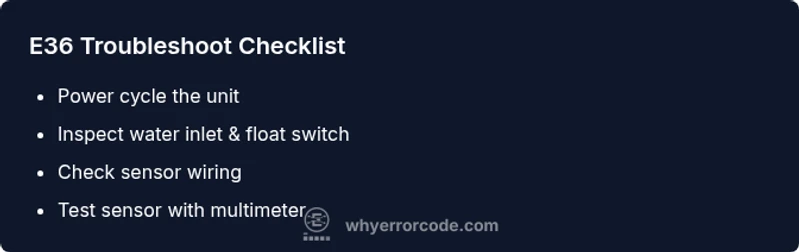
- Power cycle the unit: unplug for 60 seconds, then plug back in and try a fresh cycle. This clears transient faults and can reset the sensor logic. Tip: Do this with all water supply lines verified off and the door closed. 2) Inspect the water sensor and float switch: locate the level sensor and float assembly, inspect for debris, mineral buildup, or misalignment. Clean if needed and ensure the float operates freely. 3) Check sensor wiring at the control board: unplug the harness, inspect for loose or corroded pins, reseat the connector fully, and run a gentle wiggle test to confirm a solid connection. 4) Test continuity if you have tools: use a multimeter to check for continuity on sensor wires and verify there are no breaks. If a loose pin is found, re-crimp or replace the connector as required. 5) Reassemble and run a test cycle: after confirming wiring, sensor seating, and no leaks, run an empty cycle to verify the error does not return. If the error recurs, the sensor module or control board may require replacement. Pro tip: label wires before disconnecting to avoid miswiring during reassembly.
Other Causes and How to Address Them
While sensor and board communication are the most common culprits, other issues can trigger E36. A clogged drain or blocked inlet can affect sensor readings by creating pressure changes that the electronics misinterpret. Clean the filter and check the drain hose for kinks or obstructions. A faulty door latch or flood switch can also halt operation as a safety precaution. If you perform the above checks and the error persists, the problem could be a failed control module or sensor assembly that needs replacement. In that case, you’ll want to plan for parts cost across a range, and consider professional service for diagnostic accuracy. Note that service calls and parts vary by model and region, typically reflecting a broad range of costs and availability.
Steps
Estimated time: 45-90 minutes
- 1
Power cycle the dishwasher
Unplug the unit, wait 60 seconds, plug back in, and start a test cycle. This resets the control module and can clear transient fault codes. If available, also reset the breaker for a full power reset.
Tip: Label the power cord so you remember to unplug before servicing. - 2
Inspect water inlet and float switch
Ensure the water supply valve is fully open and the inlet screen is free of debris. Check the float switch for freedom of movement and reinstall if it was stuck.
Tip: A partially closed valve or dirty inlet screen is a common non-electrical cause of E36. - 3
Check sensor wiring and control connections
Disconnect the sensor harness and reseat the pins firmly. Look for green/blue corrosion on pins and replace any damaged connectors. Reconnect securely.
Tip: Always unplug the machine before touching electrical connectors. - 4
Test the sensor with basic tools
If you have a multimeter, perform a continuity test on the sensor circuit and check for expected resistance values as per the service manual. Replace if readings are out of spec.
Tip: If you’re unsure about resistance specs, consult the manual or a pro. - 5
Evaluate need for part replacement
If sensor continuity is good but E36 persists, the module or control board may be at fault and require replacement. Obtain manufacturer-approved parts and consider a professional installation to avoid further damage.
Tip: Always verify part compatibility with your GE model number.
Diagnosis: Dishwasher displays E36 and stops mid-cycle
Possible Causes
- highFaulty water level sensor
- mediumDamaged wiring between sensor and control board
- lowControl board failure or software glitch
Fixes
- easyInspect sensor wiring and terminals for corrosion or loose connections
- easyTest continuity of sensor wires and reseat connectors
- hardReplace sensor or control board as needed
Frequently Asked Questions
What does GE dishwasher error code 36 mean?
Error code 36 usually signals a wash circuit fault related to the water sensor or control board, causing the cycle to stop. It’s often sensor or wiring related rather than a mechanical failure.
Error code 36 indicates a wash circuit fault, usually from the water sensor or control board, which stops the cycle.
Is it safe to try fixing E36 myself?
Basic resets and visual inspections are safe if you disconnect power first. Do not touch high-voltage components or propane-free gas lines. If you’re unsure, consult a professional.
You can safely reset and inspect basics if you unplug first. If unsure, contact a pro.
How much does it cost to repair E36?
Costs vary widely based on parts and labor. A service call plus parts can range from a few hundred dollars to over a thousand, depending on what needs replacing.
Repair costs vary; expect a service call and parts to cost from a few hundred to over a thousand dollars depending on the fix.
Can cleaning or resetting fix E36 permanently?
Resetting may clear transient faults, and cleaning sensor housings can help if buildup interferes with readings. If after fixes the code returns, the fault is likely hardware-related.
Resets can clear temporary faults, but if it keeps coming back, it’s likely hardware.
When should I call a professional?
Call a pro if the code reappears after resets, if you suspect a faulty control board, or if wiring shows damage. A technician can confirm sensor integrity and board health safely.
Call a professional if the error persists after basic fixes or if wiring looks damaged.
Watch Video
Top Takeaways
- Inspect sensor wiring before replacing parts
- Power cycle first to clear transient errors
- Safety interlocks must be intact during tests
- Costs vary; professional repair may be necessary for board faults