LG Washer 1E Error Code: Urgent Diagnostic Guide
Urgent guide to diagnosing and fixing the LG washer 1E error code with quick fixes, step-by-step repair paths, safety tips, and cost ranges.


lg washer 1e error code means the washer detected an abnormal water level or sensor fault that prevents proper filling or draining. It commonly points to a faulty water level sensor, a clogged pressure switch tube, or a wiring issue to the pressure sensor. The quickest action is to power cycle the machine, then inspect hoses, and reset the control board if available.
Understanding the lg washer 1e error code
The 1e error code on LG washers signals a fault in the water level sensing system. It can appear when the washer cannot detect the correct water level during fill, or when the pressure switch or connected wiring signals an out-of-range reading. When this error shows, the machine usually halts the current cycle to prevent overflow or improper rinsing. Commonly affected models include front-load and top-load LG machines with direct drive or inverter control. If you see 1e, note the current cycle, water inlet status, and whether the tub fills partially or not at all. Diagnosing it early can prevent more expensive damages from water leaks or motor stress. The fix path ranges from simple reset and hose checks to sensor replacement, and may require professional service if you are uncomfortable with electrical components.
Quick fixes you can try now
Before you start, unplug the machine and turn off the water supply to stay safe. Then perform a cold restart: unplug for 60 seconds, plug back in, and run a test cycle. Check the water inlet hoses for kinks or clogs and ensure the inlet filters are clear. Inspect the small gray pressure hose or sensor line for cracks or detachment and reseat any loose fittings. If the tub fills unevenly or the error reappears, perform a calibration or diagnostic self-test if your model supports it. Finally, make sure the drain hose isn’t siphoning water back into the tub, as improper drainage can confuse the sensor. These steps address the most common, user-serviceable issues and can avoid an unnecessary service call.
Common causes by likelihood
- High likelihood: Faulty water level sensor or pressure switch, or blocked pressure tube. These issues directly affect how the washer reads water depth.
- Medium likelihood: Loose wiring or corroded connectors to the sensor or control board.
- Low likelihood: Control board defect, software glitch, or a sensor tube leak that intermittently disrupts readings.
How to verify the error and collect data
- Note the exact model and firmware version of the LG washer.
- Record the cycle name when 1E appears and whether the tub fills, overfills, or remains empty.
- Check any accompanying error codes or symptom details shown on the display.
- Run a self-test or diagnostic mode if your model supports it and document the results.
- Take clear photos of hoses and connectors before attempting repairs to reference later.
Step-by-step diagnosis path for the most likely cause
- Power down and unplug the washer before inspecting any components.
- Locate the water level sensor or pressure switch and identify the small gray hose connected to it.
- Inspect the pressure tube for kinks, cracks, or disconnections; replace if damaged.
- Check sensor connectors for corrosion or loose pins; reseat firmly.
- If hoses or tubes look clear, perform a calibration or reset if the model supports it.
- Reassemble, plug in, and run a brief test cycle to verify if 1E reappears. Tip: If the error persists, schedule a professional inspection and bring photos of the sensor area.
Safety warnings and when to call a pro
- Always unplug the washer before opening panels or handling wiring.
- Do not attempt to test electrical components with live power.
- If you smell burning, hear buzzing, or see damaged insulation, stop and contact a licensed technician.
- If you are uncomfortable with disassembly, call LG support or an authorized technician for safety and to preserve warranty.
Cost estimates and parts you’ll likely need
- Common fixes (sensor reseat or hose clean) often stay in the lower price range, typically under a few hundred dollars including labor in many regions.
- Sensor or pressure switch replacement can raise costs; expect a broader range depending on parts and service call fees.
- Board-level faults may require a full control board replacement, which can be more costly.
Preventive maintenance to avoid 1e in future
- Schedule periodic sensor inspections and hose checks to prevent clogs.
- Keep inlet filters clean and verify hose integrity to maintain accurate readings.
- Run occasional software calibration if your LG model supports it and update firmware when available.
- Evacuate the drum and test the machine with a small load after any service to confirm readings are stable.
Troubleshooting checklist you can print
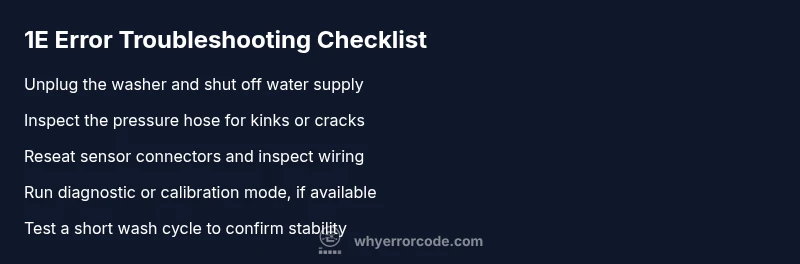
- Unplug, then replug after 60 seconds
- Check water inlet hoses and filters for blockages
- Inspect pressure hose for kinks or detachments
- Verify sensor connectors are securely seated
- Run diagnostic mode if available
- If 1E persists, contact professional service
After repair: verify operation and final tests
- Run multiple test cycles with varying loads to ensure fill and drain are accurate
- Confirm no water leaks around hoses or fittings during tests
- Monitor the control panel for further error codes for the next 24 hours
- If problems recur, escalate to LG support with your diagnostic notes
Steps
Estimated time: 45-90 minutes
- 1
Power down and prepare
Unplug the washer and shut off the water supply. Disconnect from power to reduce risk.
Tip: Avoid touching moisture; dry hands and use gloves if available. - 2
Access the sensor area
Remove the access panel per your model’s manual and locate the water level sensor or pressure switch. Identify the connected hoses and wiring.
Tip: Keep track of screws and connectors so you can reseat everything correctly. - 3
Inspect pressure tube and connections
Look for kinks, cracks, or detachment in the pressure hose. Straighten mild bends and replace damaged tubes if needed.
Tip: Handle hoses gently to avoid creating new leaks. - 4
Test and reseat connectors
Disconnect and firmly reconnect sensor harnesses and connector pins. Ensure pins are clean and fully seated.
Tip: Avoid forcing connections; if a pin is bent, replace the harness. - 5
Calibrate/reset if supported
If your model offers a calibration or test mode for water level, run it and follow on-screen prompts.
Tip: Document any error codes shown during calibration. - 6
Evaluate repair outcome
Plug in, run a short cycle with a light load, and observe if 1E reappears.
Tip: If the error persists, plan for professional service and part replacement.
Diagnosis: LG washer displays 1E error code and stops mid-cycle
Possible Causes
- highFaulty water level sensor or pressure switch
- mediumClogged or kinked pressure tube
- lowControl board glitch or wiring issue
Fixes
- easyPower cycle the washer and check for loose connectors
- easyInspect the pressure tube for kinks or clogs and reseat any loose fittings
- hardReplace water level sensor/pressure switch or motherboard if needed
Frequently Asked Questions
What does the 1E code indicate on LG washers?
1E indicates a water level sensor fault or a pressure switch issue, causing improper filling or draining. It can be caused by a faulty sensor, clogged hose, or loose wiring.
The 1E code means your LG washer has a water level sensor problem that needs checking.
Can I fix 1E myself without tools?
Some simple issues like loose hoses or connectors can be fixed without special tools. If you see damaged tubes or handle connections safely, you can try reseating components. For sensor or board problems, a professional is recommended.
You can fix minor hose or connector issues yourself, but sensor or board faults usually need a pro.
How much does it cost to repair 1E?
Repair costs vary by region and parts. Typical ranges cover simple fixes to sensor replacements, generally from the low hundreds up to several hundred dollars if a board is involved.
Most repairs are in the low hundreds, but complex sensor or board replacements can be more expensive.
How do I reset the LG washer after 1E?
Power cycle by unplugging for about 60 seconds, then plug back in and run a test cycle. This can clear minor glitches that trigger 1E.
Try a cold restart and test cycle to clear minor software glitches.
When should I contact LG support?
If the error repeats after basic troubleshooting or you’re uncomfortable with sensor testing and internal wiring, contact LG support or a certified technician.
If unresolved after basic steps, call a pro for a safe and proper repair.
Watch Video
Top Takeaways
- Unplug before service and inspect the sensor area.
- 1E usually indicates a water level sensor or pressure switch fault.
- Many fixes are user-serviceable but some require a pro.
- Repair costs vary by parts and region; plan for a range.