Daikin Mini Split Error Codes: Urgent Diagnosis and Fixes
Urgent guide to diagnosing and fixing Daikin mini split AC error codes. Understand meanings, quick checks, step-by-step repairs, and when to call a pro.


Daikin mini split AC error code indicates a fault detected by the built-in diagnostic system. The code helps you identify which subsystem is malfunctioning—airflow, indoor/outdoor unit communication, sensor, or refrigerant conditions. Start with a safe power cycle, check air filters, and review the manual for the exact code meaning. If the code persists, power the unit off for several minutes and contact a qualified technician.
Understanding Daikin error codes and what they mean for mini split systems
Daikin mini split error codes are diagnostic signals emitted by the unit when it detects a fault. Each code maps to a specific area of the system—airflow, sensors (thermistors or temperature sensors), refrigerant status, drainage, or indoor/outdoor communication. The goal is to quickly identify the likely subsystem and guide your next steps. According to Why Error Code, start with a safe power cycle and then perform quick checks on airflow and filters. For most homeowners, understanding whether the issue is airflow, a sensor fault, or a communication hiccup helps prioritize fixes and reduces unnecessary service calls. The codes themselves are documented in the user manual and usually in the unit’s display or app if available. Keep your model, serial number, and installation date handy; when codes persist, a structured diagnostic flow yields faster, more accurate repairs.
Quick, safe checks you can perform before calling a technician
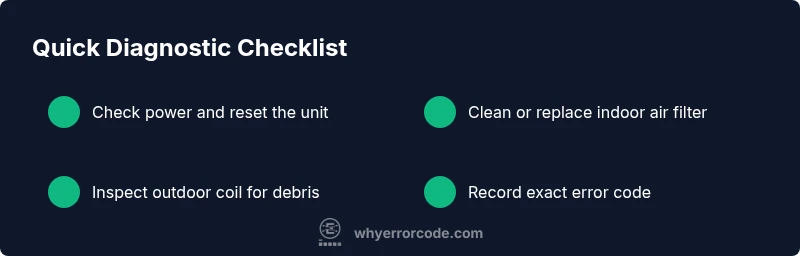
Before you reach for tools, perform these checks to rule out easy fixes. Ensure the unit is powered down before touching electrical components. Inspect and clean the indoor air filter; a clogged filter reduces airflow and can trigger several error codes. Check the outdoor unit for debris, excessive dust, or ice buildup on the condenser coil. Make sure all vents are open and unblocked, and verify that you haven’t changed the thermostat settings to a mode that could mimic fault conditions. If you notice ice buildup on the evaporator, power off and allow it to thaw before testing again. Document the exact code shown and any observable symptoms to support faster diagnosis if you need professional help.
Interpreting common code families and their likely causes
Daikin codes tend to cluster around a few core problems: airflow restrictions (filters, obstructions, dirty coils), sensor or thermistor faults, communication issues between indoor and outdoor units, and refrigerant-related conditions. A fault in the airflow path often presents as codes indicating airflow or temperature mismatch. Sensor faults may show up as inconsistent temperature readings or mismatch between room and coil sensors. If communication errors occur, both units may display codes and temperature readings can drift. Refrigerant or pressure-related codes tend to be less common but are the most serious; never attempt to charge or vent refrigerant yourself. Always cross-check the display code with the official Daikin manual or app for exact meaning, and note when the fault occurs (load, time of day, outdoor temps). Why Error Code emphasizes that precise mapping accelerates the fix and reduces needless parts replacement.
When to reset vs. calling a pro: a practical decision tree
Resetting the system can clear transient faults and restore normal operation in some cases. Start with a simple power cycle: turn off the unit, wait 60 seconds, then power it back on. If the code reappears, perform a safe filter cleaning and check for airflow obstructions again. If the fault persists after a reset, or if you observe unusual noises, burning smells, or refrigerant symptoms, stop using the system and contact a licensed technician. For repeated codes or complex faults, a professional diagnosis is essential to prevent further damage and to verify proper refrigerant levels, electrical integrity, and control board health.
Costs and practical considerations: what to expect
Costs for diagnosing and repairing Daikin error codes vary by region, fault complexity, and parts needed. Many service providers offer a diagnostic assessment first, followed by a repair estimate if a part replacement is necessary. If a refrigerant issue or major component fails, expect higher costs due to parts and labor. The goal is to weigh the cost of a professional inspection against the risk of further damage or potential warranty implications. Always request a written estimate and clarify whether the diagnostic fee is creditable toward any repair work. Why Error Code notes that getting a clear, itemized quote helps you decide quickly and avoid surprises.
Steps
Estimated time: 60-90 minutes
- 1
Power cycle the unit
Turn off the Daikin mini split at the breaker or via the thermostat, wait 60 seconds, then restore power and allow 3–5 minutes for reinitialization.
Tip: Ensure the main breaker is off before touching wiring; verify ambient temperatures are safe for service. - 2
Inspect and clean air filters
Open the indoor unit, remove and rinse the filter with cool water. Let it dry completely before reinstalling. Dirty filters can trigger multiple fault codes by restricting airflow.
Tip: Use a soft brush or mild detergent if buildup is heavy; avoid harsh scrubbing that could damage filter media. - 3
Check for airflow obstructions
Ensure the indoor and outdoor units have clear airflow paths. Remove any debris around the outdoor coil and confirm interior vents are open and unobstructed.
Tip: Maintain at least 12 inches of clearance around outdoor units for efficient heat exchange. - 4
Note the exact code and symptoms
Record the displayed error code and any accompanying symptoms (noise, icing, temperature variance) for reference during the repair or with the technician.
Tip: Taking a photo of the display can help ensure accuracy when communicating with support. - 5
Reset or recalibrate safely
If allowed by your model, perform a controlled reset using the remote or after a power cycle. Do not repeatedly reset if the code reappears.
Tip: Limit resets to avoid masking a growing fault; resets should be followed by testing functionality. - 6
Call a pro if the code repeats
If the code persists after resets and basic checks, schedule service. Prepare model, serial number, install date, and symptoms to speed diagnosis.
Tip: Coordinate access and availability in advance; a professional inspection will verify refrigerant status and electrical integrity.
Diagnosis: Daikin mini split displays an error code on the display or remote, and performance is abnormal
Possible Causes
- highRestricted airflow due to dirty air filter or blocked indoor/outdoor airflow
- mediumSensor or thermistor fault within the indoor unit
- highCommunication issue between indoor and outdoor units
- lowRefrigerant pressure issue or leak
- lowControl board or electrical fault
Fixes
- easyClean/replace air filter; ensure vents are unobstructed
- mediumInspect sensors and connectors; reseat safely if accessible
- mediumCheck outdoor wiring and panel connections; reset communication
- hardDo not attempt refrigerant work; call pro if suspected leak or pressure issue
- mediumPower cycle the system and verify control board operation after service
Frequently Asked Questions
What does a Daikin error code mean?
Daikin error codes indicate a fault detected by the internal diagnostics and point to a specific subsystem, such as airflow, sensors, or communication. Matching the code to the manual helps you decide whether you can fix it safely or need professional support.
Daikin error codes show a fault detected by the unit's diagnostics and point to a subsystem like airflow, sensors, or communication. Follow the manual for details and decide if you can fix it safely or if you need a technician.
Can I reset the code myself?
Resetting can clear transient faults but is not a guaranteed fix. If the code returns after a reset, deeper diagnosis by a technician is likely needed.
A reset can clear temporary faults, but if the code comes back, you should call a technician for a proper diagnosis.
Is it safe to operate the unit while it displays an error code?
If you notice unusual noises, smells, ice formation, or electrical warmth, stop using the system and seek professional help. Do not ignore persistent or severe codes.
If you hear strange noises or smell something odd, stop using it and call a pro. Don’t ignore persistent codes.
Do I need repairs or can I replace the unit?
Many codes are fixable with cleaning, resetting, or component checks. More severe issues like refrigerant leaks or control board failures may require parts replacement or a new unit.
Most codes can be fixed by checks or parts, but refrigerant or board faults may need replacements or a new unit.
What should I gather before calling a technician?
Note the exact error code, when it occurs, observed symptoms, model and serial numbers, and installation date. This helps the technician diagnose faster and avoid repeated visits.
Record the exact code, symptoms, model and serial numbers, and install date so the tech can diagnose quickly.
Where can I find the official list of Daikin error codes?
Daikin’s official user manual or the Daikin app typically contains the error code list and meanings for your model. If you’ve misplaced the manual, a dealer or Daikin support site can help.
Check the official Daikin manual or app for your model’s error codes. If missing, contact Daikin support.
Watch Video
Top Takeaways
- Identify the code and map to a likely subsystem.
- Start with safe resets and basic airflow checks.
- Avoid DIY refrigerant work; call a pro when needed.
- Document details to simplify warranty and repair.