P5 Error Code on della Mini Split: Quick Fixes and Step-by-Step Guide
Urgent guide to diagnosing and fixing the P5 error on della mini split. Learn quick resets, sensor checks, and when to call a pro, with a clear diagnostic flow, step by step repairs, and prevention tips.


The P5 error on a della mini split indicates a refrigerant pressure sensor fault or a related safety condition. Start with a reset, verify wiring, and inspect the outdoor unit for ice or debris. If the code reappears after a reset, power down and contact a qualified technician.
What the P5 Error Code Indicates
The della mini split p5 error code signals a safety fault in the refrigerant circuit or a sensor fault that prevents safe operation. According to Why Error Code analysis, P5 can stem from a faulty refrigerant pressure sensor, a communication error between indoor and outdoor units, or an abnormal refrigerant charge. Quick action is required to avoid compressor damage or refrigerant leaks. The error is not just a random alarm; it is the system communicating that a critical safety threshold has been breached. Treat P5 as urgent and move through checks methodically rather than guessing. Start with the simplest reset, then proceed to hardware checks if the unit remains locked out. Always assume electrical safety first, and wear protective gloves if you access wiring.
What makes this code urgent is that it often accompanies a protective shutoff. Running the unit in a fault state can worsen component wear or trigger refrigerant exposure concerns. Why Error Code recommends documenting the code, time, and any recent changes to the system so a technician can reproduce the fault reliably if professional service is required.
Understanding P5 helps you decide when to take action and when to call for professional support. The most common underlying causes are sensor faults or refrigerant-related safety triggers, both of which require careful handling and, if needed, professional service to restore proper operation.
Immediate Quick Fixes to Try Now
Before calling for service, try these safe, quick actions that cover the most common P5 triggers. Many users see a reset clear the fault temporarily, but if the condition persists, professional diagnosis is advised.
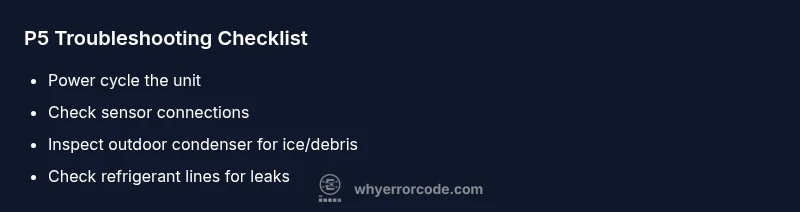
- Power cycle the unit: turn off the breaker or disconnect the power supply for 5 to 10 minutes, then restore power. This resets the microcontroller and can clear transient faults.
- Check electrical connections: ensure the main power, contactor, and control wiring are secure. Loose connections can mimic sensor failures.
- Inspect the outdoor unit: look for ice buildup, blocked coils, or debris that restricts airflow. Clear any obstructions and allow proper airflow.
- Inspect indoor airflow: replace or clean the air filter and verify that the indoor fan is operating correctly. Poor airflow can trigger safety responses.
- Verify thermostat and control signals: ensure the remote or wall pad communicates properly with the indoor unit and that mode and setpoint changes register.
- Do not bypass safety features: if the fault remains after these steps, do not continue to operate the unit. A pro should assess refrigerant charge and sensor health.
These steps are designed to cover the most common, non-invasive causes of P5. If the fault remains after completing them, prepare for a professional diagnostic service, as refrigerant handling or sensor replacement requires certified procedures.
Diagnostic Clues: Symptom to Cause to Fix
When P5 appears, start with the most likely problems and move toward less likely possibilities. This approach minimizes risk and speeds up resolution. The following flow captures typical symptoms, probable causes, and practical fixes in order of likelihood. The goal is to empower you to decide quickly whether a reset, wiring check, or service call is the right move. Early attention to airflow, coil cleanliness, and sensor connections is especially important in humid environments where condensate and ice can form rapidly. Remember that refrigerant-related issues may indicate a leak or improper charging, both of which require a licensed technician.
Symptoms: Unit shuts down or the display shows P5; system not cooling or heat pumping under normal conditions. Most likely causes (high/medium/low):
- Sensor fault or wiring issue (high)
- Refrigerant charge problem or leak (medium)
- Inter-unit communication fault (low)
- Control board fault (low)
Common fixes by likelihood:
- High: Power cycle, reseat sensor connectors, verify basic electrical supply
- Medium: Inspect refrigerant lines for oil residues or leaks; schedule refrigerant service if needed
- Low: Check for firmware updates or minor control board reseating
If the fault persists after these steps, the next recommended moves involve sensor testing with proper tools and, if needed, refrigerant service by a licensed technician.
Safety Precautions and When to Call a Pro
P5 faults should be treated with caution because they involve safety thresholds in the refrigerant circuit and electrical components. Safety first means: disconnect power before any inspection beyond the exterior cover, avoid touching live terminals, and never attempt to recharge refrigerant yourself. If you detect oily residues near joints, a refrigerant leak is possible and must be handled by a licensed technician. If you are unsure about any step, especially when accessing high-voltage parts or refrigerant lines, stop and call a pro.
When to call a professional: if reset attempts fail, if you notice ice on coils that reappears after defrost cycles, if refrigerant lines show signs of leakage, or if the control board shows abnormal behavior after power restoration. A qualified HVAC technician can verify sensor integrity, confirm refrigerant charge, and ensure safe operation.
Step-by-Step Fix: The Most Likely Cause (Sensor/Connection Fault)
Preventive Maintenance to Reduce P5 Recurrence
Maintenance is your best defense against P5. Regular checks improve reliability and reduce emergency calls. Key practices include:
- Schedule seasonal inspections of refrigerant circuits and connections.
- Clean the outdoor condenser coils and ensure proper airflow year-round.
- Replace indoor air filters every 1-3 months, depending on usage and environment.
- Inspect wiring harnesses for wear or looseness and reseat connectors during routine service.
- Monitor for ice formation on coils, particularly during humid or cold periods, and address defrost issues promptly.
- Keep the unit level and free of debris to prevent vibration and premature wear.
These proactive steps not only reduce P5 occurrences but also extend the life of your system and improve efficiency. Working with a qualified technician for annual or semi-annual maintenance can help catch sensor and refrigerant issues early before they trigger safety codes.
Steps
Estimated time: 45-90 minutes
- 1
Power down and safety check
Turn off the unit at the breaker and disconnect power. Wait 5-10 minutes to discharge capacitors before reconnecting power. This resets the microcontroller and may clear transient faults.
Tip: Always verify power is off with a non-contact tester before touching any wires. - 2
Inspect electrical connections
Open the service panel and check all wiring harnesses, connectors, and fuses. Reseat any loose connectors and ensure there is no corrosion or damage to the wires.
Tip: Gentle taps on connectors can help seat them; avoid forcing cables. - 3
Clear outdoor unit and improve airflow
Inspect the outdoor condenser for ice, leaves, or debris. Gently remove obstructions and clean the fins with a soft brush. Ensure the fan spins freely and airflow is unobstructed.
Tip: Never use sharp tools on fins; use a plastic brush instead. - 4
Check refrigerant lines for signs of leaks
Look for oily residues around joints or lines indicating a refrigerant leak. Do not attempt to recharge; leaks require a licensed tech.
Tip: If you see oil around fittings, stop and call a pro. - 5
Test indoor airflow and thermostat signal
Ensure the air filter is clean and the indoor fan runs. Verify that the thermostat or remote communicates setpoints correctly.
Tip: Reset the remote if it loses synchronization with the indoor unit. - 6
Run built-in diagnostics (if available)
Many models have a diagnostic mode for sensor or communication tests. Follow the manual to run a short self-test.
Tip: Document any fault codes that appear during the test. - 7
Review results and plan next steps
If the fault clears, monitor performance for a few cycles. If P5 returns, prepare for professional service with records.
Tip: Note the time, conditions, and any changes you made during troubleshooting. - 8
Engage professional service when needed
If the fault persists after steps above, schedule service for sensor testing and refrigerant assessment.
Tip: Professional service typically includes sensor replacement and refrigerant recovery if required. - 9
Verify resolution
After repair, power cycle again and run a test cycle to ensure P5 stays cleared and the unit operates normally.
Tip: Record the final outcome to share with the technician if needed.
Diagnosis: P5 error code displayed on della mini split, system won’t operate
Possible Causes
- highFaulty refrigerant pressure sensor
- mediumLow refrigerant charge or leak
- lowInter-unit communication fault
Fixes
- easyPower cycle the unit by switching off the breaker for 5-10 minutes, then restore power
- easyCheck indoor wiring connections and fuses, reseat plugs and boards
- easyInspect outdoor condenser for ice or debris and clear obstructions
- mediumIf leak or charge issue is suspected, contact a licensed technician for refrigerant service
Frequently Asked Questions
What does P5 mean on a della mini split?
P5 typically points to a refrigerant pressure sensor fault or a safety condition in the refrigerant circuit. It often requires checking sensors, refrigerant charge, and wiring before deciding on a repair.
P5 usually means the system detected a safety fault in the refrigerant path or sensor. Start with resets and sensor checks, then call a pro if it persists.
Can I fix P5 myself?
Basic resets, cleaning, and checking wiring can address some P5 triggers. If the fault persists, refrigerant service or sensor replacement should be performed by a licensed technician.
You can try a reset and basic checks, but if it stays, get a professional to handle sensor and refrigerant work.
Is P5 dangerous to operate the unit?
Yes, P5 indicates a safety-related fault. Do not operate the system until the fault is diagnosed and resolved by proper steps or a professional.
P5 signals a safety fault, so stop using it and get a professional diagnosis if needed.
How much does it cost to repair P5?
Diagnostics typically cost around a range; technicians may charge roughly $75-$150 for inspection, with refrigerant service or sensor replacement adding $150-$600 depending on the issue.
Expect a diagnostic fee, plus possible sensor replacement or refrigerant service if needed.
What maintenance helps prevent P5 recurrence?
Regularly clean filters, inspect outdoor coils, ensure good airflow, and schedule seasonal HVAC maintenance to catch sensor or refrigerant issues early.
Keep up with regular maintenance to catch sensor or refrigerant problems before they trigger P5.
When should I call a pro immediately?
If reset attempts fail, if you see oil near joints, or if refrigerant signs are present, contact a licensed HVAC technician promptly.
Call a technician if resets don’t help or you suspect a refrigerant leak.
Watch Video
Top Takeaways
- Reset first to clear transient faults
- Check sensors, wiring, and airflow before contacting a pro
- P5 often signals sensor or refrigerant safety issues
- Regular maintenance reduces recurrence and improves efficiency