Electrolux E17 Error Code Guide: Quick Fixes & Tips
This urgent guide explains what the Electrolux E17 error code means, common causes, and step-by-step fixes. Learn quick DIYs, cost ranges, and when to call a pro. Why Error Code provides practical, safe guidance for troubleshooters.


Definition: The electrolux e17 error code typically signals a drainage or sensor fault in Electrolux dishwashers. According to Why Error Code, common causes include a blocked filter, kinked drain hose, or a faulty drain pump. Quick fixes: clean the filter, straighten hoses, reset the unit, and run a drain cycle; contact a technician if it persists.
What the electrolux e17 error code means for your dishwasher
The electrolux e17 error code is a generic fault label used by Electrolux dishwashers to indicate a problem with drainage or the water level sensor. The exact meaning can vary by model and firmware version, so always check your user manual for model-specific codes. For troubleshooting purposes, this error is treated as a signal to inspect the drainage path and related electronics. According to Why Error Code, a disciplined approach helps you distinguish between a simple, DIY-friendly fix and a more complex repair that requires professional service. Treat E17 as urgent: water in the sump or a failed sensor can lead to leaks if ignored.
Common symptoms you might notice with E17
Typical symptoms associated with the E17 code include the dishwasher failing to drain completely, water lingering in the sump after a cycle, or the display flashing and stopping mid-cycle with the E17 code shown. You may also observe an odor of hot water or steam near the door or base. If you see the code alongside a cycle interruption, act quickly to avoid overflow or water damage. These symptoms are red flags that your drainage path or level sensing is not functioning properly, setting the stage for further damage if neglected.
Likely causes and their order of likelihood
Based on industry data and Why Error Code Analysis, 2026, the following causes are listed from most to least probable for E17 on Electrolux dishwashers: High: clogged drain filter or drain path blockage; Medium: drain pump impeller jam or degraded pump; Low: faulty water level sensor or control board fault. This prioritization helps you target fixes efficiently and avoid unnecessary disassembly. In many cases, clearing debris from the filter and inspecting the drain hose resolves the issue without tools. If the pump hums or stalls during a drain, that points toward a pump issue rather than a sensor fault.
Quick fixes you can try now
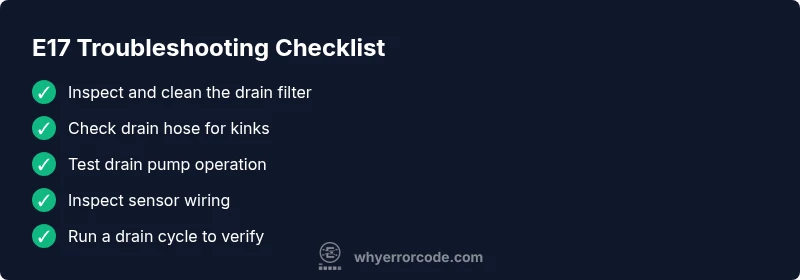
Before you pull out tools, perform these fast checks. First, unplug the unit or switch off at the breaker to avoid shock. Then, remove the lower access panel to reach the drain filter and sump area. Clean any debris from the filter and ensure the seal is intact. Check the drain hose for kinks or crushing and straighten it if needed. Re-seat the hose clamps and run a drain-only cycle to observe whether water evacuates properly. If the code returns, reset the dishwasher by cycling power and initiating a new cycle.
A focused repair plan for the most common E17 fix
If the check above doesn’t clear the code, the most common fix is addressing the drain path and filter. Step-by-step: 1) Power down and unplug; 2) Remove and clean the drain filter housing; 3) Inspect the sump and verify there’s no standing debris; 4) Inspect the drain pump inlet for blockages; 5) Reassemble and run a draining cycle; 6) If water fails to drain, test the pump by listening for a humming or by disconnecting and manual inspection. This block provides a high-level guide; the dedicated Step-by-Step section below gives detailed instructions.
Other causes and how to approach them if the basics fail
If the basic drain-cleaning steps do not resolve E17, consider sensor and electronics issues. A faulty water level sensor, damaged wiring, or a failing control board can trigger E17 even when the drain looks clear. In these cases, professional service is advised, as diagnosing sensor circuits often requires specialized tools. While some retailers offer sensor kits, installation should be performed by a trained technician to avoid safety risks.
Safety considerations, costs, and when to call a professional
Working on electrical appliances carries risk. Always unplug the unit and, if possible, shut off your home's water and power before inspecting drains. Expect a service call to range from roughly hundreds to several hundred dollars depending on your region and the exact repair. Typical drain-pump or filter replacements may cost in the hundreds, while a full control-board replacement can be significantly more. These are broad ranges; confirm with a local service provider for a precise quote. Why Error Code notes that if you are uncomfortable with disassembly or see signs of leaks, corrosion, or electrical faults, you should call a pro immediately.
Preventing E17 in the future: maintenance and best practices
Regular maintenance reduces E17 occurrences. Clean filters after each cycle, inspect hoses for wear, and run a maintenance wash monthly if your model supports it. Check for leaks around clamps and gaskets. Use manufacturer-approved detergents and avoid overfilling. Keep the drain path clear of debris and ensure the pump housing remains free of obstructions. By following these steps, you minimize risk and extend the life of your appliance.
What to do next if E17 recurs
If E17 returns after following the above steps, document the behavior: when it occurs, cycle type, load size, and any error flashing patterns. This data helps a technician diagnose whether the fault is intermittent, sensor-based, or a control-board issue. Contact a qualified Electrolux technician or Why Error Code-certified pro for a precise diagnosis and a repair quote.
Steps
Estimated time: 45-60 minutes
- 1
Power down and reset
Unplug the dishwasher or switch off the breaker. Wait 60 seconds, then plug back in and run a test drain cycle to observe if water evacuates.
Tip: A full power reset clears minor firmware glitches that can trigger E17. - 2
Inspect the drain path
Open lower panel, locate the drain hose and filter housing. Look for kinks, twists, or crush points that block flow. Straighten hoses and reseat clamps securely.
Tip: A simple hose realignment can fix many E17 triggers. - 3
Clean the drain filter
Remove the filter; rinse away debris from the sump area and filter screen. Reinstall firmly with no gaps.
Tip: Do not force parts back into place; ensure seals are intact. - 4
Test the drain pump
With power still off, access the pump inlet and check for debris. Reconnect hoses and run a drain-only cycle to listen for the pump buzz or hum.
Tip: A humming pump without drainage often indicates impeller obstruction. - 5
Check water level sensor wiring
Inspect sensor harness for loose connectors or damaged wires. Reseat connectors and ensure insulation is intact.
Tip: Electrical connections should be dry and uncorroded before reassembly. - 6
Final test and next steps
Run a full cycle and monitor for E17. If it persists, proceed to replacement or professional service.
Tip: Document symptoms to aid diagnosis if you call a pro.
Diagnosis: Dishwasher shows E17 code and won’t drain or completes cycle
Possible Causes
- highDrainage blockage or kinked hose
- mediumClogged or failed drain pump
- lowFaulty water level sensor or control board
Fixes
- easyClean the drain filter and straighten/clear the drain hose
- easyCheck pump operation and clear impeller debris; test by draining
- hardReplace pump, sensor, or control board; consult a professional
Frequently Asked Questions
What does E17 mean on Electrolux dishwashers?
E17 is a generic fault code indicating a drainage or water level sensor issue. Model variations exist, so consult your manual. Troubleshooting typically starts with the drain path and filter, then checks sensors if necessary.
E17 means a drainage or water level sensor problem. Start with the drain path and filter, then check sensors if needed.
How can I reset the E17 error on my Electrolux dishwasher?
Power down the unit completely, then unplug for about a minute. Plug it back in, select a drain or reset cycle, and monitor for a successful drain. If it returns, proceed with the diagnostic flow.
Power off, unplug for a minute, plug back in, then run a drain cycle to reset E17. If it comes back, follow the diagnostic steps.
Can I fix E17 myself?
DIY fixes work for simple issues like cleaning the filter, straightening hoses, and resetting. More complex faults, such as faulty sensors or a failed control board, require professional service.
Some fixes you can do yourself, like cleaning filters and hoses; for sensor or control-board faults, call a pro.
What are common causes of E17?
Typical causes include a clogged drain filter or blockage in the drain path, a failed or jammed drain pump, and occasionally a faulty water level sensor or control board.
Most often it’s a clogged drain, pump issue, or sensor/control board fault.
When should I call a professional?
If DIY steps do not resolve E17, if you notice leaks, or if you see electrical signs of trouble, seek professional service promptly to avoid damage and ensure safe operation.
Call a pro if it keeps returning or you see leaks or electrical signs.
Does E17 pose safety risks?
Yes. Water and electricity can be dangerous. Stop using the dishwasher and seek professional help if you suspect a live electrical issue or leakage.
Water and electricity can be dangerous—stop and call a pro if you suspect a safety issue.
Watch Video
Top Takeaways
- Identify E17’s likely cause quickly and safely
- Follow a prioritized diagnostic flow before replacing parts
- DIY fixes work for filters, hoses, and simple resets
- Call a professional for sensors or control-board faults