Dishwasher Error Code 17: Urgent Diagnosis and Fixes
Urgent guide to diagnosing and fixing dishwasher error code 17, with quick fixes, step-by-step repair, safety notes, and prevention tips for a fast return to reliable cleaning.


Dishwasher error code 17 indicates a fault in the appliance's water management system, most often tied to drainage or inlet supply. In most cases, a quick reset followed by checking the filter, drain pump, and inlet valve resolves the issue. If the code reappears, stop using the machine and proceed with diagnostics or call a technician.
What Dishwasher Error Code 17 Really Means
Dishwasher error code 17 is a catch-all fault indicator used by many brands to signal a problem with water management. It doesn’t tell you exactly which component is failing; instead, it flags something in the water handling path—usually the drain system, water inlet, float sensor, or related control logic. The Why Error Code team emphasizes that E17 is most often reset with a simple check plus a targeted tests. The urgency is real: a fault in water handling can lead to leaks, poor cleaning, or potential electrical risk if the unit runs with water mismanagement. Before you panic, understand you are not alone; most homes experience this at least once. The key is to work systematically, replacing or cleaning components only as needed, and documenting what you find for future reference.
Common Symptoms That Signal E17
Typical symptoms include the dishwasher displaying the E17 code at the end or during a cycle, an incomplete or delayed wash fill, water pooling in the base or along hoses, unusual odors, and the unit stopping mid-cycle. You may also notice excessive vibration from a blocked drain pump or hear gurgling noises if the drain path is obstructed. Keep in mind that codes can vary by brand, so consult your user manual for model-specific definitions. In many cases, addressing a drainage or inlet fault restores normal operation and prevents repeated code displays.
Core Causes: Most Likely to Least Likely (and How to Test)
- Clogged or dirty filter and sump (high likelihood). Food debris and mineral buildup can block water flow, triggering sensors and the control board. Test by removing the lower rack, locating the filter, and rinsing under running water. If the filter screen is damaged, replace it.
- Drain pump or hose blockage (high likelihood). A partial clog prevents proper water evacuation, triggering drainage warnings. Inspect the drain hose for kinks and the pump housing for debris.
- Faulty water inlet valve or supply line (medium likelihood). If the valve or supply line doesn’t open fully, the unit can’t fill correctly, which may trip E17. Check the shut-off valve and look for mineral buildup on the valve.
- Float switch or level sensor failure (medium likelihood). A stuck float can falsely signal high water, causing the control to halt cycles. Locate the float assembly in the sump and verify it moves freely.
- Control board or wiring fault (low likelihood). Loose connections or a failing relay can trigger sporadic codes. Inspect visible harnesses for corrosion or wear and reseat connections if safe to do so.
Quick Fixes You Can Try Right Now
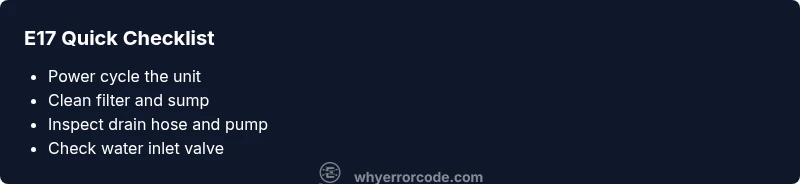
- Power cycle the dishwasher: unplug for 60 seconds, then plug back in and run a test cycle. This resets the code in many cases.
- Clean and inspect the filter: remove, rinse, and reinsert. A clean filter supports proper filtration and drainage.
- Check the drain path: ensure the drain hose isn’t kinked or crushed and that the drain pump is free of debris.
- Inspect water inlet and supply: verify the shut-off valve is fully open and there’s adequate water pressure coming into the machine.
- Test the sensor area: ensure the float moves freely and that there are no obstructions around the sensor.
- Run an empty cycle: with no dishes, observe the fill and drain phases to confirm proper operation. If the code returns, proceed with the deeper checks below.
Step-by-Step Repair: Most Common Fix (Drain Pump/Filter) – Detailed Guide
This section provides a focused, safe, and practical repair path for the most common E17 trigger: drainage issues. Follow each step carefully and never operate the machine while open.
- Power down and access the sump area
- Unplug the machine or switch off the circuit breaker. Remove the lower front panel if your model allows access to the sump area. Keep working area dry and clear.
- Tip: Have a shallow tray ready to catch residual water in the sump. A towel helps, too.
- Remove and clean the filter and sump screen
- Take out the filter assembly and rinse under warm water. Use a soft brush to dislodge buildup without scratching the plastic.
- Tip: Inspect the filter gasket for cracks; replace if damaged to prevent leaks.
- Inspect and clear the drain pump and hose
- Remove debris from the pump motor housing and check the impeller for obstruction. Detach the drain hose and inspect for kinks or clogs at both ends.
- Tip: If you find a stubborn blockage, use a flexible brush or thin pipe-cleaning tool—avoid forcing objects that could damage the pump.
- Reassemble and test the drainage
- Reinstall the filter, sump, and hoses. Reconnect power and run an empty cycle focusing on the drain phase. Listen for normal drainage with no unusual noise.
- Tip: If the code persists, you may have a pump relay issue or a blocking sensor; continue troubleshooting beyond this point.
- Check the drain pump electrical connections
- With power off, reseat or replace any loose connectors to the drain pump. Look for corrosion or damaged wires; replace any compromised harnesses.
- Tip: Use dielectric grease on connections to resist future corrosion.
- Re-test with a full load (optional safety note)
- If drainage tests are successful, run a normal wash with dishes. Do not run on a high-load cycle until you’re confident the drainage path is clear.
- Tip: If the code reappears, escalate to more advanced checks (inlet valve, sensor, or control board) or call a professional for a deeper diagnosis.
Other Possible Causes and How to Address Them
If drainage fixes don’t resolve E17, explore other potential culprits. A limited water supply can mimic drainage issues; ensure your home valve is fully open and the inlet screen is clean. A malfunctioning float switch or sensor might falsely signal an overfill or underfill condition; verify smooth operation and recalibrate if recommended by the manufacturer. A faulty control board or wiring can manifest as sporadic codes; in this case, inspect harnesses for wear and consider professional diagnostics. Always verify model-specific guidance in your user manual before swapping parts.
Safety Warnings and When to Call a Professional
- Always unplug before accessing internal components to avoid electrical shock. If there’s visible water leakage, stop using the unit and disconnect power immediately.
- Do not attempt high-voltage repairs or replace a main control board unless you have electronics repair experience. Some repairs may require specific tools and safety protocols.
- When to call a pro: if the code persists after basic cleaning and checks, if you’re unsure about electrical work, or if you notice burning smells, leaks, or signs of water intrusion near electrical components. Cost ranges vary by region and component, with typical parts costing between $20–$150 and labor between $60–$250; total repair often falls in the $100–$450 range depending on the exact fault and model.
Prevention Tips to Avoid E17 Recurrence
- Clean the filter and spray arms monthly to prevent buildup that blocks drainage and affects inlet performance.
- Run an occasional empty cycle with a dishwasher-safe cleaner to remove mineral deposits and limescale that can affect sensors.
- Inspect hoses and clamps for wear and replace as needed to prevent leaks that trigger safety shutoffs.
- Record model details and recent repairs to simplify future troubleshooting and ensure compatible parts.
Steps
Estimated time: 60-90 minutes
- 1
Power cycle and access the sump
Unplug the unit or switch off the circuit breaker. Remove the lower panel to access the sump area; ensure the area is dry before touching any components.
Tip: Have a shallow tray ready to catch residual water. - 2
Remove and clean the filter
Take out the filter and rinse it under warm running water. Use a soft brush to clear debris from the screen and ensure the gasket is intact.
Tip: Inspect the gasket for cracks; replace if damaged. - 3
Check the drain pump and hose
Look for clogs in the pump housing and inspect the drain hose for kinks or blockages. Clear any obstruction with a flexible brush.
Tip: Never force a tool into the pump; use gentle maneuvers. - 4
Test the water inlet valve
Ensure the shut-off valve is fully open and listen for a clicking sound when the valve is commanded to open. Check for mineral buildup on the valve screen.
Tip: If you hear no valve response, the inlet control could be faulty. - 5
Inspect float switch and sensors
Move the float assembly up and down to confirm it moves freely and returns to its resting position. Look for obstructions around the sensor.
Tip: A stuck float is a common cause of false overfill signals. - 6
Run a test cycle and assess
Reconnect power and run a no-load or light-load cycle. Observe the fill and drain phases and ensure there are no alarms or leaks.
Tip: If the code reappears, escalate to further diagnostics or professional service.
Diagnosis: Dishwasher displays error code 17 and drains improperly or fails to fill correctly
Possible Causes
- highClogged filter/sump causing poor drainage
- highDrain pump blockage or failure
- mediumInsufficient water supply or inlet valve fault
- mediumStuck float switch or faulty level sensor
- lowControl board or wiring fault
Fixes
- easyClean the filter and sump; inspect for debris
- easyInspect and clear the drain pump and hose
- easyConfirm water supply is fully open and inlet valve operates
- mediumTest/replace float switch or level sensor
- hardInspect control board wiring or replace board if needed
Frequently Asked Questions
What does dishwasher error code 17 mean, and is it the same across brands?
E17 generally signals a water management fault, which can involve drainage, filling, or sensor systems. Brand-specific definitions vary, so consult your manual for model details.
E17 usually means a water-management fault; check drainage and filling components first. Brand specifics vary, so refer to your manual.
Can I fix E17 myself, or is a pro necessary?
Many drivers of E17 are addressable with basic maintenance (filter cleaning, drain path checks, and resets). If the code persists after these steps, a professional diagnostic is recommended.
You can try basic maintenance, but if the code stays, call a professional.
What are the typical costs to fix E17?
Costs vary by fault. Parts may range from $20–$150, labor from $60–$250; total repairs commonly fall between $100–$450 depending on the issue and model.
Most fixes cost between $100 and $450, depending on the part and service.
Is it safe to run the dishwasher after a suspected drain issue?
Only run a no-load or light-load test after completing drainage checks. If you observe leaks or unusual noises, stop and seek professional help.
Run only empty cycles after drainage work; otherwise stop and consult an expert.
What should I do if water leaks during inspection?
Shut off power at the source immediately and relocate the appliance away from the leak. Do not touch exposed wiring; contact a technician.
If water leaks, power off and call a pro right away.
How can I prevent E17 from returning?
Perform regular filter cleaning, inspect hoses and clamps, and run periodic maintenance cycles with a dishwasher-safe cleaner to reduce mineral buildup.
Keep filters clean and run maintenance cycles to prevent E17.
Watch Video
Top Takeaways
- Follow a methodical, documented approach.
- Start with simple resets and cleaning before complex repairs.
- Know when to call a professional to avoid further damage.
- Prevent recurrence with routine maintenance.