Electrolux Washing Machine Error Code E21: Drain Fault Diagnosis and Fix
Urgent guide to diagnosing and fixing the Electrolux washing machine error code e21. Learn causes, quick fixes, step-by-step repairs, safety tips, and when to call a pro for reliable results.


electrolux washing machine error code e21 indicates a drainage fault. In most cases the issue is in the drain path—filter, hose, or pump. Start with a quick fix: unplug, clean the drain filter, inspect the drain hose for kinks, and test the drain pump. If the problem persists, perform a reset and prepare for professional service if needed.
What electrolux washing machine error code e21 Means for your unit
The term electrolux washing machine error code e21 points to a drainage fault. It appears when the machine cannot successfully drain the final rinse or empty the tub. This is a common fault that interrupts cycles and can lead to standing water in the drum. For many users, E21 is not a fatal hardware failure but a signal that the drain path needs attention. If you own an Electrolux washer, you’ll want to treat this as a drain fault that is usually fixable with owner-level diagnostics and some careful cleaning or part replacement. Remember, safety comes first; unplug the machine before you start any checks, and never work on live electrical components.
The keyword to anchor your troubleshooting is the drain path: filter, hose, pump, and related sensors. When you see E21, you should verify that water can flow out of the drum easily and that no step in the drainage sequence is blocked or delayed. A fast, methodical approach often resolves the issue without professional service, but if you still see E21 after the checks, it’s time to escalate.
Common Causes of E21 Drain Fault
E21 commonly arises from issues in the drainage route. Here are the typical culprits, listed from most to least likely, so you know where to start.
- Clogged drain filter or sump debris: This is a high-likelihood cause. A blocked filter restricts flow and triggers the drain fault. Regular cleaning of the filter is a simple, high-impact fix.
- Blocked or kinked drain hose: A blocked hose or a bend in the line prevents water from exiting. This is another high-likelihood scenario that’s quick to diagnose.
- Drain pump failure or impeller jam: If the pump isn’t turning or can’t pump water out, E21 can appear. This is a medium likelihood cause and may require a replacement part.
- Faulty water-level sensor or control board: A low-likelihood cause, but it can miscommunicate the drain cycle and trigger E21 even if the path is clear.
Understanding these causes helps you triage efficiently. Each fix should start with the easiest, lowest-cost option and advance to components that require parts or professional service if the error persists.
Quick Home Fixes Before Service
Before you call for service, try these non-invasive, quick fixes that solve many E21 drain faults:
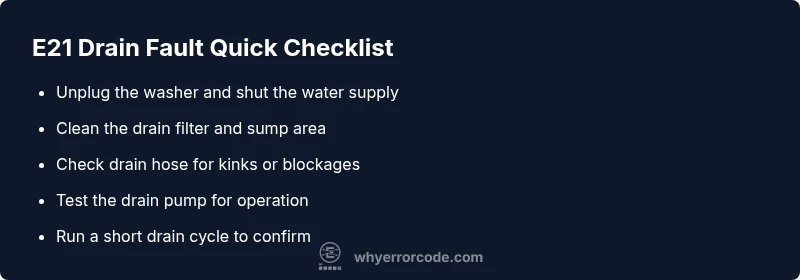
- Unplug the washer and shut off the water supply. Safety first—do not work on a live mains-powered appliance.
- Locate and clean the drain filter and sump. Remove debris such as lint, coins, or hair that could be blocking the drain path.
- Inspect the drain hose for kinks, twists, or blockages. Straighten the hose and clear any obstruction.
- Check the drain pump operation by listening for the pump motor when the washer runs a short drain cycle. A loud rattle or no sound may indicate a pump issue.
- Run a short drain cycle or the entire wash program to verify if the tub drains successfully after cleaning.
If these steps don’t clear the error, you’ll need to move to more thorough checks or professional service. Quick tests can save time and money by avoiding an unnecessary service call.
Step-By-Step Troubleshooting for the Drain Path
This section expands on the drain path checks to help you diagnose more precisely. It’s designed to be followed in order, with each step building on the previous one.
- Power down and unplug the unit. Disconnect from power and water sources, then remove the front access panel if your model requires it. Tip: Have a towel ready for residual water.
- Access the drain filter and sump. Remove the filter housing, take out any debris, and rinse the filter with running water. Tip: Use a small brush to dislodge lint without damaging the screen.
- Inspect the drain hose for blockages and kinks. Detach the hose from the wastewater line and check for obstructions inside the hose or trap. Tip: Hold the hose at the end to feel for obstructions by hand.
- Test the drain pump operation. With the hose reattached, run a drain cycle and listen for the pump motor. If the pump is silent or makes a grinding sound, it might be failing. Tip: Check the electrical connections for corrosion or loose wires.
- Check the pump impeller and sump area. Look for jammed debris that could impede rotation. If debris is present, clear it out and ensure the impeller spins freely.
- Reset the machine. Some models respond to a reset by unplugging for several minutes or pressing a dedicated reset sequence. Tip: Check the user manual for model-specific reset steps.
- Reassemble, run a test cycle, and monitor. Use a short cycle to confirm drainage completes without error. Tip: If the error recurs, record the exact circumstances for service.
Other Potential Causes and How to Verify
While drain faults are the most common, other factors can masquerade as E21 drain errors. Here’s how to verify if you’re facing a broader issue:
- Water inlet valve or sensor fault: The machine might miscommunicate water levels, leading to drainage confusion. Check wiring to the level sensor and valve for loose connections.
- Control board or firmware glitch: A software fault can trigger drainage misreads. A firmware reset or service update might be required.
- Leaks around the drum or sump: A leak can disrupt pressure readings that inform drain timing. Inspect seals and gaskets for wear.
- Door latch or anti-flood system activation: If the latch is not sensing a closed door, the machine may halt drain cycles for safety.
Verifying these requires careful inspection or professional diagnostics if you’re not comfortable with electronics or water connections.
Safety Warnings and When to Call a Professional
- Always unplug before opening panels or handling electrical components. Water and electricity are a dangerous combination.
- If you see signs of burning smell, sparking, or if you hear loud banging from the pump, stop and call a pro immediately.
- If you’re unsure about any disassembly or fluid handling, schedule professional service to avoid injury or warranty voiding.
- A pro can accurately diagnose subtle control board or sensor issues and provide a reliable repair plan with cost estimates.
Professional service is recommended when the drain path checks do not resolve E21, when you detect pump failures, or when wiring and components require testing with specialized tools.
Preventive Tips to Avoid E21 in the Future
- Clean the drain filter and sump on a regular cadence, such as monthly or every few cycles depending on usage.
- Inspect hoses for wear and replace them if you notice cracks or bulges. Keep hoses straight and free of kinks.
- Use the recommended detergent quantities and avoid overflow situations that force additional drain cycles.
- Schedule annual maintenance checks if your model is prone to sensor or control issues. A quick professional inspection can catch failing components before they trigger E21.
Steps
Estimated time: 30-60 minutes
- 1
Power down and unplug
Disconnect the washer from power and close the water supply. Wait 60 seconds before opening any access panels. This reduces the risk of shock or leaks while you work.
Tip: Keep a note of any unusual sounds when power is reconnected later. - 2
Access the drain path
Open the filter housing and remove any visible debris from the drain filter and sump. Rinse the filter and reinstall securely.
Tip: Place a towel underneath to catch residual water. - 3
Inspect the drain hose
Disconnect and inspect the drain hose for kinks, blockages, or obstructions. Clear any debris and ensure the hose is routed straight into the drain.
Tip: Do not kink the hose when reattaching. - 4
Test the drain pump
With the hose reconnected, run a drain cycle. Listen for the pump motor and check for unusual noises or lack of water movement.
Tip: If there is no sound, the pump may be faulty. - 5
Inspect the sump and impeller
Look for debris in the sump area that could jam the impeller. Remove debris and ensure the impeller spins freely by hand if accessible.
Tip: Be mindful of sharp edges; wear gloves. - 6
Reset and test
Perform the model-specific reset procedure or simply unplug for a few minutes, then run a full cycle to verify drainage completes.
Tip: Note any lingering error codes after the reset. - 7
Decide on repair vs. service
If E21 persists after these steps, document symptoms and contact a professional. The issue may be a failing pump or control board that requires replacement.
Tip: Request a written estimate and parts list.
Diagnosis: Error code E21 displayed on Electrolux washer with water not draining
Possible Causes
- highClogged or dirty drain filter
- highBlocked drain hose or kinks in the hose
- mediumDrain pump failure or impeller jam
- lowControl board fault or faulty water level switch
Fixes
- easyClean the drain filter and remove debris from the sump
- easyUnblock and straighten the drain hose; remove any obstruction
- mediumTest the drain pump for operation; replace if noisy or not pumping
- hardInspect the water level switch and control board connections; repair or replace if needed
Frequently Asked Questions
What does E21 mean on an Electrolux washing machine?
E21 signals a drainage fault. It typically points to issues in the drain path such as the filter, hose, or pump. Start with quick checks and cleaning before considering component replacement.
E21 means there’s a drainage fault. Start with the drain path checks and cleaning before you decide on any component replacement.
Can I fix E21 myself?
Yes for many at-home checks like cleaning the filter and hose. Complex fixes, like a pump replacement or control board issue, may require a professional.
Yes, you can do many checks at home, but larger repairs may need a professional.
How much does it cost to fix E21?
Costs vary by model and repair type. Typical ranges include a low-cost home fix of $50–$150 for parts plus labor, or higher when replacing a pump or control board, roughly $150–$400 total.
Costs depend on parts and labor, but you can expect roughly between a low, DIY fix and a higher-range professional repair.
Should I replace or repair the pump?
If the impeller is jammed or the motor is failing, replacement is often more reliable. If the pump is lightly worn, a rebuild might be possible. A pro can advise based on diagnosis.
Replacement is common for a failing pump, but a technician can confirm if a rebuild is viable.
Is E21 dangerous to ignore?
Ignoring drainage faults can lead to water damage and electrical hazards. Unplug and address the issue promptly, and call a pro if needed.
Yes—don’t ignore it. Unplug the machine and handle it safely, and get a pro if the issue persists.
What’s the best way to prevent E21?
Regularly clean the drain filter, inspect hoses for wear, use the correct detergent amount, and schedule annual maintenance checks to catch issues early.
Keep up with regular filter cleaning and hose checks to prevent drainage problems.
Watch Video
Top Takeaways
- Unplug and inspect drain path first
- Start with filter and hose checks before pump replacement
- Reset and test before calling a pro
- Call a professional if E21 persists after basic fixes
- Regular maintenance prevents drainage faults