Hot Tub HR Error: Urgent Heater Troubleshooting
A practical, urgent guide to hot tub error code HR. Learn what HR means, quick fixes, and a diagnostic path to restore heating safely, with professional help recommended when the fault persists.


HR on a hot tub almost always signals a heater-related fault or an overheating condition. The exact meaning can vary by brand, but HR generally points to the heating system rather than the pump, jets, or control software. This is an urgent indicator: continuing to heat with a fault can risk damage or scalding. According to Why Error Code analysis, HR typically points to a sensor, a thermostat, or a heater relay issue. Common triggers include a faulty temperature sensor, a stuck heater relay, or a failing control board that stops heating altogether. Quick fixes include power cycling the unit, verifying water level and filter cleanliness, checking thermostat settings, and inspecting the heater enclosure. If the HR code reappears, stop and contact a service professional.
What HR Means for Your Hot Tub
HR on a hot tub almost always signals a heater-related fault or an overheating condition. The exact meaning can vary by brand, but HR generally points to the heating system rather than the pump, jets, or control software. This is an urgent indicator: continuing to heat with a fault can risk damage or scalding. According to Why Error Code analysis, HR typically points to a sensor, a thermostat, or a heater relay issue. Common triggers include a faulty temperature sensor, a stuck heater relay, or a failing control board that stops heating altogether. Understanding this helps you respond quickly and safely, preventing costly repairs down the line.
Quick Fixes You Can Try Right Now
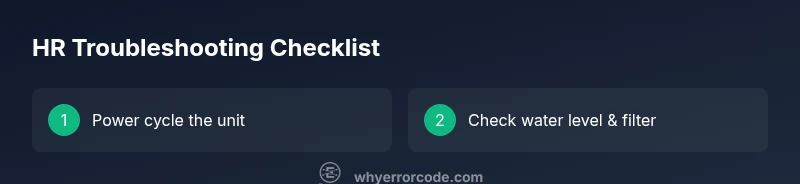
These steps are designed as safe, initial checks you can perform without tools. First, power cycle the spa by turning off the breaker for 60 seconds, then restoring power. Check that the water level covers the heater intake and that the filter is clean. Confirm that the thermostat is set within the recommended range and that the jets are not blocking heat transfer. If the HR code remains after these quick fixes, proceed to the diagnostic flow. Remember: safety first—disconnect power before touching electrical components.
Diagnostic Flow: Symptom to Causes to Fixes
Symptom: Hot tub displays HR and stops heating. Likely causes (prioritized by likelihood): - Faulty temperature sensor or thermistor (high) - Stuck or failing heater relay (medium) - Control board glitch or software fault (low).
Quick fixes: - Power cycle the unit and reset the control panel (easy) - Check sensor wiring and replace sensor if damaged (medium) - Inspect and test the heater relay with a multimeter (hard). This flow helps you decide whether to attempt a repair, or move to more advanced diagnostics or professional service.
Other Possible Causes and How to Address Them
Beyond heater faults, HR can appear due to:
- Low water level or poor water quality, which makes heat transfer inefficient. Fix by topping up water to the correct level and balancing chemicals.
- A dirty or clogged filter restricting flow to the heater. Clean or replace the filter and restart the system.
- Power supply issues or voltage fluctuations. Check for tripped breakers or blown fuses and restore a stable supply.
- Software or control panel glitches. A factory reset or firmware update (if available for your model) can help.
If you try these and HR persists, it’s a strong sign you should involve a professional technician.
Safety Notes, Warnings, and When to Call a Pro
Electrical work around hot tubs carries risk. If you smell burning, notice melted insulation, or find visible wiring damage, stop using the unit and call a licensed technician immediately. Do not bypass safety interlocks or ignore water leaks near electrical components. For most models, a persistent HR fault warrants a professional evaluation to avoid electrical shock, fire risk, or warranty issues.
Prevention: Maintenance to Reduce HR Recurrence
To minimize HR incidents, schedule regular maintenance:
- Test and calibrate the temperature sensor annually.
- Clean the filter and ensure adequate water level before each heating cycle.
- Inspect heater connections for corrosion and tighten any loose wires with the power off.
- Update control software if your model supports it, and keep the manual handy for model-specific reset procedures.
- Have a professional perform a yearly service to verify all electrical components and safety interlocks.
Steps
Estimated time: 30-60 minutes
- 1
Power down the spa
Turn off the circuit breaker to the hot tub and wait 60 seconds to allow capacitors to discharge. Restore power and observe if HR clears or reappears.
Tip: Label the breaker so it’s easy to locate next time. - 2
Check water level and filter
Ensure the water level covers the heater intake and the filter is clean. Poor flow can trigger overheating and HR codes.
Tip: Clean the filter with running water; don’t use harsh chemicals. - 3
Verify thermostat settings
Confirm the thermostat is set within the manufacturer’s recommended range. If it’s too high, the system may trip on overheat.
Tip: Compare to the model’s user manual for recommended temps. - 4
Inspect heater connections
With power off, peek at visible heater wiring for signs of corrosion, burns, or loose connectors. Tighten or replace as needed.
Tip: Only handle wiring if you are comfortable; otherwise skip this step. - 5
Reset control panel
Perform any model-specific reset procedure from the manual. A software hiccup can cause transient HR faults.
Tip: Document the reset steps in case you need to describe them to a tech. - 6
Test with a controlled run
Restore power and run a short heat cycle while monitoring for HR. If it returns, move to professional service.
Tip: Do not leave the spa unattended during a test run.
Diagnosis: Hot tub displays HR and won’t heat beyond set temperature
Possible Causes
- highFaulty temperature sensor or thermistor
- mediumStuck or failing heater relay
- lowControl board glitch or software fault
Fixes
- easyPower cycle the unit and reset the control panel
- mediumCheck sensor wiring and replace sensor if damaged
- hardInspect and test the heater relay with a multimeter (or replace)
Frequently Asked Questions
What does HR mean on a hot tub?
HR typically indicates a heater fault or overheating condition. It signals an urgent need to inspect the heating system and possibly perform a reset or professional service if the fault persists.
HR usually means a heater fault or overheating. Start with a safe power cycle and quick checks, and call a pro if it keeps appearing.
Can I reset HR myself?
A simple power cycle and control panel reset can clear transient errors. If HR returns, there is a deeper issue in the heater circuit or sensor.
You can try a power cycle and reset, but if HR comes back, you should get a professional check.
Is HR dangerous for users?
Overheating can pose burn risks and electrical hazards. Shut off power immediately if you notice unusual heat, burning smells, or damaged wiring.
Yes, HR can be dangerous. Turn off power and call a pro if you suspect damage or overheating.
What will a technician check?
Technicians inspect sensor signals, heater elements, relays, control board, and wiring. They may replace faulty parts or recalibrate the system.
A tech will test sensors, relays, and boards and may replace components.
How much do HR-related repairs cost?
Repair costs vary by model and region, typically ranging from a few hundred to several hundred dollars depending on parts and labor.
Costs vary; expect a few hundred to around six hundred dollars depending on what needs replacement.
Watch Video
Top Takeaways
- Identify HR as a heater fault and act quickly
- Start with safe, quick fixes before diving into repair
- Most HR causes are sensor or relay-related; deeper diagnostics may be needed
- Call a professional for electrical work or persistent HR faults