Hot Tub Error Code: Heater Too Hot
Urgent guide to diagnose and fix the hot tub error code heater too hot, with safe steps, diagnostic flow, and cost ranges. Learn how to reset, test sensors, and prevent overheating in 2026.


An error code heater too hot means the hot tub’s safety system detected an abnormal heat level or a fault in the high‑limit switch, triggering a shutdown. Immediate steps: switch off power at the breaker, allow the tub to cool, and inspect water flow for blockages. If the code persists, contact a qualified service technician.
What This Error Means
A hot tub displaying the heater too hot error code signals that the safety system has detected a temperature condition exceeding safe levels. The high‑limit thermostat and temperature sensor protect you and the equipment; when the water nears or surpasses the limit, the controller trips and the heater shuts down. In practice, this means the fault will appear and heating will pause until the condition is verified safe. If you see hot tub error code heater too hot on the display, treat it as a critical safety warning and proceed with caution. According to Why Error Code, warnings like this are among the most common safety faults in 2026.
Immediate Safety Actions (Power Down First)
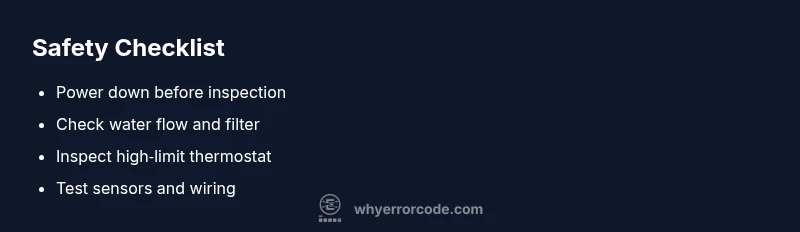
Safety first: power down the tub before inspecting any components. Do not reach into electrical panels while anything is energized. At the breaker: switch off the circuit feeding the hot tub, then unplug the unit if accessible and safe. Wait 30–60 minutes to let components cool, then recheck water flow and cover. Confirm the area is dry and free of standing water before touching wiring.
Diagnostic Flow: Symptoms, Likely Causes, and Quick Fixes
Symptoms typically include the heater shutting off abruptly, a fault code on the display, and a concern that the water isn't heating as expected. Most common causes, listed from highest to lowest likelihood, are: 1) restricted water flow from a dirty filter or pump issue (high), 2) a stuck or faulty high‑limit thermostat (medium), 3) sensor misread or loose wiring (low). Quick fixes start with fundamental checks: verify water level, clean or replace the filter, and restart the system after a cooling period. If the code returns, move to stepwise testing of the thermostat and sensors.
Step-by-Step Fix for the Most Common Cause (Restricted Water Flow)
- Power down safely and remove power at the breaker. 2) Open the filter housing and remove the filter; rinse or replace if dirty. 3) Clean the suction intake and pump strainer; ensure there are no kinks in hoses. 4) Re-seat the filter and run a short test cycle to observe water flow. 5) If the fault persists, inspect the high‑limit thermostat and temperature sensor connections.
Other Causes and How to Address Them
If the problem isn't resolved by improving water flow, investigate other causes: a stuck relay or failed high‑limit thermostat, a faulty temperature sensor, or wiring issues in the control box. For each, the recommended action varies: replace the thermostat or sensor as needed, verify wiring continuity, and consider a control board inspection by a pro. Additionally, ambient heat and air drafts can influence sensor readings; ensure proper enclosure and venting.
Safety, Warnings, and When to Call a Pro
Never bypass safety features or jump-start a heater that has tripped. A 240V system poses serious risk of electric shock; if you smell burning, hear buzzing, or see signs of damage, stop and call a licensed technician. Cost ranges for repairs vary widely: minor tasks like filter cleaning or sensor recalibration might cost $50–$150 in parts and labor; thermostat or sensor replacements typically run $150–$500; control-board repairs or heater replacements can exceed $500 and up. Always obtain a written estimate before authorizing major work.
Maintenance Tips to Prevent Recurrence
To minimize future overheating events, perform routine maintenance: clean filters monthly, test water temperature with a calibrated thermometer, maintain proper water chemistry, and inspect electrical components annually. Replace the spa cover when worn, ensure adequate ventilation around the equipment bay, and schedule professional inspections if the unit is more than 5–7 years old.
Steps
Estimated time: 45-60 minutes
- 1
Power down safely
Switch off the circuit feeding the hot tub at the home breaker and, if safe, unplug the unit. This prevents shock while you inspect components.
Tip: Always unplug before touching electrical parts. - 2
Inspect and clean the filter
Remove the filter, rinse it thoroughly, and reinsert. A clogged filter is a frequent cause of restricted flow and overheating.
Tip: Use a dedicated filter cleaner if available. - 3
Check water flow paths
Inspect the skimmer, pump basket, and return lines for obstructions or air locks. Clear debris and ensure the pump runs smoothly.
Tip: Listen for a steady pump hum during operation. - 4
Test the thermostat and sensor wiring
Look for loose connectors or signs of corrosion on the high‑limit thermostat and temperature sensor wires; reseat or replace as needed.
Tip: Disconnect power when handling wiring. - 5
Reset and test the system
After reassembly, restore power and run a short test cycle to observe whether the heater stays within safe temperature and the code clears.
Tip: If the code reappears, proceed to professional diagnosis.
Diagnosis: Hot tub displays heater too hot error and may stop heating
Possible Causes
- highRestricted water flow due to a dirty filter or pump issue
- mediumStuck or faulty high-limit thermostat
- lowSensor misread or loose wiring
Fixes
- easyClean/replace the filter and verify water flow
- mediumInspect and reset or replace the high-limit thermostat
- mediumCheck sensor connections and replace faulty sensors
Frequently Asked Questions
What does the heater too hot error mean for my hot tub?
It means the safety system detected overheating or a faulty sensor and shut down heating. Inspect flow, filters, and sensors, then retest.
The heater too hot error means overheating detected and the heater has shut off. Check the flow and sensors, then test again.
Can I reset the error code without a technician?
Some models allow a reset after cooling, often via the display menu. If unsure, power down, wait, and power back on to recheck.
Yes, some units reset after cooling, but it's safer to follow the manual or call a pro if it reappears.
How long should I wait for the tub to cool before retrying?
Allow 30–60 minutes for cooling, depending on ambient temperature and tub volume. Do not rush the test cycle.
About 30 to 60 minutes should be enough for cooling before trying again.
If the error returns after reset, what should I do?
If the fault repeats, the problem is likely mechanical or sensor-related. Stop using the unit and consult a professional.
If it keeps coming back, don’t run it—get a technician to diagnose the control or sensor.
Are there safety concerns after overheating?
Yes. Overheating can cause burns or damage insulation. Avoid touching hot components and ensure the area is dry before checking wiring.
Overheating can be dangerous—keep clear of hot parts and call a pro if unsure.
Watch Video
Top Takeaways
- Shut down power safely before inspection
- Prioritize water flow and filters first
- Test thermostat and sensor wiring if flow is clear
- Never bypass safety systems; call a pro if unsure
- Regular maintenance reduces recurrence