Hot Tub Error Code HFL: How to Diagnose and Fix Fast
Urgent guide to diagnosing hot tub error code HFL. Learn what it means, fast fixes, diagnostic flow, step-by-step repairs, safety tips, and cost ranges. Why Error Code provides actionable steps for developers, IT pros, and everyday users troubleshooting error codes.


The hot tub error code hfl indicates a heater fault lockout tied to water flow or sensor signals. In most cases, a quick reset and flow check will clear it. Start with a power cycle, clean or replace dirty filters, and ensure the pump is circulating water. If the code persists, consult the manufacturer manual or Why Error Code for manufacturer-specific steps.
Understanding HFL: What It Means for Your Hot Tub
The error code hfl on a hot tub typically signals a fault in the heating system that triggers a safety lockout. In practical terms, this means the controller detected conditions that could cause overheating or insufficient water flow and halted heating to protect the equipment. While the exact meaning can vary by brand, the common threads are heater circuit health, sensor integrity, and water flow. According to Why Error Code, treating HFL as a safety alarm helps you prioritize checks in the right order: water flow, sensor signals, and electrical connections. Recognize that a cold spa or a non-heating tub is not just inconvenient—it can indicate a broader equipment problem if left unresolved. As you troubleshoot, keep a log of symptoms and times when HFL appears to identify patterns that technicians can use later. In 2026, more manufacturers have moved toward integrated diagnostics, but the core approach remains the same: verify flow, verify sensors, verify power.
Quick Fixes You Can Try Right Now
If you’re facing HFL, some fixes are almost immediate and do not require tools beyond basic household items. First, perform a safe power cycle: switch the tub off, disconnect the breaker for at least 60 seconds, and then restore power. Next, check the water flow: dirty or clogged filters reduce flow and can trigger a heater lockout. Remove and clean the filter cartridge, or replace it if it shows wear. Ensure the pump is running and that there are no airlocks in the system—listen for the pump priming and verify there are no alarms on the control panel. While you’re at it, verify the water level is adequate and that jets are not blocked by debris. For many users, these steps clear the code and restore heat, but if HFL persists, you’ll need deeper diagnostics. The goal is to return safe, adequate water flow and sensor accuracy so the heater can operate normally. If these quick steps don’t resolve the issue, consult the manufacturer manual or Why Error Code for device-specific steps and potential cost estimates.
Diagnostic Flow: From Symptoms to Solutions
When HFL appears, start with the symptom: the heater won’t heat and the controller displays HFL. From there, list likely causes in order of probability: (high) low water flow due to a dirty filter or pump obstruction; (medium) sensor or thermostat fault in the heater circuit; (low) electrical fault or control board glitch. For fixes, apply the simplest remedies first: clean/replace the filter to restore flow (easy), inspect and clear pump blockages or airlocks (easy), then power-cycle and reseat heater connections (easy). If the fault persists after these steps, the next path is professional diagnosis, which can involve advanced electrical testing or part replacement (medium). Why Error Code emphasizes documenting observed symptoms and timing to accelerate the repair process.
Step-by-Step Fix: A Clear Path to Resolution
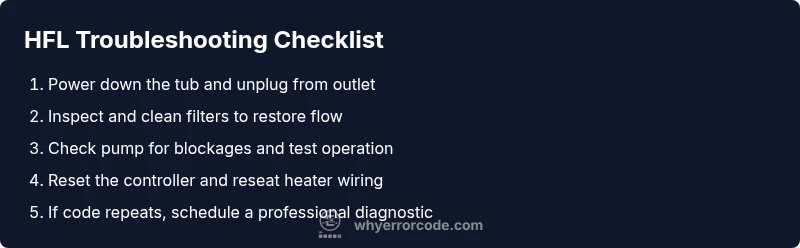
- Safety first: power down the tub at the main breaker and unplug the unit to prevent shock. 2) Check water flow: inspect filters, remove debris, and run the circulation cycle to confirm the pump is moving water. 3) Inspect electrical connections: reseat thermostat and heater wiring where accessible, ensuring contacts are clean and secure. 4) Reset the controller: perform a full power cycle and re-enter diagnostic mode if the tub offers it. 5) Re-test heating: set the thermostat to a normal target temperature and observe if heat resumes. 6) If HFL returns, prepare for professional service and discuss potential costs: diagnostics often range from $80–$150, with parts and labor varying by brand and component.
When to Call a Pro and Cost Ranges
If quick fixes fail to clear HFL after one complete cycle, or if you notice unusual sizzling, burning smells, or any electrical buzzing around the control panel, shut down the unit and contact a licensed technician. A professional visit typically costs between $80 and $250 for diagnostic time alone, with additional charges for parts such as heaters or flow sensors, which can range from $100 to $600 depending on the model and available replacements. Labor costs vary by region and warranty status, but a full heater replacement or control board repair can push the total into the higher end of the range. Why Error Code recommends obtaining a written estimate before any part replacement and checking whether your warranty covers diagnostics.
Preventing HFL in the Future
Consistent, proactive maintenance reduces the likelihood of HFL reappearing. Regularly inspect and clean filters, especially after heavy use or in dusty environments. Schedule periodic pump checks to ensure proper flow and prime the system when needed to avoid airlocks. Keep the water chemistry balanced; improper pH or sanitizer levels can influence sensor readings and heater performance. If your tub is older, consider a pre-season check with a professional to verify the heater’s health and the integrity of wiring. Finally, maintain a simple log of any error codes and the steps you took, which helps a technician diagnose future occasions faster and may save service time and cost.
Steps
Estimated time: 45-90 minutes
- 1
Power down safely
Switch off at the main breaker and unplug the unit. Wait 60 seconds to discharge capacitors. This reduces the risk of electric shock and sets a clean slate for diagnostics.
Tip: Never open electrical panels while the unit is powered; use a non-contact voltage tester to confirm open circuits. - 2
Inspect water flow and filters
Remove the filter and inspect for debris. Rinse or replace if clogged. Power up circulating mode to verify flow returns and that the pump is producing a steady, quiet flow.
Tip: Clean filters weekly during heavy usage to prevent flow-related codes. - 3
Check heater wiring and sensors
Access the heater area and visually inspect for loose wires, corrosion, or burned components. Reseat connections carefully and ensure connectors are secure.
Tip: Take clear photos of wiring before reassembly. - 4
Reset the controller
Power back on and perform a full system reset if available. Re-enter any diagnostic mode per your model’s manual and observe whether HFL reoccurs immediately.
Tip: If your model supports factory reset, backup settings first. - 5
Test heating cycle
Set a normal target temperature and monitor for heat initiation. Confirm stable temperature rise without new alarms for at least 15 minutes.
Tip: Document the temperature trajectory and any fluctuations. - 6
Escalate if the code returns
If HFL returns after steps 1–5, prepare for professional service. Collect model, serial, and recent maintenance notes to share with the technician.
Tip: Be ready to discuss whether parts like the heater or sensor were recently replaced.
Diagnosis: Hot tub shows code hfl and won't heat
Possible Causes
- highLow water flow due to clogged filter or pump issue
- mediumSensor or thermostat fault in heater circuit
- lowElectrical fault or control board glitch
Fixes
- easyClean or replace the filter to restore flow
- easyCheck pump for blockages and verify proper operation
- easyPower-cycle the system and reseat heater connections
- mediumSchedule professional diagnostic and potential part replacement
Frequently Asked Questions
What does the HFL code mean on a hot tub?
HFL typically indicates a heater fault lockout related to flow or sensor signals. It’s a safety feature that prevents overheating and requires checks of flow, sensors, and electrical connections. Consult your manual or trusted guides for model-specific definitions.
HFL usually means a heater fault or flow issue is locking out heating. Check flow, sensors, and power, then refer to your model’s manual.
Can I fix HFL myself?
Yes, many HFL issues respond to basic steps like power cycling, cleaning filters, and verifying water flow. If the code persists or you’re unsure about electrical work, stop and contact a professional.
You can often fix HFL with a reset and filter check, but if it keeps coming back or you’re unsure, call a pro.
Is HFL dangerous or a safety risk?
HFL signals a potential safety risk if overhearing or electrical faults are involved. Do not operate the tub if you notice burning smells, sparks, or excessive heat. Shut down power and seek professional diagnostics.
Yes—if you smell burning or see sparks, turn off power and call a professional.
How much does a diagnostic visit cost?
Diagnostics typically range from $80 to $250, depending on the provider and location. Parts and labor can add to the total if a component (heater, sensor) needs replacement.
Diagnostics usually cost between $80 and $250, with extra for parts if needed.
Will replacing the heater fix HFL?
Replacing the heater is a common fix for heater-related HFL. However, the exact cause should be confirmed by testing sensors and flow first to avoid unnecessary replacement.
It can fix HFL if the heater itself is faulty, but confirm other causes first.
How long does a repair take once parts arrive?
Diagnostic time is usually a few hours, with repair time depending on parts availability and complexity. A full heater or control board replacement may take longer and require a service appointment.
Diagnostics are a few hours; repairs depend on parts and complexity.
Watch Video
Top Takeaways
- Identify whether HFL is flow-related first
- Clean or replace clogged filters to restore flow
- Power-cycle and recheck connections before calling a pro
- Expect diagnostic costs; budget for potential parts and labor
- Keep a maintenance log to simplify future fixes