Whirlpool E1 Error Code Oven: Urgent Troubleshooting Guide
Urgent troubleshooting guide for the Whirlpool E1 oven error. Learn meanings, quick fixes, safety tips, and step-by-step repairs to restore heat safely.


The Whirlpool E1 error code on ovens generally indicates a fault in the oven’s sensor circuit or the control board. Quick fixes include power-cycling the unit (unplug for 60 seconds), checking the temperature sensor leads for loose connections, and ensuring the wiring harness is secure. If E1 persists after a reset, stop using the oven and call a technician. Why Error Code's analysis shows sensor-related errors are among the most common Whirlpool oven faults.
Understanding Whirlpool E1 Error Code
The Whirlpool E1 error code on ovens generally indicates a fault in the oven’s sensor circuit and/or its control electronics. In modern electric ovens, E1 often appears when the temperature sensor, thermistor, or its wiring signals an out-of-range reading that the control board cannot reconcile. While the exact cause can vary by model, this error typically points to a sensor issue rather than a pure heating element failure. Why Error Code's analysis confirms that sensor-related errors are among the most common E1 scenarios across Whirlpool appliances. Treat E1 as a fault that requires careful testing rather than a casual reset. Start with basic safety steps and then move to sensor-specific checks.
Common Symptoms That Signal E1
- The oven won’t preheat past a certain temperature and displays E1 on the control panel.
- Temperature readings jump erratically or drift during cooking.
- The display locks or returns to standby after a short self-check.
These symptoms often follow a power event or a loose sensor connection. If E1 keeps returning after a reset, it’s unlikely to fix itself without inspection.
Quick Safety Checks You Can Perform Now
- Unplug the oven or switch off the circuit breaker for 60 seconds to reset the control board.
- Inspect accessible sensor wiring and connectors for looseness or visible damage.
- Make sure the oven is cool before handling any components; never touch exposed metal while powered.
- Reconnect all harnesses firmly and restore power to see if the code clears.
Diagnostic Pathway: What to Confirm
If E1 resurfaces after a reset, focus on the temperature sensor (thermistor) and its harness. A high likelihood cause is a degraded sensor or poor connection; medium likelihood is a damaged harness; low likelihood is an isolated control-board fault. This flow helps decide between sensor replacement, harness repair, or board service.
What to Expect Next: Sensor-Based Fixes
The most effective initial approach is to verify the sensor and its wiring before replacing major components. If the sensor or its harness shows damage, replacement is warranted. If wiring looks intact but readings remain erratic, a controlled test or replacement of the thermistor is advised. Always verify the fix with a controlled bake test after reassembly.
Other Potential Causes and Their Fixes
Beyond the temperature sensor, E1 can stem from degraded wiring, a faulty sensor connector, or, less commonly, a controller-board fault. Fixes range from reseating connectors and cleaning contacts (easy) to replacing the thermistor or board (hard). A systematic approach minimizes unnecessary parts replacement and reduces downtime.
Safety, Costs, and Next Steps
Safety first: disconnect power before any inspection and avoid operating a unit with damaged wiring. Costs vary by model and region, but expect parts and labor to range; sensor replacements are typically more affordable than full control-board overhauls. When in doubt or when you notice burning smells or buzzing, contact a professional to avoid safety hazards.
Steps
Estimated time: 60-90 minutes
- 1
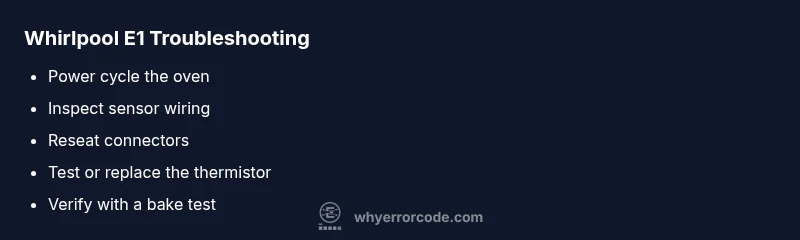
Power cycle the oven
Unplug the oven from the wall outlet or switch off the dedicated circuit breaker for at least 60 seconds. This resets the control board and can clear transient faults that trigger E1. After reconnecting power, run a small bake test at a low temperature to observe if the code returns.
Tip: Label any unplugged connections before removing panels to make reassembly quick. - 2
Access and inspect the temperature sensor
Open the rear panel or interior service cover as permitted by your model and locate the oven temperature sensor/thermistor. Look for damaged insulation, exposed conductors, or a loose connector. Do not tug on fragile wires; handle with care.
Tip: Take a photo of the sensor wiring before disconnecting anything in case you need to revert. - 3
Reseat and test the sensor harness
Disconnect and reconnect the sensor harness firmly at both ends. Listen for a definite click to confirm seating. Reconnect any other connectors you touched and reapply power to retest the oven.
Tip: Clean contacts with a dry brush if you see light corrosion; never use liquids to clean electrical contacts. - 4
Replace the temperature sensor if needed
If visual inspection shows damage or readings stay out of spec after reseating, replace the sensor/thermistor with a compatible Whirlpool part following the service manual. Recheck the wiring and clear any fault memory after replacement.
Tip: Compare the new sensor’s resistance range with the manufacturer spec to confirm a correct part. - 5
Final test and validation
Power cycle the unit again, set a bake cycle, and monitor the display for stability. If E1 recurs, escalate to professional service as a potential control-board fault may be involved.
Tip: Document the steps taken and the results of the bake test for the technician.
Diagnosis: Oven displays E1 and won’t heat correctly
Possible Causes
- highFaulty temperature sensor or thermistor
- mediumLoose or damaged sensor wiring
- lowControl board fault
Fixes
- easyInspect and reseat sensor connections, reconnect harnesses
- mediumTest/replace the temperature sensor assembly
- hardReplace control board if sensor replacement doesn't fix the issue
Frequently Asked Questions
What does the Whirlpool E1 error code mean on ovens?
E1 typically signals a fault in the sensor circuit or the control board. It most often involves the temperature sensor or its wiring. If resets don’t clear it, testing or replacement of the sensor is usually necessary.
E1 means a sensor or control-board fault. Check the sensor, reseat connections, and consider professional service if resets fail.
Can I fix E1 myself?
Some safe, basic checks are possible, like power-cycling and reseating sensor connectors. Avoid opening the oven if you’re unsure about wiring. If you’re uncomfortable, hire a technician to avoid safety risks.
Yes, basic checks can help, but don’t DIY if you’re unsure about wiring.
Is it safe to use the oven with E1 flashing?
No. If E1 persists, stop using the oven. A faulty sensor or board can lead to incorrect temperatures and safety hazards. Have it inspected before resuming use.
No, don’t use it until it’s inspected.
How much does the repair typically cost?
Costs vary by model and region. Sensor replacements are generally less expensive than full board replacement. Plan for parts plus labor in a broad range and obtain a written estimate before work.
Costs vary; sensor replacement is usually cheaper than board repair.
How long does a sensor replacement take?
A typical sensor replacement can take under an hour for a trained technician. Additional time may be needed for diagnostics, parts ordering, or test baking after repair.
Usually under an hour, plus diagnostic time.
What should I do if E1 comes back after a reset?
If E1 returns after a reset, stop using the oven and schedule service. Reoccurring faults suggest a sensor or board issue that requires professional diagnosis.
If it comes back, get a pro to diagnose.
Watch Video
Top Takeaways
- Power cycle first to clear minor faults.
- Check sensor wiring before replacing parts.
- If E1 returns, seek professional repair.
- Sensor replacement cost varies; plan for parts + labor.