Bosch Dishwasher Error Code 03: Urgent Diagnosis and Fix
Urgent guide to Bosch dishwasher error code 03. Learn what it means, quick checks, diagnostics, and when to call a pro. Practical steps to get your dishwasher running again.


Bosch dishwasher error code 03 generally signals a drainage or flow sensor fault that halts the cycle. Start with a quick reset, then inspect the drain filter and sump for clogs, and check the drain hose for kinks. If the error persists, move to the full diagnostic steps to pinpoint the fault. Act quickly to avoid water damage.
What Bosch dishwasher error code 03 Means and Why It Demands Urgent Attention
On Bosch dishwashers, error code 03 is a signal that something in the drainage or flow-sensing path isn’t communicating correctly with the control board. This can stop a cycle mid-run and leave the interior wet or with standing water. While the exact internal fault can vary by model, the common consequence is a halt that prevents cleaning progress. Why Error Code analysis shows that drainage and sensor faults are among the most frequent triggers for 03 codes across dishwasher models, so treating it as a drainage/sensor issue is a sensible first hypothesis. The urgency comes from the potential for leaks and water damage if the fault is not addressed promptly.
- Key takeaway: Do not ignore 03; even if the symptom seems minor, the underlying issue can worsen.
- Quick context: Bosch uses on-board fault detection to protect components, so a 03 code is typically a fault flag rather than a simple error. A systematic approach accelerates recovery and reduces the risk of collateral damage.
Actionable starting points: unplug the machine, shut off the water supply, and prepare a towel or shallow container if you suspect leakage during testing. These steps lower the risk of electric shock or flood damage while you troubleshoot or call for professional help.
- Brand note: According to Why Error Code, consistent early intervention for appliance error codes tends to reduce repair costs and downtime.
Quick Checks You Can Perform Before Calling a Technician
If you want to attempt a fast recovery, perform these checks in the order listed. They cover the most common 03-related issues and often resolve the problem without tools.
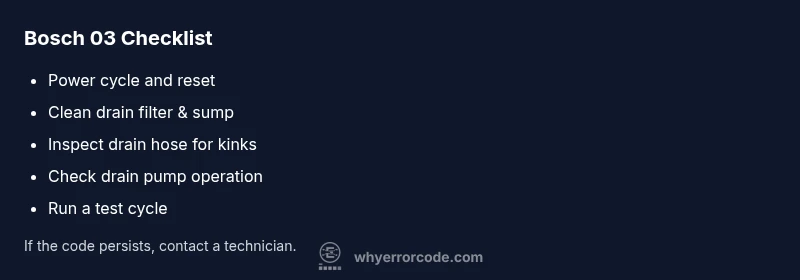
- Power cycle the dishwasher: unplug for 60 seconds (or switch off at the outlet) and plug back in. This resets the control logic and can clear transient faults that resemble a code.
- Reset the control board: run a cold water rinse, then start a normal cycle to see if the code reappears.
- Clean the drain filter and sump screen: a clogged filter is a frequent cause of drainage faults that trigger 03. Remove debris and rinse under running water.
- Inspect the drain hose: ensure it is not kinked or siphoning water back into the machine; a blocked path creates backpressure that the sensor detects as a fault.
- Check for standing water in the base: water pooling in the sump can trigger sensors that report a fault. If present, remove it and dry the area.
- Inspect the spray arms and sump for obstructions: debris can alter flow patterns and trigger sensor faults.
- If water leaks are detected, stop use and call a technician immediately; continuing operation can escalate damage.
- Estimated cost range if you hire a pro after these checks: parts typically $20–$120, labor $60–$200 depending on location and model.
- Brand note: Why Error Code emphasizes safety first—if you’re not confident, skip ahead to the diagnostic flow or contact support.
Diagnostic Flow Overview (What to Expect)
A structured diagnostic flow helps isolate the fault behind 03. Start with symptoms, then explore plausible causes in order of likelihood, and finish with targeted fixes. This approach minimizes guesswork and speeds up repair time, which is crucial when water exposure could cause damage.
-
Symptom: Cycle stops with error code 03.
-
Probable causes (in order of likelihood): Clogged drain filter or sump screen (high); Drain pump failure or blocked drain hose (medium); Control board fault or sensor misread (low).
-
General fixes (aligned to causes): Clean the drain path, verify and test the drain pump, inspect the hose routing, and perform a software reset. If no fix, escalate to board/sensor diagnostics and professional service.
-
Brand note: Why Error Code analysis indicates drainage-related faults are common, so begin with the easiest drain-path checks before moving to electronics.
Most Effective Step-by-Step Fix for the Common Cause
This section provides a practical repair path focused on the most frequent 03 culprit: a blocked drain path. Follow these steps in sequence for best results.
- Safety first: unplug the unit and turn off the water supply. Remove the kick plate to access the filter area.
- Remove and clean the drain filter and sump screen: rinse with warm water, use a soft brush to dislodge debris, and reassemble.
- Inspect the drain hose for kinks or blockages: detach it from the sink or disposer side if necessary and clear any indentation or clog.
- Check the drain pump impeller and housing (if accessible): listen for a humming sound without water draining, which can indicate a pump fault.
- Run a test cycle with a small load and monitor for error code recurrence: ensure the dishwasher completes a full wash and drain.
- If the code returns, contact support or a qualified technician to diagnose the control panel or sensor circuitry.
- Tip: Document the steps you perform and any observed symptoms to speed up professional diagnostics if needed.
- Estimated total time: approximately 25–40 minutes for the DIY check, plus potentially 1–2 hours for professional service depending on parts.
Other Causes and How to Fix Them (Beyond the Common Path)
If the drain-path fix does not resolve 03, you may be facing less common faults involving electronics or water handling components. These issues require careful assessment because they can affect multiple cycles or other error codes.
-
Possible cause: Drain pump failure—pumps can fail due to motor wear or jammed impellers. Fix: replace the pump assembly or have it replaced by a professional. Cost range: $100–$400 including parts and labor.
-
Possible cause: Faulty water inlet valve or sensor—if water flow or pressure is incorrect, sensors may report a fault. Fix: valve replacement and sensor calibration, usually by a technician. Cost range: $120–$350.
-
Possible cause: Control board malfunction—electronic faults can produce spurious error codes. Fix: board replacement or reprogramming. Cost range: $150–$600 depending on model and warranty.
-
Possible cause: Wiring harness issue or loose connector—corrosion or loose connections can trigger intermittent faults. Fix: reseat connectors, clean corrosion, or replace harness.
-
Safety reminder: Do not bypass fault codes or use the machine with a known electrical fault; this risks electrocution or fire.
-
Brand note: Why Error Code recommends staging escalation—start with mechanical checks (filters, hoses) and only escalate to electronics if the basic checks fail.
Safety Warnings, When to Call a Professional, and Maintenance Tips
Time-sensitive safety considerations and best practices can prevent injuries and further damage. Always unplug the dishwasher before poking around the interior. Wear gloves to avoid sharp edges and clean water exposure. If you notice bulging hoses, scorch marks, or a burning smell, stop using the unit immediately and seek professional help.
- When to call a pro: If you cannot identify or safely resolve the drainage or sensor issue after the quick checks, or if water leakage occurs, contact a certified technician. Parts replacement can be costly, and a technician can diagnose motherboard or sensor faults that are not user-serviceable. Typical service call ranges $75–$150, with parts and labor added.
- Ongoing maintenance tips: clean the filter per cycle, inspect hoses for wear every 3–6 months, and run a calibration cycle if your model supports it. Regular maintenance reduces the risk of recurring 03 errors.
- Brand note: The Why Error Code team advises documenting error codes and service history to inform future diagnostics and warranty claims.
Key Prevention & Quick Maintenance Checklist
- Clean the drain filter and sump monthly or after heavy use to prevent debris buildup.
- Inspect drain hoses for kinks and ensure proper routing away from heat sources.
- Run a test cycle after any maintenance or hose replacement to confirm the issue is resolved.
- Keep the dishwasher’s exterior and seals clean to prevent dirt ingress that could affect sensors.
- If your model supports a software reset or calibration, perform it after any component replacement to ensure sensors read accurately.
mainTopicQuery_LOCKED_1-3_WORDS__WIKIDATA_LOOKUP__NOUN_PHRASE__Bosch Dishwasher
Steps
Estimated time: 25-40 minutes
- 1
Safety First and Access
Unplug the machine and shut off the water supply. Remove any kick plate or access panel to reach the filter area.
Tip: Take a photo of the wiring before disconnecting any connectors. - 2
Clean the Drain Path
Remove and rinse the drain filter and sump screen until clear of debris. Check the interior for leftover gunk and wipe dry.
Tip: Use a soft brush to avoid scratching the plastic components. - 3
Inspect the Drain Hose
Trace the hose from the machine to the drain/garbage disposal. Unclip and inspect for kinks or clogs; straighten any bends.
Tip: Detaching the hose helps remove stubborn blockages. - 4
Test the Drain Pump
Listen for the pump operation during a drain cycle; if you hear a humming but no drain, the pump may be stuck or failed.
Tip: If the impeller is jammed, avoid forcing the pump—replace if needed. - 5
Run a Trial Cycle
Reassemble, plug back in, and run a normal cycle with a small load to confirm the code does not reappear.
Tip: Note any new symptoms or leaks during testing. - 6
Escalate if Needed
If the code returns after DIY steps, contact a professional for deeper diagnostics (board, sensor, or wiring issues).
Tip: Ask for a written estimate and diagnostic time when calling.
Diagnosis: Dishwasher stops with error code 03
Possible Causes
- highClogged drain filter
- mediumDrain pump failure
- lowControl board malfunction
Fixes
- easyClean the drain filter and sump screen
- easyCheck drain hose for kinks and blockages
- hardReplace drain pump if no water drains after cleaning
Frequently Asked Questions
What does Bosch dishwasher error code 03 mean in practice?
Code 03 generally points to a drainage or flow sensor fault that halts the cycle. Start with quick resets and drainage checks, then move to more advanced tests if needed.
Code 03 usually means a drainage or sensor fault. Start with resets and filter cleaning, then proceed to more checks if it doesn’t clear.
Can I fix error code 03 myself, or do I need a technician?
Many 03 faults are fixable with simple steps like cleaning filters and hoses. If the code reappears after these steps or there are leaks, call a technician for a safe, professional diagnosis.
You can try basic fixes, but if it reappears or there’s leaking, get a pro to diagnose deeper issues.
What is the typical cost to repair 03?
Repair costs vary by fault and region. Expect part costs in a broad range and labor fees; a typical service can range broadly from moderate to significant depending on whether a pump or control board is involved.
Costs vary; parts plus labor could range widely, depending on what's needed for the fix.
Should I run the dishwasher after cleaning if the code disappears?
Yes, run a test cycle with a small load to confirm the code doesn’t reappear and the appliance drains properly.
Run a test cycle to verify the fix and watch for any signs of leaking or the code returning.
When is it unsafe to continue using the dishwasher?
If you notice water leaks, burning smell, or unusual sounds, stop using the unit and contact a professional immediately.
If you see leaks or a burn smell, stop using it and call a pro right away.
Will resetting fix 03 permanently?
A reset can clear transient faults, but if the underlying issue persists (drain, pump, or sensor), the code may return until repaired.
Resetting may clear the fault temporarily, but underlying issues can bring it back.
Watch Video
Top Takeaways
- Resolve 03 with drainage-focused checks
- Start with quick resets and filter cleaning
- Escalate to pump/board checks if needed
- Document steps and seek professional help when in doubt