Most common status codes in API
Learn the most common HTTP status codes used in APIs, what they mean, and how to use them effectively for debugging, design, and resilience.


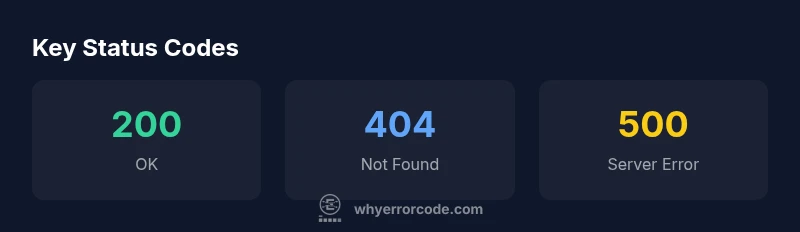
Among API responses, the most common status codes in api are 200 OK for successful requests, with frequent 4xx client errors and 5xx server errors in practice. For practical debugging, focus on core codes: 200, 400, 401, 403, 404, and 500. Understanding these codes helps developers quickly interpret API behavior and diagnose issues.
Understanding HTTP status codes in APIs
HTTP status codes are the language that an API uses to signal the result of a request. They fall into five broad classes: 1xx informational, 2xx success, 3xx redirection, 4xx client errors, and 5xx server errors. In practice, the 2xx class dominates the landscape of public and private APIs, while 4xx and 5xx codes indicate problems that require remediation. For developers and IT pros, the key is to map each code to a precise semantic meaning and to pair that meaning with a consistent response body and headers. The phrase most common status codes in api captures the idea that teams should standardize which codes mean what across endpoints, services, and teams. This consistency reduces confusion, speeds debugging, and improves reliability. As part of a reliability-first approach, API teams should document code semantics and ensure payloads convey actionable information.
Why this matters: when clients see a code they recognize and a predictable payload, they can react quickly, retry appropriately, and report issues with precision. This is especially important in distributed systems where multiple services interact through a shared API contract.
The 2xx family: Success responses
The 2xx family indicates a successful operation. The most common is 200 OK, which signals that the request succeeded and a response body is usually returned. Other important 2xx variants include 201 Created (resource created), 202 Accepted (request accepted but not yet completed), and 204 No Content (success with no body). Practical usage examples:
- GET requests typically return 200 with a payload.
- POST requests that create resources often return 201 with a Location header pointing to the new resource.
- DELETE or PUT requests that do not need to return data may use 204.
Designers should ensure that the payload for 200/201 is informative, consistent, and aligned with the API’s error schema for failures. In contrast, 204 should be truly empty, with no body content. This consistency helps clients understand success without ambiguity and contributes to more predictable client behavior.
The 4xx family: Client errors you should minimize
4xx status codes indicate issues with the request sent by the client. The most common are 400 Bad Request (invalid syntax or missing required fields), 401 Unauthorized (authentication problems), 403 Forbidden (insufficient permissions), and 404 Not Found (resource does not exist). Other useful codes include 409 Conflict (resource state conflict) and 422 Unprocessable Entity (validation errors on input data).
Best practices:
- Use precise codes that reflect the actual problem (e.g., 400 for malformed requests, 422 for semantic validation errors).
- Provide a detailed error payload explaining what went wrong and how to fix it.
- Avoid leaking sensitive server-side details in error messages.
Handling 4xx codes well improves UX, reduces support load, and helps clients correct their requests sooner. When possible, standardize error payload structures across all 4xx responses to simplify client parsing and reduce ambiguity during debugging.
The 5xx family: Server errors and resilience
5xx status codes signal server-side failures. The most common are 500 Internal Server Error, 502 Bad Gateway, 503 Service Unavailable, and 504 Gateway Timeout. Unlike 4xx errors, retries for 5xx errors are often appropriate, but they should be controlled with backoff strategies and clear Retry-After guidance.
Practical tips:
- Return 503 with a Retry-After header when the service is temporarily unavailable.
- Consider circuit breakers and exponential backoff to avoid cascading failures.
- Provide meaningful, non-sensitive error payloads that help operators diagnose backend issues without exposing internals to clients.
Robust APIs should document how clients should respond to each 5xx code, including retry behavior, timeouts, and user-facing messaging when applicable. A consistent approach to 5xx errors reduces confusion during outages and accelerates recovery.
REST vs GraphQL: status codes in different API styles
REST APIs rely on standard HTTP status codes to convey results, while GraphQL often uses 200 OK for most responses and reports errors in the response body under an errors array. In GraphQL, a successful HTTP response does not guarantee a successful operation; the presence of errors in the payload indicates partial success or logical failures. For REST, 3xx redirects have clear semantics, while GraphQL tends to rely on 200 with a structured error payload. When building mixed-style APIs, ensure that messaging and status semantics remain clear across both styles and that clients can distinguish transport-level outcomes from application-level errors.
Practical guidelines for using status codes in API design
To design robust APIs, follow practical guidelines that align with user expectations and tooling conventions:
- Use 2xx for success, 201 for created, 204 for no content, and 202 for asynchronous processing.
- Use 4xx for client errors (400 for invalid input, 401 for authentication, 403 for permissions, 404 for missing resources, 409 for conflicts, 422 for validation nuances).
- Use 429 for rate limiting and provide a Retry-After header where possible.
- Use 5xx for server-side issues; implement retry logic and clear incident communication.
- Adopt a standardized error payload format (for example, RFC 7807 Problem Details) to unify error reporting across endpoints.
- Document the expected status codes for each endpoint in the API contract and ensure consistency across the board.
These practices improve reliability, debuggability, and developer trust, reducing mean time to resolution (MTTR) and speeding feature delivery.
Debugging workflow: mapping logs to status codes
A disciplined debugging workflow helps teams quickly locate issues by status code signals. Start by correlating client logs with API gateway and service logs to understand where the failure originates. Map each status code to a canonical cause:
- 2xx: Ensure the response payload matches the contract and contains the expected fields.
- 4xx: Validate input, authentication, and authorization flow; verify resource availability.
- 5xx: Inspect backend services, databases, and inter-service communication; check for timeouts and capacity issues.
Create runbooks that describe known issues for each code, including sample requests, expected responses, and remediation steps. Use alerting that reflects status semantics (e.g., alert on sustained 5xx errors or spikes in 429 responses) to maintain system resilience.
Designing responses and headers to accompany status codes
Status codes are most effective when paired with informative headers and response bodies. For standard REST APIs:
- 201 responses should include a Location header with the URL of the created resource.
- 204 responses must have an empty body; no payload is returned.
- 429 responses should include Retry-After with a reasonable delay or a clear retry policy.
- Consider ETag and Last-Modified headers to support conditional requests and caching semantics.
- Use consistent error payloads that describe the problem, offer a path to resolution, and avoid leaking sensitive server details.
By enriching status codes with precise headers and well-structured bodies, APIs become easier to consume, resilient under load, and straightforward to troubleshoot during peak traffic or outages.
Common status codes reference table
| Category | Status Code | Typical Use | Notes |
|---|---|---|---|
| Success | 200 OK | Request succeeded | Returns payload in body |
| Created | 201 Created | New resource created | Location header recommended |
| No Content | 204 No Content | Success with no response | No body in response |
| Bad Request | 400 Bad Request | Malformed request | Validate input and retry |
| Unauthorized | 401 Unauthorized | Missing/invalid credentials | Obtain token or API key |
| Forbidden | 403 Forbidden | Authenticated but not allowed | Check permissions |
| Not Found | 404 Not Found | Resource not found | Verify URL/resource ID |
| Conflict | 409 Conflict | Resource state conflict | Resolve with idempotent operation |
| Internal Server Error | 500 Internal Server Error | Unhandled server issue | Check server logs |
| Too Many Requests | 429 Too Many Requests | Rate-limiting | Back off and retry after time |
Frequently Asked Questions
What is the difference between 200 and 201 status codes?
200 OK indicates a successful request with a response body. 201 Created signals that a new resource was created as a result of the request, typically returning a Location header pointing to the new resource.
200 means success with a body, 201 means a resource was created and you’ll often see a Location header.
When should I return 204 No Content?
Use 204 when the request succeeds but there is no content to return. Common cases include successful DELETE requests or updates that don’t produce a response body.
Use 204 when you’ve successfully completed the request but you have nothing to return.
Is it appropriate to use redirects (301/302) in APIs?
Redirects are less common in APIs, but they can occur. If used, prefer 307/308 for preserving the original request method and intent; otherwise, provide a direct response to avoid extra round-trips.
Redirects happen, but most APIs avoid them; if you do use redirects, pick the right codes.
Should I always include a body with 2xx responses?
Not always. 200/201 typically include a payload, but 204 must have no body. For asynchronous operations, 202 is common, and the body should describe the processing status or a link to results.
Usually yes for 200/201, but 204 has no body and 202 may include status until completion.
What should clients do on a 429 Too Many Requests?
Respect the Retry-After header if provided, implement exponential backoff, and inform users or systems when limits will reset. Consider distributing traffic more evenly to avoid throttling.
If you hit 429, back off and retry later according to any Retry-After guidance.
Are 4xx and 5xx codes interchangeable?
No. 4xx codes indicate client-side problems (invalid input, missing auth), while 5xx codes indicate server-side problems that require backend investigation.
No—4xx is client-side, 5xx is server-side; they signal different causes and remedies.
“Status codes are the language of an API's contract; using them consistently reduces ambiguity and speeds debugging.”
Top Takeaways
- Standardize 2xx, 4xx, and 5xx semantics across endpoints
- Use precise codes (200 vs 201 vs 204) to reflect the operation
- Provide informative error payloads to guide client action
- Respect rate limits and communicate via Retry-After
- Design GraphQL to distinguish transport vs application errors