Bosch E15 Error: Diagnosis, Fixes, and Prevention
Learn how to identify, diagnose, and fix Bosch dishwasher error code E15 quickly. This guide covers symptoms, likely causes, quick fixes, step-by-step repairs, safety tips, and when to call a pro. Follow practical steps to restore operation safely in minutes.


Bosch dishwasher error code E15 means water is detected in the base pan, triggering flood protection. It usually points to a leak, a blocked drain, or a faulty sensor. The fastest path to resolution is to power off safely, drain and dry the base pan, inspect seals and hoses, and follow the prescribed fixes or call a technician if the leak persists.
What E15 Means in Bosch Dishwashers
E15 is Bosch's flood protection code. It triggers when the dishwasher senses water in the base pan, a safety feature designed to prevent electrical hazards. In practice, you might see the E15 fault after a cycle ends with damp towels at the front, or after you notice water pooling beneath the unit. The base pan houses a level sensor and flood switch; if water covers the sensor, the machine stops and displays E15 to prevent further damage. While the cause is often a small leak, the root may be a clogged filter, a drippy door seal, a cracked hose, or a mis-seated drain hose. Even a minor overflow can fill the base pan in minutes, so address E15 promptly. The big picture: this code is less about the overall dishwasher health and more about the imminent risk of water contacting electrical components. Remaining mindful of safety will help you triage quickly.
Common Symptoms and What They Indicate
You may notice water in the base pan even after a cycle, a damp bottom panel, or the dishwasher halting with an E15 message. Other symptoms include leaks under the unit, increased moisture near seals, or the display flashing during a wash. These signs point to a base-pan issue rather than a random software glitch. Understanding that E15 signals water presence helps you triage without guessing. Safety first: avoid touching electrical components when water is present and unplug the unit before inspection.
Most Likely Causes (Ranked by Likelihood)
- high: Leaks around the door seal, tub cracks, or loose hoses that let water seep into the base pan.
- high: A clogged or blocked filter and drain line causing water to back up into the base pan.
- medium: A faulty flood switch or sensor that misreads a dry tub as wet even when no active leak is present.
- low: Infrequent electrical issues that disable safety features without actual water contact.
Step-by-Step Fix for the Most Common Cause
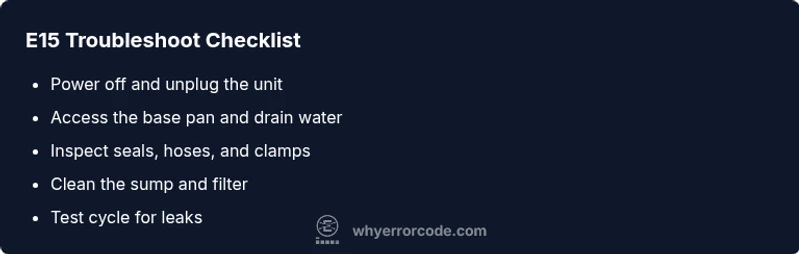
- Safety first: unplug the machine and switch off the circuit to prevent electrical shock. 2) Access the base pan: remove the lower kick panel to reach the base pan beneath the tub. 3) Drain and dry: mop out standing water and dry the base pan, sensors, and nearby components completely. 4) Inspect seals and hoses: check the door gasket, tub seams, drain hose, and clamp connections for cracks or loosening. 5) Check the filter and pump: remove debris from the filter, clear the drain pump area of obstructions. 6) Reassemble and test: replace the kick panel, reconnect power, and run a quick cycle to confirm no water remains. 7) If the error returns, trap the leak and consider professional inspection.
Other Possible Causes and Fixes
If water isn’t visibly present but E15 appears, investigate the flood switch, pressure sensor, and wiring harness for faults. A faulty flood switch can falsely trigger E15; replacing the switch or sensor is a medium-difficulty repair. Water inlet valve leaks, cracked supply hose, or a leaking tub are more serious and may require professional service. Clean the sump, reseat the drain hose, and verify proper sealing around the door to prevent future leaks. In all cases, locating and fixing the leak source is essential to prevent recurrence.
Safety, Warnings, and When to Call a Pro
Water plus electricity is a dangerous combination. If you detect active leaks or cannot safely access the base pan, stop and call a technician. Do not reuse a dishwasher that shows signs of persistent leaks until the issue is fixed. If your unit is still under warranty, contact Bosch support or your service provider for authorized repair options. Cost ranges for professional service typically fall into a broad window depending on the leak source and parts needed.
Prevention and Maintenance Tips
After any fix, dry the area thoroughly and monitor for several cycles to ensure the problem is resolved. Regular maintenance—cleaning the filter, inspecting door seals, and ensuring proper drain hose routing—helps prevent E15 in the future. Keep the area around the unit dry and avoid storing liquids nearby.
Steps
Estimated time: 45-75 minutes
- 1
Power down and unplug
For safety, shut off the machine at the outlet or breaker. Disconnect any external power before opening access panels.
Tip: Use a GFCI outlet if nearby and keep water away from outlets. - 2
Access the base pan
Remove the lower kick panel or access cover to reach the base pan beneath the tub.
Tip: Have towels ready in case water pools as you open the panel. - 3
Drain and dry
Scoop or sponge out standing water and dry the base pan, sensors, and nearby components completely.
Tip: Use a hair dryer on cool setting only if needed to dry hard-to-reach spots. - 4
Inspect seals and hoses
Check the door gasket, tub seams, drain hose, and clamp connections for cracks or loosening.
Tip: Tighten clamps carefully to avoid pinching hoses. - 5
Clean the sump and filter
Remove and clean the filter and pump area to ensure no debris blocks drainage.
Tip: Remove debris gently to avoid damaging the pump impeller. - 6
Run a test cycle
Reconnect power and run a quick cycle to verify no water remains and E15 does not reappear.
Tip: Watch for leaks at seals during initial test. - 7
Address persistent leaks
If water returns or you see active leaks, seal replacements or parts replacement may be necessary.
Tip: Consider professional service for complex leaks.
Diagnosis: Error code E15 on Bosch dishwasher indicating water in the base pan
Possible Causes
- highLeak from door seal, tub, or hoses
- highClogged drain or filter causing water backup
- lowFaulty flood switch or sensor
Fixes
- easyDrain base pan water and dry completely
- mediumInspect seals and hoses, reseal or replace if needed
- hardReplace flood switch or faulty sensor (professional)
Frequently Asked Questions
What does E15 mean on a Bosch dishwasher?
E15 indicates water detected in the base pan, triggering flood protection. It usually points to a leak or drainage issue and requires prompt inspection and repair.
E15 means water is detected in the base pan, usually due to a leak or drainage problem. Prompt inspection is recommended.
Can I fix E15 myself?
Some E15 causes are user-serviceable, such as drying the base, tightening seals, and cleaning the filter. More complex leaks or sensor faults may require professional service.
You can often handle base drying and seal checks yourself, but persistent leaks may need a pro.
How much does a Bosch E15 repair cost?
Repair costs vary by cause and region, typically including parts and labor. Expect a broad range from a low amount for simple seal fixes to higher costs for leaks behind the tub or sensor replacement.
Costs vary widely; simple seal fixes are cheaper, while leaks behind the tub or sensor replacements cost more.
When should I call a professional?
If you locate an active leak, see water around electrical components, or can't identify the source, contact a licensed technician or Bosch support.
Call a pro if you have active leaks or can't pinpoint the source.
How can I prevent E15 in the future?
Regular maintenance—clean the filter, inspect seals, ensure proper hose routing, and address any signs of wear—reduces the chance of leaks that trigger E15.
Regular maintenance helps prevent future E15 by catching wear early.
Watch Video
Top Takeaways
- Power down before inspection
- Drain and dry base pan thoroughly
- Check door seals and hoses for leaks
- Test cycle and monitor for reoccurrence