Bosch Dishwasher Error Code E24: Quick Fix Guide
Learn what Bosch dishwasher error code E24 means and get urgent, step-by-step fixes to clear drainage faults, reset the cycle, and prevent repeat outages. This guide helps developers, IT pros, and everyday users diagnose and repair efficiently.


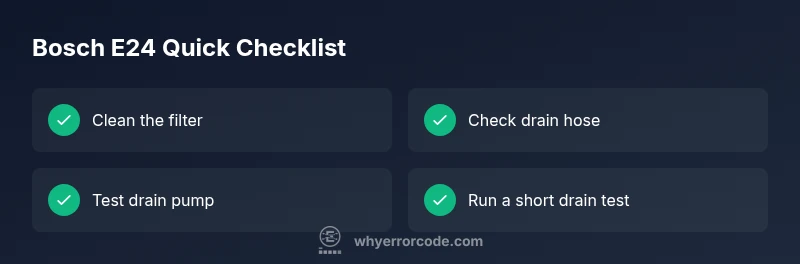
E24 on a Bosch dishwasher generally signals a drainage or water-flow fault that stops the cycle. The quickest path to relief is to inspect and clean the filter, verify the drain hose for kinks or clogs, and test the drain pump activity. If the error persists, perform a reset and seek support if needed. According to Why Error Code, addressing drainage first resolves most E24 incidents.
What Bosch Dishwasher Error Code E24 Typically Means
When a Bosch dishwasher displays E24, it usually points to a drainage or water-flow fault that prevents the machine from completing a cycle. This is often triggered by a clogged filter, a blocked drain hose, or a non-operational drain pump. While the exact wording of the Bosch service sheet may vary, the practical implication is clear: the appliance cannot evacuate water as required. For developers and IT pros debugging home appliances in lab environments, treat E24 as a drain-focused fault that can cascade into longer runtimes and higher water usage if ignored. Early resolution minimizes risk of water damage and reduces energy waste. The Why Error Code team emphasizes that a systematic approach—start with the drain path, then inspect the pump, and finally verify the control logic—is the fastest way to restore service.
If you’re troubleshooting remotely or documenting for a support portal, remember to log the symptom, the exact model, and any audible or visual cues that accompany E24. This information speeds up triage and helps technicians reproduce the issue in a controlled setting. Commonly, users see E24 after a wash cycle ends prematurely, with standing water or a beeping sequence indicating fault entries. The practical takeaway is to treat E24 as a drainage fault first, then escalate if symptoms persist. Why Error Code’s analysis shows drainage problems account for a significant share of E24 reports across Bosch models.
Related terms to understand: drainage fault, filter blockage, pump impeller jam, drain hose kink, water intake anomaly. When you map these terms to diagnostic tests, you’ll have a repeatable workflow rather than guesswork.
Quick Fixes You Can Try Before Disassembly
Before tearing into the machine, try these low-effort steps that can clear most E24 incidents. They are designed to be safe, fast, and affordable, with no special tools required in many cases. If any step feels beyond your comfort zone, stop and call a professional.
- Power cycle the dishwasher: unplug for 60 seconds, then plug back in and run a test cycle. This resets internal fault memory and can clear transient errors.
- Inspect and clean the filter and sump: remove the bottom rack, locate the filter, wash it under warm water, and remove any debris from the sump area. Even small blockages can disrupt drainage.
- Check the drain hose and air gap: ensure the hose is free of kinks and that the hose terminates properly to the sink drainage. A kinked hose can trap water and trigger E24.
- Examine the drain pump area: listen for the pump during a drain cycle. If you hear grinding or no noise at all, the pump may be blocked or failed. Do not run the unit with a visibly damaged hose or pump.
- Run a test cycle with a light load: after cleaning, run a short cycle with a small amount of water to verify drainage without risking overflow.
- Confirm water supply and inlet valve: in some models, a partial inlet fault can confuse the drain logic. Ensure water supply is steady and the inlet valve isn’t obstructed.
If any of these steps resolves the issue, document the change and monitor for recurrence. If E24 returns, continue with the Diagnostic Flow below or contact support for more advanced testing.
Diagnostic Flow Overview for E24
The diagnostic path below outlines a practical sequence to identify E24’s root cause, focusing on drainage-first logic, which is the most common scenario. Prioritize steps that can be completed safely at home before moving to professional repair. Start with symptoms, then test probable causes, then apply fixes in order of likelihood. This approach mirrors real-world service sheets used in consumer electronics repair and aligns with the guidance from Why Error Code.
- Symptom: Dishwasher displays E24 and won’t drain or completes the cycle. Water remains in the basin and the run phase ends with a fault beeper or an error display.
- Causes (in order of likelihood):
- clogged drain filter or sump (high)
- drain pump failure or impeller jam (medium)
- drain hose kink or air gap blockage (medium)
- control board glitch or software fault (low)
- Fixes (by difficulty):
- Clean the drain filter and sump (easy)
- Inspect and clean the drain pump area; confirm impeller spins freely (easy–medium)
- Straighten or replace drain hose, clear any blockages in the hose and air gap (easy–medium)
- Replace drain pump or perform control board diagnostics if the pump tests fail (hard)
Steps
Estimated time: 40-60 minutes
- 1
Power down and prepare
Unplug the dishwasher and switch off the circuit breaker to ensure there is no live power while inspecting components inside. Wait 60 seconds before replugging. This reset helps clear fault memory in many cases.
Tip: Use a flashlight to inspect for loose wires; never force connectors. - 2
Access the drain-path and filter
Remove the lower rack and locate the drain filter assembly. Remove debris by hand, rinse under warm water, and wipe the sump gently. A clean path ensures effective drainage during all cycles.
Tip: Keep a towel handy; water may spill when you open the sump. - 3
Inspect the drain hose
Trace the hose from the sump to the drain connection. Look for kinks, clogs, or kinking at the bend under the sink. If you find restrictions, disconnect and flush the hose with water.
Tip: Detach carefully to avoid tearing any fittings. - 4
Test the drain pump
With power reconnected, listen for the drain pump during a drain cycle. If you hear grinding, buzzing, or no sound, the pump may be blocked or failed and require replacement.
Tip: Do not run the unit if the pump is visibly damaged. - 5
Run a diagnostic test cycle
Set the appliance to a test or short cycle and observe whether it drains properly. If water remains or E24 reappears, proceed to professional testing.
Tip: Document the time-to-drain and any error codes that appear. - 6
Evaluate need for professional service
If the above steps do not resolve E24, a professional technician can perform pump tests, board diagnostics, and verify electrical safety. Expect a range of possible repair costs depending on part availability and labor.
Tip: Request a written estimate before any repair work.
Diagnosis: Dishwasher displays E24 and won't drain/complete cycle
Possible Causes
- highClogged drain filter
- mediumDrain pump failure
- lowControl board malfunction
Fixes
- easyClean the drain filter
- easyCheck drain hose for kinks and clear blockages
- hardReplace drain pump
Frequently Asked Questions
What does Bosch error code E24 indicate?
E24 typically signals a drainage fault in Bosch dishwashers. This often means water is not draining properly due to clogs, a blocked hose, or a failing pump. The symptom is usually standing water and an error beeper or display after a cycle.
E24 usually means drainage trouble. Start with cleaning filters and hoses, then reset the machine. If it keeps coming back, you may need a pump check or professional help.
Can I fix E24 myself at home?
Yes, many E24 issues can be addressed at home with a few safe inspections: clear the filter, check for hose kinks, and test the drain pump. If the cycle still fails or you hear unusual noises, stop and consult a technician.
You can try cleaning the filter and hose first, but if the pump or electronics seem involved, call a pro.
How long does it take to fix E24?
Home fixes may take 30–60 minutes if you are following a straightforward drain-path clean. More complex repairs, like pump replacement or board diagnostics, can take several hours and may require parts.
Most quick checks take under an hour. Complex fixes can require scheduling and parts.
Will Bosch service cover E24 under warranty?
Warranty coverage depends on your warranty status and model. If the unit is out of warranty, expect service or parts costs to be the responsibility of the owner. Always verify warranty terms with the manufacturer or your retailer.
Check your warranty first; if it’s expired, you’ll pay for parts and labor.
Is it safe to run the dishwasher after attempting fixes?
Only run a test cycle without dishes after you’ve confirmed the drains are clear. If water remains or the error returns, stop and call a pro. Repeated drainage failures can cause leaks and electrical hazards.
Run a short cycle after you’re confident it’s clear, but stop if it comes back.
When should I call a professional?
Call a professional if you cannot safely access the drain path, if the pump or wiring appears damaged, or if repeated E24 occurrences persist after home fixes. A pro can perform electrical tests and diagnose hidden faults.
If in doubt, don’t DIY beyond basic cleaning—call a pro for a thorough check.
Watch Video
Top Takeaways
- Prioritize drainage checks for E24 faults
- Clean filters and hoses before pump replacement
- Reset and test cycles to confirm fix
- Call a pro if issues persist after home troubleshooting