Bosch Dishwasher Error Code E15: Water Tap Reset and Full Diagnostic
Diagnose and fix Bosch dishwasher E15 water inlet/overflow. Step-by-step reset, water tap checks, hose cleaning, and professional guidance. Why Error Code explains common causes, cost ranges, and safety tips.


Bosch dishwasher error code E15 indicates a water inlet or overflow fault, typically caused by restricted water supply or a tripped sensor. The quick fix is to ensure the shutoff valve is fully open, check for kinks in the inlet hose, and clean the filter screen. According to Why Error Code, restore proper water flow and reset the machine to clear the code if the issue is resolved.
What E15 Means for Bosch Dishwashers
The Bosch dishwasher error code E15 denotes a water inlet fault or overflow condition. In practical terms, the appliance believes there is either too little water entering the tub, or water is not draining as it should, which triggers safety shutoffs to prevent flooding. Importantly, this code is often linked to the water tap or supply path rather than a mysterious electronics issue. The Why Error Code team has found that the most common trigger is a disrupted water tap/reset scenario—where the supply valve hasn’t delivered consistent flow or has been inadvertently restricted. Understanding that linkage helps you prioritize checks in the right order and prevents unnecessary resets that don’t address the root cause.
Key takeaway: start at the entrance of the water path (the tap/valve) and move downstream to hoses, filters, and sensors. This approach reduces repeated E15 appearances and minimizes water damage risk.
Common Symptoms You'll Notice
When E15 is active, you may observe one or more of the following symptoms:
- The display shows E15 and a stalled fill or wash cycle.
- You notice water on the kitchen floor near the dishwasher after a cycle.
- The unit endlessly fills or overfills before the error appears.
- The basin remains empty or partially filled despite the cycle starting.
If you see any combination of these signs, perform a quick diagnosis using the diagnostic flow below and follow with the recommended fixes. Brand-specific quirks matter—Bosch models vary in inlet valve design and float switch placement, so consult your manual for model-specific steps.
Verifying the Water Tap and Inlet Supply
A methodical check of the water supply is the fastest way to rule in or out the easiest fix. Start with the basics and work toward more involved steps:
- Make sure the main shutoff valve feeding the dishwasher is fully open and the supply hose is not kinked or crushed. A restricted flow is a common culprit for E15.
- Inspect the inlet hose for cracks or blockages. Replace if you see damage or mineral buildup that restricts flow.
- Remove and clean the inlet filter screen near the valve connection to the dishwasher. Dirt, sediment, or mineral deposits can reduce flow enough to trigger E15.
- Verify the water pressure in your home is within normal range; low pressure can mimic valve failure and trigger the same fault in the appliance.
If all components appear clear and the error persists, the issue may lie with a sensor, float, or the inlet valve itself, which may require deeper inspection or part replacement.
Quick Fixes You Can Try Right Now
Before diving into disassembly, try these low-friction fixes:
- Turn the water shutoff valve fully counterclockwise to ensure maximum flow, then re-test the dishwasher. If the valve is stiff, replace it or call a plumber.
- Detach and inspect the inlet hose for kinks; reposition or replace as needed.
- Power cycle the unit by unplugging for 60 seconds, then plug back in and start a short wash to see if E15 clears.
- Check for a loose or blocked drain during a cycle; a blocked drain can falsely trigger overflow logic. Clear any debris if found.
If these steps don’t resolve E15, move to the structured diagnostic flow and step-by-step repair below.
Step-by-Step Repair Guide for the Most Common Cause
This section focuses on the most frequent root: a faulty water inlet path due to valve or hose issues. Follow these steps in order and pause if you encounter resistance or leaks:
- Power down the dishwasher and shut off the water supply. Safety first.
- Disconnect the inlet hose from the valve and inspect the internal screen for debris. Clean gently or replace the hose if damage is evident.
- Reconnect the hose securely and open the water valve fully.
- Re-seat any float switches or sensors if accessible, ensuring they move freely and aren’t jammed by mineral buildup.
- Plug the machine back in and run a brief cycle to verify whether the E15 code reappears.
If the code persists, the valve assembly or control electronics may require professional replacement or recalibration. Expect professional service if you see persistent leaks, unfamiliar parts, or if the unit exhibits unusual behavior during tests.
Other Causes and How to Address Them
Beyond the water inlet path, several other contributors can trigger E15:
- Float switch stuck or water level sensor fault: Inspect for blockages and test movement; replace if stuck.
- Drain pump issues or blocked sump: A clogged drain or pump failure can cause overflow detection independent of water supply. Clear clogs and test pump operation.
- Control board or firmware anomaly: Wiring corrosion or a stubborn fault may require software reset or module replacement by a technician.
- Incorrect detergent dosage or incompatible rinse aids: These can cause suds and overflow confusion; follow manufacturer recommendations. For each alternate cause, perform the corresponding fix with caution, and verify the result with a test cycle.
Safety, Costs, and When to Hire a Professional
Working on mains water lines and electrical appliances carries risk. If you are uncomfortable with electrical disconnections or disassembly, stop and call a pro. Typical costs for repair vary by region, parts, and labor, and can range from modest parts replacements to more substantial service calls when a valve, sensor, or control module is involved. Always obtain a written estimate before proceeding. If you notice standing water, a persistent leak, or you dislike the risk of water damage, escalate to professional help sooner rather than later.
Prevention: Maintenance to Avoid E15 in the Future
Proactive steps reduce the likelihood of E15:
- Inspect water supply lines annually and replace aging hoses before leaks develop.
- Use provided filters and screens; clean them every few cycles to prevent mineral buildup.
- Schedule periodic dishwasher maintenance to check valves, float switches, and sensors.
- Run hot-water cycles occasionally to clear mineral deposits from the inlet path and screen.
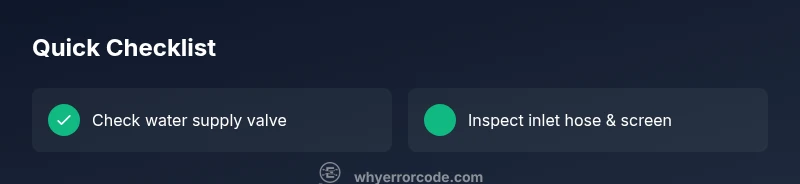
Quick Troubleshooting Checklist
- [ ] Confirm water supply valve is fully open.
- [ ] Inspect inlet hose for kinks or damage.
- [ ] Clean inlet screen and filter.
- [ ] Reset the dishwasher and test a short cycle.
- [ ] If E15 recurs, contact a professional for valve or sensor inspection.
Steps
Estimated time: 45-60 minutes
- 1
Power down & disconnect water supply
Unplug the unit and turn off the home water supply to prevent leaks. This reduces the risk of electric shock during inspection.
Tip: Always have a towel handy for any incidental spills. - 2
Inspect the inlet hose
Detatch the hose from the valve, check for kinks or damage, and clean any debris from the screen. Reattach securely.
Tip: Hold the hose steady to avoid stressing fittings. - 3
Check the water valve & screen
Inspect the valve screen for clogging and clean; ensure valve opens fully when retested.
Tip: If the valve shows stiffness, consider replacement. - 4
Reset sensors and float mechanism
Ensure float moves freely and isn’t obstructed; reseat or replace if needed.
Tip: A stuck float is a frequent E15 cause. - 5
Power cycle & test run
Reconnect power, restore water supply, and run a short cycle to confirm the error does not return.
Tip: Watch for leaks during the first test run. - 6
Escalate if E15 persists
If the code reappears, the issue may be in the valve, sensor, or control board and requires professional service.
Tip: Document symptoms and dates to speed up diagnostics.
Diagnosis: Bosch dishwasher displays E15 and either won't fill or overfills
Possible Causes
- highWater inlet valve restricted or malfunctioning
- mediumInlet hose kinked or blocked
- lowOverflow float switch or sump sensor fault
Fixes
- easyOpen the water shutoff valve fully and clean the inlet screen; replace hose if damaged
- easyInspect inlet hose for kinks, straighten, and re-seat connections to the valve
- hardTest or replace the float switch/sensor and verify proper operation
Frequently Asked Questions
What does Bosch E15 mean on my dishwasher?
E15 indicates a water inlet or overflow fault. It often points to the water tap or supply path, including filters or sensors that detect abnormal water levels. Addressing the water path usually resolves the code.
E15 means your dishwasher detected a water inlet or overflow issue, often tied to the water supply path. Start with the water tap and filters, then check sensors.
How do I reset Bosch dishwasher after E15?
Power off the unit, unplug for 60 seconds, then plug back in and run a short cycle to see if the code clears. If it reappears, proceed with a deeper diagnostic.
First, unplug it for a minute, plug back in, and run a quick cycle to test if E15 clears.
What are common causes of E15 besides water supply?
Common alternatives include a stuck float switch, clogged sump or drain, damaged inlet hose, or a faulty inlet valve. Each requires a different corrective action, often starting with a visual inspection.
Besides the water supply, E15 can be caused by a stuck float, a clogged drain, or a faulty valve.
Can I fix E15 myself, or is a pro required?
Many users resolve E15 with basic checks, cleaning, and a reset. If the fault persists or involves valve or sensor replacement, a professional should handle it to prevent further damage.
You can often fix E15 with basic checks, but persistent issues should be handled by a pro.
When should I call a professional for E15?
Call a pro if there’s a persistent code after fixes, visible leaks, or signs of a faulty valve or sensor. A technician can safely test electrical components and replace parts.
If E15 stays after fixes or you see leaks, get a professional to inspect the valve and sensors.
Are there cost considerations for E15 repair?
Costs vary by region and parts needed. Expect potential charges for parts like the inlet valve or sensors and service labor, with price ranges depending on severity and your location.
Repair costs depend on parts and labor, and can vary a lot by where you are.
Watch Video
Top Takeaways
- Verify water supply first; E15 often stems from inlet problems.
- Clean the inlet filter and inspect the hose for kinks.
- Power-cycle and reseat float sensors before calling a pro.
- If the error repeats, expect professional service, especially for valve or sensor faults.
- Regular maintenance reduces E15 risk and potential water damage.