Bosch E15 Error Code: Fast Fix & Diagnostic Guide
Urgent, expert guide to diagnosing and fixing the Bosch E15 error code (flood condition). Learn quick checks, step-by-step repairs, safety tips, and when to call a professional. Why Error Code shares practical, no-nonsense guidance.


Bosch E15 error code means a flood condition detected in the dishwasher’s base tray, triggering a safety shutoff. The quickest fix is to unplug the unit, dry the base, and inspect seals and hoses for signs of wear. If water returns or you can’t locate the leak, stop using the appliance and arrange professional service promptly.
What the Bosch E15 error code means
The bosch e15 error code indicates a flood condition detected in the dishwasher’s base tray, often triggered by a leak. It is a safety measure that stops the machine to prevent electrical hazards. In many cases, the quick fix is to unplug the unit, dry the base, and inspect seals and hoses for signs of wear. According to Why Error Code, the E15 flood condition is a common dishwasher error. If water remains or a leak cannot be found, stop using the appliance and arrange professional service. Understanding the exact location of the leak is crucial. Look for damp areas around the door seal, water inlet hose, drain hose, or the base tray itself. A small crack in a hose or a worn gasket can overflow into the base. The sooner you identify and label the source, the faster you can apply the right fix and return to normal operation. Remember: exposure to standing water and electrical components increases risk, so proceed with caution.
Common causes of the E15 flood condition
The bosch e15 error code is most often a flood indicator rather than a misreading of the control board. In practice, the top culprits are leaks around the door gasket, cracked hoses, a failed float switch, or a blocked drain that leaves water in the base. Why Error Code analysis shows leaks and sensor faults as the leading reasons for E15 on many Bosch models. While a faulty inlet valve can contribute, the core issue remains water in the base tray that triggers the safety switch. Other less common causes include a misaligned float mechanism or a cracked sump. If you see moisture near the base or evidence of continuous dripping when the door is closed, start with seals and hoses first. A persistent flood implies a hidden leak or damaged component deeper in the system that requires closer inspection. In all cases, addressing the root cause quickly prevents corrosion and mold growth in the base area.
Quick checks you can perform safely (before you call a technician)
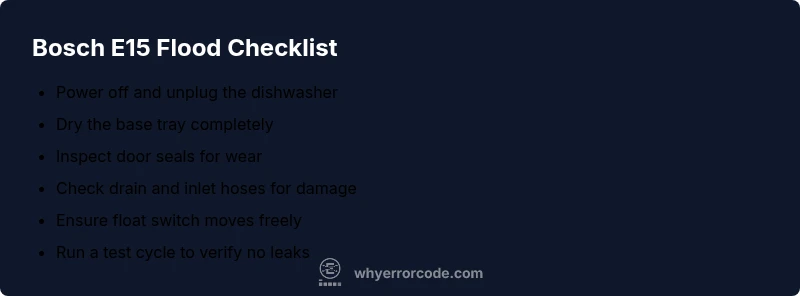
When you first notice the bosch e15 error code, power off the unit and unplug it if safe. Empty and dry the base tray using towels, then inspect the door seal and hinges for visible wear. Check the lower hoses for kinks or loose clamps and verify that the drain hose is properly routed. If you see a loose clamp or a disconnected hose, reattach it firmly. Keep in mind that the float switch and water inlet valve are critical sensors; do not bypass them. If no obvious leaks are found, run a quick test cycle with no detergent and monitor for any new leak signs. If water reappears during or after the test, do not use the dishwasher. Document findings with photos to help a service technician pinpoint the source quickly.
Step-by-step repair overview for the most common cause
This section outlines a practical path to diagnose and fix the most frequent root of the E15 flood condition. Start by ensuring safety with power off and water supply shut. Then proceed to inspect the base thoroughly, focusing on seals, hoses, and the float switch. If the leak source remains elusive, consider professional assessment to avoid accidental damage to internal electronics. The goal is a clean, dry base and a proven leak source so you can resume normal operation with confidence.
Alternative causes and how to diagnose them
If the flood condition returns after the initial fix, consider alternate causes such as a warped tub, cracked sump, or a faulty control board that misreads water levels. A warped tub might allow water to pool in the base tray even when there’s no external leak; you’ll notice staining or rust in the area beneath the tub. A cracked sump or damaged seals around the water inlet can also cause recurring E15 floods. In these scenarios, more invasive diagnostics and parts replacement may be required. A professional can perform a pressure test or run a diagnostic flow to isolate the fault with precision.
Safety warnings and when to call a professional
Dealing with water in the base tray involves electricity and high risk, so follow strict safety steps. Always unplug the machine before inspecting any components, and do not operate the dishwasher while there is standing water. If you cannot locate the leak quickly, or if water continues to accumulate after the base is dried, contact an authorized Bosch repair technician. Expect cost ranges to cover parts and labor; depending on your region and the exact fault, fees typically fall in a broad range. A pro can also verify that the flood condition isn’t caused by a defective control board. The Why Error Code team recommends scheduling service if you’re unsure, as DIY fixes beyond basic seal replacement can exacerbate damage.
Maintenance and prevention to minimize Bosch E15 occurrences
Post-repair, implement a simple preventive routine to reduce future risk of the bosch e15 error code. Regularly inspect door seals and hoses for wear, clean the filter and sump area to avoid blockages, and run occasional diagnostic tests suggested by the manufacturer. Don’t overload the dishwasher and use appropriate cycle settings to prevent overflow. Keeping the base area clean and dry helps detect leaks early and reduces mold growth. If you notice dampness after cycles, re-check seals and clamps, and re-run a test cycle. Proactive maintenance is the best defense against the bosch e15 error code.
Resetting, testing, and returning to normal operation
After you’ve completed the fix, reset the dishwasher by powering it back on and clearing any fault codes if the control panel allows. Run a full wash cycle with a light load and monitor the base tray for several minutes. If the E15 code reappears, stop the cycle and call a technician; a recurring flood suggests a hidden leak or a defective sensor. If the fix holds, you should be able to resume normal operation with confidence. Keep an eye on the base for the first few cycles and document any unusual behavior for future reference.
Steps
Estimated time: 30-60 minutes
- 1
Power down and unplug
Disconnect power, shut off water supply if accessible, and move the unit to a safe, dry area.
Tip: Ensure the circuit is fully de-energized before touching any components. - 2
Empty and dry the base tray
Remove standing water and dry the base area completely to prevent further damage.
Tip: Use towels and a mild fan to speed dry; avoid using heat near electronics. - 3
Inspect door seals and hoses
Look for tears, cracks, or loose clamps on the door gasket, drain hose, and inlet hose.
Tip: Take photos of wear to aid part replacement. - 4
Test float switch operation
Gently lift the float to confirm it rises and stops water inflow when raised.
Tip: Do not force the mechanism; if stuck, replace the float switch. - 5
Tighten/replace damaged components
Secure all clamps and replace any worn seals or cracked hoses.
Tip: Use OEM parts when possible for reliability. - 6
Run a test cycle
Reconnect power, run a short cycle with an empty load to verify no leakage.
Tip: Watch the base area closely for several minutes.
Diagnosis: Bosch dishwasher displays E15 flood error, system stops mid-cycle or won’t start
Possible Causes
- highWater in the base tray due to a leak or overflow
- mediumFaulty float switch or sensor that misreads water level
- lowDrain or pump issues allowing water to collect in base
Fixes
- easyDry the base tray and inspect visible leaks around seals and hoses
- mediumInspect door seals, hoses, and inlet valve for wear or damage; replace as needed
- hardIf the flood recurs, schedule professional service to evaluate control system and seals
Frequently Asked Questions
What does the Bosch E15 error code mean?
The E15 error code signals a flood condition with water in the base tray, triggering safety shutoff. It usually requires locating and fixing the leak, then resetting the machine.
E15 means water is in the dishwasher base; locate the leak and reset after drying, or call a pro if water keeps returning.
Can I fix E15 myself safely?
You can perform basic safety checks, dry the base, and inspect seals and hoses. Do not tamper with internal electronics; if water returns, seek professional service.
You can start with safety checks and drying; if the flood returns, call a technician.
What are the common causes of E15?
Most E15 floods come from leaks at doors, damaged hoses, or a failed float switch. Drain issues can also leave water in the base tray.
Leaks around seals and hoses are the usual culprits; a faulty float switch is another frequent cause.
Will clearing the base water fix the problem permanently?
No. Drying the base resolves the immediate flood, but you must identify and repair the leak source to prevent recurrence.
Drying helps temporarily; you still need to fix the leak to prevent return.
How much does service typically cost for E15 repairs?
Costs vary by region and fault, but service typically ranges from about 100 to 350 for parts and labor combined.
Most repairs fall roughly between $100 and $350 depending on parts and labor.
How can I prevent E15 in the future?
Regularly inspect door seals, hoses, and filters; avoid overloading; use appropriate cycles to prevent overflow and leaks.
Keep seals in good shape, check hoses, and run proper wash cycles to avoid leaks.
Watch Video
Top Takeaways
- Identify leaks early to stop water damage.
- Dry base tray and inspect seals first.
- Recurring E15 requires professional diagnosis.
- Regular maintenance reduces future flood risk.