Carrier Air Conditioner E3 Error Code: Quick Fix Guide
A practical, step-by-step guide to diagnose and fix the Carrier E3 error code, with quick fixes, common causes, safety tips, and cost ranges.


Definition: The Carrier E3 error code typically signals a fault in the control network or sensing circuit. It often points to a bad sensor, a loose connection, or a communication error between indoor and outdoor units. Quick, safe fixes include a breaker power cycle, thermostat re-pair if supported, and checking accessible sensor connectors. If the code persists, expect an underlying hardware fault requiring professional service.
What the carrier air conditioner e3 error code means
The E3 error code on Carrier air conditioners points to a fault in the system's control network or temperature sensing array. In practical terms, it usually signals that a sensor or the communication path between indoor and outdoor electronics has detected an abnormal condition. This kind of fault triggers the unit's safety protections, which can include shutting down or refusing to operate until the issue is resolved. Why Error Code emphasizes that the first action is to confirm the symptom and rule out simple causes before diving into component-level repairs. If you see E3, start with safe resets, then verify wiring and sensor status. The urgency is real: a misdiagnosed fault can lead to degraded performance or further damage if ignored.
Quick fixes you can try safely
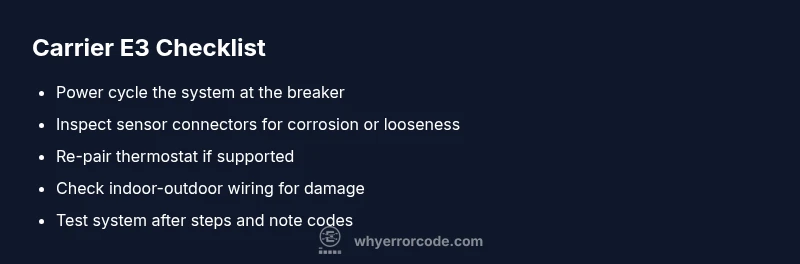
Before touching electrical components, switch off power at the main breaker to avoid shock. Then perform a safe reset: unplug the outdoor and indoor units (if accessible) or switch off the circuit, wait 60 seconds, and re-energize. Re-pair the thermostat if your model supports it and confirm connections at the control board are snug. Visually inspect accessible connectors for corrosion, burns, or loose wires, and reseat any suspect harnesses. Clear debris around the outdoor unit and ensure the condensate line is clear. If the E3 code persists after these steps, do not continue diagnosing with live power; proceed to a formal diagnostic flow or contact a professional.
Diagnostic flow: from symptom to solution
The moment E3 appears, start a structured diagnostic flow. First, verify the symptom: does the code appear consistently, only under heat or cooling, or after a power interruption? Next, examine likely causes in order of probability: sensor faults and wiring issues tend to be most common, while motherboard failures are rarer but more disruptive. Finally, apply targeted fixes and test the system under normal load. A systematic approach reduces guesswork and protects the equipment. This section outlines how to move from observation to evidence-led repairs, with practical checks you can perform safely.
Common causes in Carrier systems
Carrier systems use a network of sensors and control boards to regulate temperature and compressor operation. When E3 appears, the most frequent culprits are sensor faults (like a failing temperature sensor or a degraded thermistor) and communication faults between the indoor unit, outdoor unit, and the thermostat. Less common but possible issues include damaged wiring harnesses, blown fuses, or a failing control board. Weather exposure and moisture can accelerate corrosion on connectors, leading to intermittent faults that trigger E3. By focusing on the most probable causes first, you avoid unnecessary repairs and costs.
Cause 1: Sensor faults explained
Temperature sensors are the eyes of the HVAC system. If a sensor drifts or fails, the controller can misread ambient conditions and trigger safety shutoffs, often signaling E3. Signs include inconsistent cooling, strange cycling, or the unit stopping mid-run. Thermistors aged by heat or moisture can lose calibration, producing readings that are too high or too low. In many Carrier configurations, the fix is as simple as reseating or replacing a sensor, but only if you are comfortable working with low voltage connectors. If you observe visible damage, replace only with compatible parts from the manufacturer or a reputable supplier.
Cause 2: Indoor-outdoor communication fault
The E3 code frequently stems from a breakdown in the communication pathway that links the indoor control board with the outdoor unit. Loose connections, damaged ribbon cables, or corroded terminals can corrupt signals that coordinate compressor operation and fan speeds. Symptoms include sporadic fan cycling, delayed start, or the outdoor unit failing to respond to thermostat commands. The fix typically involves securing or replacing connectors, updating wiring harnesses, and ensuring the control boards share a common ground. In some models, software resets or a re-pair of the system may be required.
Step-by-step fix: address the most common cause (sensor/connection)
- Power down completely and confirm the circuit is isolated. 2) Open only the accessible service panels you are comfortable with; avoid touching high-voltage parts. 3) Inspect the sensor harness and connectors at both ends; reseat any loose connections with firm, clean seats. 4) Look for signs of corrosion or moisture and dry or replace affected components. 5) If the sensor is replaceable, swap in a compatible part and reassemble. 6) Restore power, re-energize the system, and run a test cycle to observe if E3 persists. 7) If the error recurs, escalate to a professional for a deeper diagnostic, including control-board testing.
Other potential causes and fixes
If the E3 persists after addressing sensors and communication, other possibilities include a failing control board, a blown fuse, a faulty relay, or refrigerant-related pressure issues. Replacing a control board is typically a hard repair with costs and downtime; a fuse or relay failure is easier to diagnose with a multimeter. Always consult the service manual for your model; never attempt refrigerant repairs yourself. Pro tip: capturing fault codes and operating conditions in a log helps the technician pinpoint root causes.
Safety, warnings, and when to call a professional
Working on HVAC equipment involves 240V AC services and pressurized refrigerant loops. If you smell refrigerant or hear hissing, stop immediately and evacuate. Only attempt basic resets if you are comfortable with electrical work; otherwise, contact a licensed technician. A professional diagnosis not only costs less in the long run but can protect your equipment warranty. If your unit is under warranty, check coverage before replacing hardware yourself.
Maintenance to prevent future E3 errors
Schedule seasonal inspections to keep sensors and boards clean and connections tight. Replace any aged or corroded connectors, ensure the condensate drain is clear, and keep the outdoor unit free of debris. Regularly reset the thermostat and verify firmware updates if supported by your model. Prevention reduces the odds of recurring E3 faults and extends system life.
Cost considerations and budgeting for E3 repairs
Costs vary widely by model, location, and the parts needed. A simple sensor replacement plus labor can range roughly from $150 to $450, while a control-board repair or replacement might run from $400 to $1,000 or more, including diagnostics. If the fix requires outdoor-unit wiring rewiring or harness replacement, expect a broader range. Always request a written estimate and ask about warranty on parts and labor. This is where the Why Error Code analysis helps you set expectations for 2026.
Quick recap and next steps
- E3 on Carrier means a sensor or communication fault; start with safe resets and wiring checks. - If symptoms persist, plan for professional diagnosis; early intervention saves parts costs. - Keep a maintenance log and watch for recurring codes. - Refer to Why Error Code for structured troubleshooting and budget planning.
Steps
Estimated time: 60-120 minutes
- 1
Power down and isolate
Power off at the main breaker and verify there is no residual charge. Confirm the circuit is isolated before touching any components. This prevents electric shock and protects sensitive electronics.
Tip: Use a non-contact voltage tester to confirm de-energized status. - 2
Inspect sensor harnesses
Open the service panels you are comfortable with and locate sensor connectors. Ensure all harnesses are fully seated and free of corrosion or moisture. Gently reseat any loose connections and inspect for signs of wear.
Tip: Do not force connectors; if a pin is bent or damaged, stop and replace the connector. - 3
Check for moisture or corrosion
Look for condensation, moisture, or corrosion at sensor pins and connectors on both indoor and outdoor boards. Wipe dry with a clean cloth and apply dielectric grease if recommended by your model’s manual.
Tip: Moisture is a common hidden cause of intermittent E3 faults. - 4
Test after reassembly
Close service panels, restore power, and run a controlled test cycle. Monitor for the E3 code and listen for abnormal cycling or delays in compressor engagement.
Tip: Document the cycle times and codes observed during testing. - 5
Evaluate need for part replacement
If E3 persists after sensor/connector checks, evaluate whether a sensor, harness, or control-board replacement is required. Consider model compatibility and warranty implications.
Tip: When in doubt, obtain a formal diagnostic estimate before purchasing parts. - 6
Escalate if unresolved
If the fault remains after the above steps, contact a licensed HVAC technician for advanced diagnostics (PCB tests, wiring integrity, refrigerant checks). Note that refrigerant work requires certification.
Tip: Professional service can protect warranty and prevent further damage.
Diagnosis: Carrier air conditioner displays E3 error code and shows disrupted operation
Possible Causes
- highSensor fault (e.g., temperature sensor or thermistor)
- mediumCommunication fault between indoor and outdoor units
- lowControl board/PCB fault
Fixes
- easyPower cycle the system at the breaker to reset protection logic
- easyCheck and reseat sensor and harness connectors at both ends
- easyTest and secure indoor-outdoor communication wiring and terminations
Frequently Asked Questions
What does the E3 error code indicate on a Carrier air conditioner?
E3 generally indicates a fault in the control system or sensor network, often related to a faulty sensor or a communication issue between indoor and outdoor units. It triggers safety protections and can halt operation.
E3 usually means a sensor or communication fault in your Carrier system. Start with safety resets and sensor checks, then you may need a professional diagnostic if it persists.
Can I reset the E3 code myself safely?
Yes, you can perform a safe reset by power-cycling the unit at the breaker, then re-pairing the thermostat if supported. If the code returns, stop and proceed with a diagnostic flow or seek professional help.
You can try a safe reset at the breaker, then re-pair the thermostat if your model supports it. If it comes back, call a pro.
Is E3 related to refrigerant levels or leaks?
E3 is not typically a refrigerant code. Refrigerant-related issues usually produce different fault codes and require a licensed technician to inspect pressures and lines.
E3 isn’t usually about refrigerant. If you suspect a refrigerant issue, get a pro to check pressures safely.
How much do E3 repairs generally cost?
Costs vary, but sensor replacement plus labor can range roughly from $150 to $450, while control-board repairs might run from $400 to $1,000 or more, depending on parts and labor.
Costs can vary from a few hundred to over a thousand dollars, depending on parts and labor.
When should I replace my Carrier unit because of E3?
If faults recur after professional diagnosis and multiple part replacements, or the system is old, replacement can be more cost-efficient than repeated repairs.
If E3 keeps coming back and the system is aging, replacement may be the smarter option.
Does warranty cover E3 repairs?
Warranty coverage depends on the model and purchase date. Check your contract for sensor, board, and labor coverage, and consult the installer or manufacturer for specifics.
Warranty depends on your plan—check your coverage for sensors, boards, and labor.
Watch Video
Top Takeaways
- Reset and verify sensor connections to clear E3
- Focus on sensor and communication faults first
- Do not bypass safety protections; call a pro if unresolved
- Document codes/symptoms to speed up diagnostics
- Maintenance prevents future E3 errors