Lloyd AC E5 Error Code: Diagnosis, Fixes, and Prevention
Urgent guide to diagnose Lloyd AC E5 error code, identify common causes, and safe fixes. Learn step-by-step flows, when to call a pro, and maintenance tips to prevent E5 recurrence in Lloyd air conditioners.


The Lloyd ac e5 error code signals a fault detected by the unit's control system, commonly linked to sensor input or inter‑unit communication, which halts cooling operation. A quick fix includes cycling power, reseating connectors, inspecting and cleaning filters, and performing a safe reset. If the problem persists, follow the diagnostic flow below or contact support.
What Lloyd AC E5 Means
The Lloyd ac e5 error code signals a fault detected by the unit's control system. While models vary, E5 is typically tied to sensor input or inter-unit communication problems that prevent normal cooling operation. In practice, you might see inconsistent temperatures, incomplete fan operation, or the display flashing E5. The Why Error Code team emphasizes that E5 is not a single failure mode; it represents a category of faults that require careful diagnosis. Understanding whether the issue originates in a sensor, wiring, or the control PCB helps you pick the right repair path. Over time, vibration, moisture ingress, or dust buildup can degrade sensor readings or plug connections, leading to intermittent E5 codes. Always consult the user manual for model-specific definitions, and remember: early detection saves money and downtime. The Lloyd ac e5 error code often triggers a self-diagnostic alert, so take note of when it appears and under what conditions. According to Why Error Code, proactive maintenance reduces the odds of recurring E5 faults and helps you budget repairs more effectively.
Recognizing Symptoms
If you see the Lloyd ac e5 error code, several symptoms typically accompany it. Cooling performance may drop or stop, indoor temperatures won’t stabilize, or the unit might cycle on and off erratically. The display may blink E5 or show a fault icon, and LEDs on the outdoor unit can flash in a pattern you’ll want to record for service. In some cases, you’ll notice unusual noises, reduced airflow, or a fan that refuses to run. While these symptoms aren’t exclusive to E5, they strongly indicate an electrical or sensor issue within the control loop. For technicians, symptom timing—whether it happens after start-up, during a particular mode, or under heat load—helps narrow the fault domain quickly. The Why Error Code team recommends tracking timing and environmental conditions to distinguish E5 from temporary hiccups like a transient power dip.
Common Causes and How They Map to Fixes
E5 is typically a fault in the control circuit, often arising from sensor failure, loose connections, or a PCB issue. Other plausible causes include wiring wear, moisture intrusion in the indoor or outdoor module, or a failing compressor strain sensor. In practical terms, the most probable category is sensor or communication fault, followed by loose wiring, with PCB faults being less frequent but plausible in older units. This hierarchy helps you prioritize fixes: start with safe, low-cost checks (power cycle, reseat plugs, inspect filters) before moving to component replacements (sensors, wiring harnesses, or control boards). Why Error Code’s methodology emphasizes ruling out simple issues first to avoid unnecessary service calls and to shorten downtime for Lloyd ac e5 error code events.
Quick Fixes You Can Try Safely
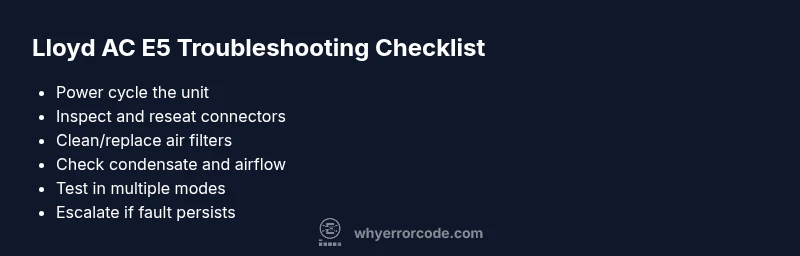
Before opening panels or touching wiring, ensure the unit is powered off and unplugged. Quick fixes for Lloyd ac e5 error code focus on non-destructive steps: cycle power by turning the unit off, wait 60 seconds, and turn it back on to reset the fault indication. Check and reseat all accessible connectors, especially sensor leads and the main harness between indoor and outdoor units. Inspect the air filters and clean or replace if clogged, since restricted airflow can trigger sensors and safety interlocks. Verify the condensate drain is clear and that the outdoor unit is free from obstructions. If your model has a service reset or a hidden diagnostic menu, perform it according to the manual. For safety and reliability, document every step you take and observe if E5 reappears after a power cycle.
Diagnostic Flow at a Glance
A structured diagnostic approach helps you separate symptoms from root causes. Start with symptom confirmation (does E5 appear under load, at startup, or in a specific mode?). Next, test probable causes with quick checks: sensor integrity, connector seating, and basic wiring condition. If these steps don’t resolve the error, the issue may shift toward a control board problem or a more complex sensor fault that requires professional evaluation. Why Error Code recommends using a flowchart to stay organized: you’ll build a concrete record of what tests were done, what readings were observed, and what repairs were attempted. This approach reduces downtime and ensures technicians have all relevant information when they are called in to fix the Lloyd ac e5 error code.
Step-by-Step Repair for the Most Likely Cause (Sensor/Connector Faults)
In many instances, sensor or connector faults are the root cause of Lloyd ac e5 error code. This section expands on the most common repair path, including safe checks, component reseating, and verification steps. You’ll want to access the control panel and service connectors via the manufacturer’s recommended process. If you’re not sure about sensor specifications or the correct connector orientation, do not force connections—mis-wiring can cause more damage. When in doubt, contact a certified technician. The goal is to reestablish clean, reliable sensor input and stable communication lines between indoor and outdoor modules. Always test the system in multiple modes (cool, dry, fan) to confirm the fault is cleared before re-assembling.
Other Potential Causes and Their Fixes
If quick fixes don’t clear E5, broaden the scope to consider inter-unit communication issues, wiring degradation, and control board health. Loose or corroded terminals on the main harness can mimic sensor faults, so re-check those connections with a multimeter if you’re trained. Moisture in electrical compartments or condensed humidity can affect sensor readings and microcontrollers. A failing outdoor unit sensor or a damaged indoor ambient sensor can also trigger E5. In these scenarios, the fix ranges from reseating plugs and cleaning terminals to sensor replacement or board-level diagnostics. Remember to verify firmware compatibility if your Lloyd unit supports software-based fault codes.
Safety, Costs, and When to Call a Pro
Electrical faults, refrigerant handling, and PCB replacements carry risk. If you notice burnt smells, sizzling sounds, exposed wires, or refrigerant leaks, stop immediately and contact an HVAC professional. For many households, a sensor or wiring fault can be addressed with a service call, typically ranging from a basic diagnostic visit to a mid-range component replacement—budget approximately $150–$500 depending on parts and labor. More complex board-level repairs or outdoor unit tests may push costs toward $500–$1,200. The Why Error Code team advises evaluating the warranty status; many Lloyd AC units remain covered for specific fault codes, including E5, for a defined period post-installation. Always request a written estimate and a clear explanation of the proposed work.
Maintenance and Prevention for Lloyd AC E5
Prevention is better than remediation when it comes to Lloyd ac e5 error code. Schedule routine sensor checks, clean air filters monthly, and inspect wiring harnesses for wear or moisture intrusion. Keep the indoor and outdoor units clear from debris and vegetation, and ensure outdoor fans rotate freely. Periodically review error logs if your model supports them and reset the fault memory after confirming the fault won’t recur. A proactive maintenance plan reduces the likelihood of E5 reappearing and can extend the life of your Lloyd AC system.
Steps
Estimated time: 45-60 minutes
- 1
Power down and Safety Check
Turn off the Lloyd AC unit and unplug from the mains. Wait 60 seconds to discharge capacitors and reset the control logic. If you have a service disconnect, switch it off there as well. This step minimizes electric shock risk and prepares the unit for safe inspection.
Tip: Always dry your hands and use insulated tools; never probe live terminals. - 2
Open Access Panels and Inspect Connectors
Remove access panels according to the model’s manual and visually inspect connectors and sensor plugs for looseness or corrosion. Gently reseat any suspect connectors and note any discoloration or damage. Do not pull cables by the wires; grip the plug itself.
Tip: Take a photo of harness layouts before disconnecting to aid reassembly. - 3
Check and Clean Filters
Remove the air filters and clean or replace them if dirty. Blocked filters can force the system to run in an unsafe mode that triggers sensor checks and fault codes. Reinstall filters firmly and ensure proper seating.
Tip: Use manufacturer-approved replacement parts to maintain warranty. - 4
Reset Fault Memory and Power On
If your model supports a service reset, perform it using the standard sequence in the manual. If not, disconnect power for 2–3 minutes to clear fault memory and then power back on. Observe if the E5 code reappears.
Tip: Do not rush this step; a full 2-minute power-down helps ensure a clean reset. - 5
Test Across Modes
Run cooling, dry, and fan modes for a few minutes each. Watch for abnormal noises, hesitation, or poor airflow which could indicate a stuck relay or sensor fault. If E5 persists in any mode, record the exact conditions for the technician.
Tip: Keep a log of mode, temperature, and time to help diagnose patterns. - 6
Escalate to Pro If Needed
If the fault remains after these steps, schedule a service visit. Technician-level checks may involve sensor replacement, wiring harness diagnostics, or PCB testing. Ask for a written estimate and a clear explanation of what will be tested.
Tip: Ask about warranty coverage for parts and labor before authorizing work.
Diagnosis: Lloyd AC displays E5 and stops cooling
Possible Causes
- highSensor fault or degraded sensor wiring
- highInter-unit communication error between indoor/outdoor units
- mediumLoose, damaged, or corroded wiring/connectors
- lowControl board (PCB) malfunction
Fixes
- easyPower cycle the unit and perform a safe reset
- easyCheck and reseat sensor and main harness connections
- mediumInspect and replace faulty sensors or wiring harness
- hardReplace the control board if diagnostics point to PCB fault
Frequently Asked Questions
What does Lloyd AC E5 mean and is it repairable at home?
E5 typically signals a sensor or communication fault in the Lloyd AC control system. Some basic checks, like power cycling and reseating connectors, can be done safely at home, but more complex symptoms should be handled by a technician to avoid damage or safety risks.
E5 is a sensor or communication fault in the control system. Simple resets may help, but more involved repairs should be done by a technician.
Can I fix E5 without professional help?
Some quick checks are safe and can be done by the user, such as power cycling, cleaning filters, and reseating plugs. If the fault persists after these steps, or if you encounter wiring or refrigerant concerns, contact a pro.
DIY fixes are limited to basic checks; persistent E5 or wiring issues require a professional.
What is the typical cost range to fix Lloyd AC E5?
Costs vary by extent: basic diagnostics and part replacements may range from roughly $150 to $500, while board-level repairs or sensor replacements could reach $500 to $1,200 depending on parts and labor. Always obtain a written estimate first.
Diagnostics and simple parts cost a few hundred dollars; complex fixes can be over $1,000 with labor.
Will E5 affect warranty coverage?
Warranty coverage for E5 depends on model, age, and service history. Many warranties cover defects in factory parts but may exclude damage from improper maintenance. Check your warranty terms or contact the manufacturer for confirmation.
Warranty may cover E5 if it’s a manufacturing defect; maintenance and improper handling can affect coverage.
How long does it take for a technician to diagnose E5?
On-site diagnosis typically takes 30–90 minutes, depending on accessibility, test equipment, and whether panel or wiring work is needed. Expect additional time if replacements are required.
Diagnosis usually takes about 30 to 90 minutes; more time if parts must be replaced.
What should I prepare before a service visit?
Have model and serial numbers handy, note when E5 occurs, and provide a brief history of previous fixes. Clear access to the unit and a contactable deadline helps technicians schedule efficiently.
Gather model info, fault timing, and prior fixes to speed up service.
Watch Video
Top Takeaways
- Understand E5 as a fault category, not a single failure.
- Start with safe, low-cost checks before component replacements.
- Document steps and observe symptom timing for the technician.
- Call a pro if there is any sign of electrical hazards or refrigerant issues.