E24 Error Code Bosch Dishwasher: Quick Fix and In-Depth Guide
Learn how to diagnose and fix the Bosch E24 drain error. This urgent guide covers symptoms, causes, quick fixes, step-by-step repair, safety tips, and prevention strategies.


E24 on a Bosch dishwasher signals a drainage fault—usually from a clogged filter, blocked drain hose, or a failing drain pump. The quick fix is to clean the filter and sump, inspect the drain hose for kinks, and reset the unit. If water remains, run a short drain cycle and check for debris.
What the E24 Error Means for Bosch Dishwashers
The E24 error on Bosch dishwashers is primarily a drainage fault. It indicates the machine cannot properly evacuate wastewater during the drain phase. While the exact wording may vary by model, the underlying issue is consistently linked to how water exits the sump area. The root cause is usually a mechanical obstruction or a sensor-triggered fault that prevents the drain pump from cycling correctly. According to Why Error Code, drain-related problems are the most common culprits behind E24 on many Bosch units, making this guide especially relevant for quick, actionable troubleshooting.
In practice, you’ll notice the dishwasher stops mid-drain, displays E24, and may leave a pool of water at the bottom. The escalation path is typically straightforward: verify filters and hoses first, then inspect the pump, and finally assess electronics if the problem persists. This approach helps you isolate the issue quickly without unnecessary disassembly.
The urgency behind resolving E24 is twofold: preventing potential water damage and avoiding unnecessary service calls. If your model is under warranty, consult the manufacturer’s guidance before performing any invasive repairs. If in doubt, prioritize safety and professional support. The Why Error Code team recommends a careful, methodical process to reduce risk and costs.
Quick Diagnostic Overview: Symptoms, Causes, and First Actions
When E24 appears, you have a drained-but-waiting-to-drain scenario. Common symptoms include water in the bottom of the tub after a cycle ends, a steady or blinking drain light, or the washer pausing with an E24 code. The first actions are simple but critical: power off the machine, unplug it, and verify that the kitchen floor is dry enough to avoid slip hazards. Then proceed to inspect the filter and drain hose. In many cases, a straightforward cleaning resolves the issue; more persistent faults move to the pump or sensor level. This section sums up the most frequent causes and the immediate remedies you can attempt safely at home.
In the context of this error, it’s important to distinguish between a clogged path and a faulty sensor. A blockage is typically positional and solvable with basic tools and cleaning; a sensor or pump fault may require component replacement. Throughout, keep a log of what you check and the results; this makes future troubleshooting faster and reduces unnecessary parts purchases.
Finally, if you run into resistance, don’t force components or bypass safety features. The recommended path is to methodically test each element and escalate to professional service if the error persists. The Why Error Code team emphasizes safety-first and stepwise verification to protect both you and the appliance.
Step-by-Step Quick Fixes to Try Right Now
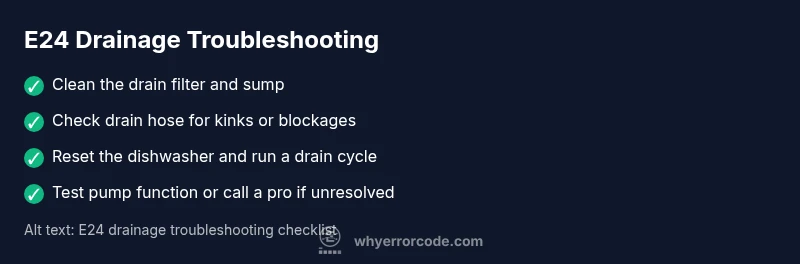
- Inspect the drain filter and sump area for debris and clean thoroughly. A blocked filter is the most common E24 trigger and is easily remedied.
- Check the drain hose for kinks, clogs, or air gaps. Straighten bends and remove any blockages that prevent proper wastewater flow.
- Run a short drain cycle or a forced reset to clear any temporary faults in the control circuitry.
- Inspect the area under the filter for standing water; if present, mop up and attempt another drain cycle to verify clearance.
- If the dishwasher continues to display E24 after these steps, the next suspect is the drain pump or a sensor issue; plan for a deeper diagnostic or professional service.
Tip: Always unplug the unit before opening panels and handling internal parts to avoid electric shock. Keep a camera handy to document wiring and hose connections if you’ll need to reference them later when reassembling.
Potential Causes Beyond the Obvious
- Clogged or dirty drain filter: The most frequent cause; simple cleaning often resolves the issue.
- Blocked drain hose or air gap: Partial restrictions can stall drainage and trigger E24.
- Faulty drain pump or impeller jam: A worn or seized pump will fail to move water out of the sump.
- Drain sensor or control board fault: Electronic faults can falsely indicate a drain problem even when mechanical parts are fine.
- Improper anti-flood devices or water level sensor misreadings: These can also cause drain-related errors in some Bosch models.
In most scenarios, start with the filter and hose, then test the pump. Sensor or PCB problems are less common but should be considered if mechanical checks pass without resolution. Documentation of each step helps you decide whether professional intervention is warranted and can speed up service if needed.
Safe, Practical Next Steps and When to Call a Pro
- For a quick self-check, clear the filter, inspect hoses, and reset the unit. If E24 remains after these actions, the fault may be more serious.
- If you hear unusual noises from the drain pump or notice water leakage around the base after reseating parts, stop and call a technician.
- Consider the model’s warranty status. If under warranty, consult Bosch support before attempting component replacements.
- Budget considerations: DIY parts and basic tools may cost roughly $20–$100, while professional service can range higher depending on parts and labor.
- If a pump failure or control-board fault is suspected, professional diagnosis is advised to avoid further damage or safety risks.
The conclusion: when E24 persists after basic checks, rely on a staged approach and escalate to professional help when needed. The Why Error Code Team recommends documenting symptoms and outcomes to streamline future service interactions.
Maintenance and Prevention to Minimize Future E24 Occurrences
- Regularly clean the filter and sump area as part of routine maintenance. A clean sump helps prevent recurring blockages.
- Run an occasional drain cycle to flush debris, especially after heavy-use scenarios where food particles or sludge may accumulate.
- Inspect hoses for wear, kinks, or mineral buildup—replace hoses showing signs of aging.
- Use recommended detergent and avoid overfilling the dishwasher, which can cause backflow and strain on the drainage system.
- If you store or relocate the unit, ensure water lines are clear and the unit is level to prevent misreads from sensors.
Following these preventive steps will reduce the likelihood of E24 returning and extend the life of your Bosch dishwasher. The Why Error Code team's guidance here focuses on practical, repeatable actions you can perform without specialized tools.
Steps
Estimated time: 45-60 minutes
- 1
Power down and access the drain area
Unplug the unit and turn off the water supply if accessible. Remove the lower front panel or filters as per your model’s guide to expose the sump and drain pathway.
Tip: Lock in your workspace—keep screws and small parts in labeled containers. - 2
Clean drain components
Remove the filter and wipe away any debris from the sump and filter mesh. Rinse under running water until clear and reinsert.
Tip: Use a soft brush to dislodge stubborn debris without damaging the mesh. - 3
Inspect the drain hose and air gap
Trace the drain hose from the tub to the waste line. Look for kinks, blockages, or a clogged air gap and straighten/clean as needed.
Tip: Detangle gently; avoid crushing the hose with clamps. - 4
Test the drain pump function
With panels reassembled, run a short drain cycle to observe pump operation. Listen for unusual noises or no movement of water.
Tip: If the pump hums but doesn’t move water, the impeller may be jammed or the pump may be failing. - 5
Reset and run a full cycle
Reset the control board as per your model’s instructions (often a specific button sequence). Run a complete wash and drain cycle to confirm E24 is cleared.
Tip: Keep a close eye on the first post-reset cycle for any reappearance of the error. - 6
Decide on further action
If E24 persists after these steps, the likely culprits are the drain sensor or control board; arrange professional service to avoid further damage.
Tip: Document all steps and results to share with the technician.
Diagnosis: Error code E24 displayed on Bosch dishwasher during/after drain cycle
Possible Causes
- highClogged or dirty drain filter
- mediumBlocked drain hose or air gap
- mediumDrain pump failure or impeller jam
- lowControl board/drain sensor fault
Fixes
- easyClean the drain filter and sump area
- easyCheck drain hose for kinks and clear blockages
- easyRun a drain cycle or reset the dishwasher
- hardReplace drain pump or repair control board (professional)
Frequently Asked Questions
What does the E24 error code mean on a Bosch dishwasher?
E24 indicates a drainage fault. It usually points to a clogged filter, blocked drain hose, or a failing drain pump. Start with the basics: clean the filter, check the hose, and run a drain cycle.
E24 means the dishwasher can't drain properly—start with cleaning the filter and hose, then run a drain cycle.
Can I fix E24 myself, or do I need a technician?
In most cases you can fix E24 yourself by cleaning the filter and hose. If the pump or control board is faulty, or if the problem persists after basic fixes, professional service is recommended.
You can usually fix E24 yourself first, but call a tech if it doesn’t clear or you suspect a pump or board fault.
How do I reset the Bosch dishwasher after clearing a clog?
Power off the unit, wait 1–2 minutes, then power back on. Run a short drain cycle to verify the fault is cleared.
Turn it off, wait a moment, turn it back on, and run a quick drain test to see if E24 returns.
Is E24 the same across all Bosch dishwasher models?
E24 generally indicates a drainage issue across Bosch models, but the exact diagnostic steps can vary slightly by model and age.
Most Bosch models use E24 for drain issues, but always check your model’s manual for specifics.
What are typical costs to repair E24?
DIY parts typically cost around $20–$100. If you hire a technician, total costs usually range from $100–$350 depending on parts and labor.
Parts and labor for E24 repair usually run from about one hundred to three hundred fifty dollars, depending on what's needed.
Watch Video
Top Takeaways
- Address E24 quickly to prevent water damage
- Start with the drain filter and hose before pumping components
- If the issue persists after basic checks, seek professional service
- Document symptoms and steps for faster repairs
- Regular maintenance reduces future drainage faults