Everest Refrigeration E1 Error Code: Quick Fix & Diagnosis
Learn how to diagnose and fix the Everest refrigeration E1 error code quickly. Step-by-step repairs, safety tips, and professional guidance from Why Error Code to prevent spoilage and extend your unit's life.


An Everest E1 error usually indicates a sensor or controller fault that triggers the fridge's protection as a safety measure. The fastest path is a power reset, then inspect the temperature sensor wiring and reseat any harness connections. If the error remains after these quick fixes, contact a certified technician to diagnose the control board.
What Everest Refrigeration E1 Error Code Means
For Everest refrigeration units, the E1 error code typically signals a fault in temperature sensing or the control logic. The exact interpretation can vary by model, but the common thread is that the refrigerator's safety protections have detected an abnormal condition that could affect cooling performance. This is a non-trivial alert that requires action to prevent food spoilage. According to Why Error Code, the most frequent triggers are sensor faults, loose wiring, or a failing control board. The first response is to perform a controlled reset and inspect critical connections before escalating to component replacements. Keeping a calm, methodical approach helps you isolate the root cause quickly and avoid unnecessary part swaps. The goal is to restore stable temperature readings and confirm that the internal sensors are communicating correctly with the main controller. If the error reappears after a reset and checks, expect a deeper diagnostic or professional service. We’ll walk through a structured flow from symptom to solution to help you fix E1 efficiently.
Common Causes at a Glance
- Faulty evaporator temperature sensor or thermistor (high likelihood)
- Loose, damaged, or corroded sensor wiring/harness (high likelihood)
- Control board fault or firmware issue (medium likelihood)
- Door sensor misread or ambient sensor fault (low likelihood)
Understanding these categories helps you prioritize checks and avoid unnecessary replacements. In many cases, this pattern is resolved by re-seating connectors and resetting the module. Remember that the goal is to re-establish proper communication between the sensor network and the control board.
Immediate Quick Fixes You Can Try
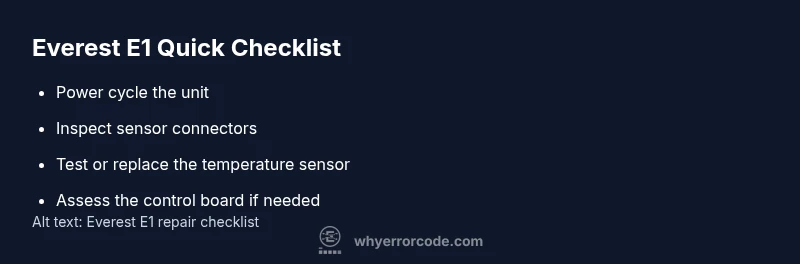
- Power cycle the unit: unplug for 5–10 minutes, then plug back in to reset the controller.
- Inspect sensor connectors and harnesses for looseness, corrosion, or damaged pins; reseat firmly.
- Check for obvious signs of damaged insulation or frayed wires near the back panel and service ports.
- If available, consult the service manual for model-specific sensor testing procedures and safe testing methods.
Note: Only perform non-destructive checks you are comfortable with. If you smell burning or observe damaged components, stop and seek professional help immediately.
Diagnostic Flow: Symptom to Solution
If Everest refrigeration displays E1, start by confirming the symptom: a static E1 code with reduced or absent cooling. From there, rule in or out the high-lidelity causes: sensor wiring, sensor faults, control board issues, and sensor misreads due to door or ambient conditions. Use the diagnostic flow to prioritize fixes from least invasive to most invasive. Quick resets and connector reseating come first, followed by sensor testing; if unresolved, proceed to board inspection or professional evaluation. This approach minimizes downtime and reduces costly part swaps.
Step-by-Step Fix for the Most Likely Cause
- Power cycle the unit by unplugging for 5–10 minutes and then plugging back in. 2) Open the service panel and locate the temperature sensor/harness; reseat all connectors, looking for corrosion or bent pins. 3) If you have a multimeter, test the sensor resistance at room temperature against the model’s spec; replace the sensor if it’s out of range. 4) Inspect the control board for obvious signs of damage or loose connectors and reseat any large cables. 5) If E1 persists after these steps, contact a technician for a board-level diagnostic or part replacement.
Estimated time for this fix: 30–45 minutes.
Other Causes and How to Address Them
Beyond the sensor and harness, E1 can originate from a faulty main board or firmware fault, a bad door switch, or misreads from environmental sensors. For a board fault, technicians may need to reflash firmware or replace the control module. Door switches should be tested for proper operation; a misread door switch can trigger false E1 codes. After any wiring or board work, re-test the system to ensure the fault is cleared and cooling returns to specification.
Safety, Warnings, and When to Call a Pro
Safety first. Always disconnect power before inspecting electrical components. If you detect burning smells, exposed conductors, or if you lack the tools or parts to perform safe testing, stop and contact a pro. A certified refrigeration technician can confirm sensor specs, validate the control board condition, and source genuine parts. Attempting major repairs without proper diagnostic tools can void warranties or cause further damage.
Prevention and Maintenance to Avoid E1
Regular maintenance reduces the likelihood of E1 returning. Schedule periodic cleanings of condenser coils, check door gaskets for a tight seal, and keep the rear panel free of dust. Record error codes and repair steps to aid future troubleshooting. Use the manufacturer’s official parts and follow model-specific service windows to prevent sensor misalignments from changing ambient temperatures. Maintaining a consistent temperature environment helps the sensors stay within tolerance and reduces false alarms.
Steps
Estimated time: 30-45 minutes
- 1
Power down and reset
Unplug the refrigerator and wait 5–10 minutes to allow the control board to reset. Reconnect power and monitor for the E1 code. If it reappears, proceed to the sensor checks.
Tip: Label power cords and ensure the unit is completely disconnected before handling. - 2
Check sensor connectors
Open the service panel and locate the temperature sensor and its harness. Reseat all connectors firmly and inspect for corrosion or bent pins. A loose connection is a common cause of E1.
Tip: Use a flashlight and avoid touching exposed electronics while powered. - 3
Test or replace the sensor
If you have a multimeter, test the sensor resistance at room temperature and compare to the model's spec. Replace the sensor if the reading is out of range or if the code returns after reseating.
Tip: Only replace with an exact OEM or compatible sensor to ensure correct calibration. - 4
Inspect the control board
Check for signs of damage, bulging capacitors, or burnt components. Reseat large controller cables and verify firmware integrity if possible.
Tip: Only perform advanced checks if you have training; improper handling can cause further damage. - 5
Call a professional if unresolved
If E1 persists after sensor and board checks, schedule a service call with a certified technician. Document the steps you have taken and the observed symptoms.
Tip: Provide model number, serial, and a timeline of error occurrences to accelerate diagnosis.
Diagnosis: Everest refrigerator displays E1 error code with inconsistent cooling
Possible Causes
- highFaulty evaporator temperature sensor or thermistor
- highLoose, damaged, or corroded sensor wiring/harness
- mediumControl board fault or firmware issue
- lowDoor sensor misread or ambient sensor fault
Fixes
- easyPower cycle the unit by unplugging for 5–10 minutes, then plug back in
- easyInspect and reseat temperature sensor connections; look for damaged wires
- hardTest or replace the temperature sensor with the manufacturer's part
- hardIf the issue persists, diagnose or replace the control board with professional help
Frequently Asked Questions
What does E1 mean on Everest refrigeration units?
E1 indicates a sensor or controller fault triggering the fridge’s protective shutdown. It often points to a faulty temperature sensor, damaged wiring, or a failing control board. Start with resets and sensor checks before considering part replacements.
E1 is a sensor or controller fault. Start with a reset and check the temperature sensor wiring before deciding on parts.
Can I reset E1 myself?
Yes, a power cycle can clear transient faults. If E1 returns, avoid repeated resets and proceed with sensor checks or professional diagnostics.
You can try a power reset, but if it keeps coming back, get a pro to diagnose.
Is E1 more likely a sensor or a board issue?
Most reports point to sensor wiring or the temperature sensor itself as the primary culprits; control board faults are less common but possible.
Usually a sensor or wiring problem, though the board can fail too.
What are typical costs to fix E1?
Costs vary by part and region. Sensor replacement often ranges from about $50 to $150, wiring harness from $50 to $200, and control board from $200 to $600, plus labor.
Repair costs can range from around a few dozen dollars for sensors to several hundred for the board, plus labor.
When should I replace the fridge instead of repairing?
If the unit is older than 10–15 years and E1 keeps recurring with high repair costs, replacement may be more economical in the long run.
If it’s an old fridge and repairs keep failing, consider replacement.
Watch Video
Top Takeaways
- Power cycle first to clear transient faults
- Prioritize sensor wiring checks before board work
- Replace only with correct parts and verify calibration
- If E1 returns, don’t delay professional help
- Maintain routine upkeep to prevent future E1s