LG Inverter Washing Machine OE Error Code: Quick Fixes & Troubleshooting
Urgent guide to diagnosing and fixing OE error code on LG inverter washers. Learn causes, quick fixes, safety tips, costs, and when to call a pro.


OE on LG inverter washing machines signifies a drainage problem that stops water from draining. The fastest fixes are to unplug, check the drain hose and filter, and run a test cycle. If the error persists, inspect the drain pump and consider professional service.
What OE Means on LG Inverter Washers
The OE error code on LG inverter washing machines indicates a drainage issue. In most models, the machine signals an inability to drain water properly after a wash cycle. This can halt progression and may lead to additional warnings if not addressed promptly. Understanding OE in the context of LG inverter technology helps you target the fix quickly. Commonly, OE arises from clogs, hose kinks, or pump faults, not from a broad power issue. Start with the drainage path first to avoid unnecessary part replacements. This distinction matters for both homeowners and professional technicians, since the path to resolution is usually straightforward when you stay focused on the drain system.
According to Why Error Code, the OE code often reflects a mechanical or sensor-reading problem within the drain subsystem rather than a total electronics failure. Recognizing this nuance helps you prioritize the simplest, least invasive fixes before escalating to costly component replacements. While the exact model can shift where to access the filter or pump, the underlying principle—clear the drain path first—remains constant across LG inverter washers.
Common Causes of OE on LG Inverter Washers
The OE code is most often caused by a blocked drain filter, a kinked or clogged drain hose, or a failing drain pump. Less frequent but possible culprits include a faulty water level sensor or a blocked sump. In inverter designs, sensor readings can be misinterpreted by the microcontroller if the hose is blocked. Prioritize cleaning the filter and inspecting hoses before replacing parts. If you recently moved the machine or performed a heavy load, recheck hose routing and height. Debris like coins, lint, or hair accumulation is a classic hidden offender that builds over time and triggers drainage faults.
Understanding the drain system in LG inverter models helps you identify the most probable cause quickly. The OE code often responds to a simple clog or kink rather than a failed motherboard, although electronics faults can masquerade as drainage issues. Start with the drain path and filtration, then expand your scope if the problem persists.
Quick Fixes You Can Try Right Now
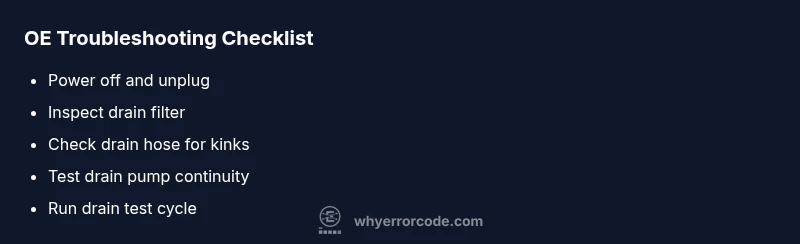
- Unplug the washer and drain the remaining water if safe to do so using the manual drain hose. - Check the drain filter and remove any lint, coins, or debris. - Inspect the drain hose for kinks or clogs; detach and flush with water. - Run a short drain-and-spin cycle to confirm the hose and filter are clear. If OE returns, continue with deeper diagnostics. - Safety note: always ensure power is off before poking around electrical components.
- If your model has a secondary access panel, inspect the area for loose connections or cracks in hoses that could allow slow drainage or air locks. - After each fix, run a full cycle to verify the error does not reappear. Some models may require multiple cycles to reset the system after a drain issue.
Diagnostic Flow: From Symptom to Root Cause
Symptom: OE code displayed; water remains in the drum after a cycle. Possible causes include a clogged drain filter, a blocked drain hose, a faulty drain pump, or a sensor fault.
Fixes start with the easiest checks:
- Clean the filter
- Clear the hose
- Listen for the pump hum or grind; test continuity if you have tools
If the problem persists after these checks, the pump or control board may require replacement. Keep a log of error codes and cycle times to share with a technician.
Step-by-Step Fix: Most Common Cause (Blockage)
- Unplug and remove the access panel to locate the drain pump and filter. 2. Place a towel to catch residual water. 3. Unscrew and remove the drain filter; clean thoroughly. 4. Reassemble and run a test cycle. 5. If OE reappears, inspect the drain hose for obstructions and ensure it's properly connected. 6. If still unresolved, proceed to pump inspection or replacement.
- In some LG models, you may need to remove a front panel to access the filter housing; consult the user manual for model-specific steps.
Other Causes and How to Fix Them
- Faulty drain pump: test with a multimeter or listen for motor hum during a drain cycle; replacement may be necessary. - Incorrectly installed drain hose: ensure the hose height and routing comply with the manual. - Sensor or control board fault: consult a technician for advanced diagnostics; replacement can be costly. - If the door interlock or latch is malfunctioning, the machine may falsely report drainage issues even if water leaves the drum—verify the door clearly seals before starting a new cycle.
Safety, Cost Ranges, and When to Call a Professional
If you are not comfortable with electrical components or removing panels, professional help is advised. Typical repair costs for drain issues range from $50 for a simple filter clean to $150–$350 for pump replacement, plus labor. Control-board fault repairs can exceed $300–$600. Always unplug before work, and avoid forcing hoses or components. If your unit remains under warranty, check coverage before performing internal repairs; some models require authorized service to maintain warranty validity.
Prevention Tips to Avoid OE in the Future
- Regularly clean the drain filter every 1-2 months. - Use the correct detergent amount to reduce sudsing; excess suds can trap debris in the pump. - Check hoses for wear and replace damaged hoses promptly. - Schedule professional maintenance if you use the machine heavily. - Keep the drain area clear of clutter to prevent blockages from forming after transport or cleaning cycles.
Steps
Estimated time: 45-90 minutes
- 1
Power off and prepare
Unplug the machine and move it to a dry area. Gather towels and a shallow tray for catching water. Confirm manual drain hose path to a floor drain.
Tip: Safety first: water and electricity can be hazardous; use dry hands and dry towels. - 2
Access the drain filter
Open the lower access panel or filter access door per model. Place a towel to catch residual water before loosening the filter cap.
Tip: Have a container ready for captured water to avoid spills. - 3
Clean the drain filter
Unscrew the filter, rinse under running water, remove lint and debris. Reinstall securely.
Tip: Do not over-tighten the filter; ensure the seal is clean. - 4
Inspect the drain hose
Detach the hose from the drain and inspect for kinks or clogs. Flush with clean water to clear obstructions.
Tip: Check hose piping for any cracks that may cause leaks. - 5
Run a test drain cycle
Plug in the washer and run a short drain cycle to confirm proper drainage. If OE reappears, move to pump testing.
Tip: Listen for the pump sound; a dead pump means replacement is likely. - 6
Check the drain pump
If possible, access the pump and test for continuity with a multimeter. Look for blockages in impeller housing.
Tip: If you are uncomfortable testing electrical components, skip to professional help. - 7
Decide on next steps
Based on pump test outcomes, decide whether to replace the pump or call a technician for a board fault.
Tip: Warranty may cover parts; check terms before purchasing.
Diagnosis: OE error code appears and the drum won’t drain after a cycle
Possible Causes
- highClogged drain filter
- highKinked or blocked drain hose
- mediumFailed drain pump
- lowControl board/sensor fault
Fixes
- easyClean the drain filter and straighten the hose
- easyCheck hose for kinks and flush out blockages
- hardTest or replace the drain pump if needed
- hardInspect the control board and sensors; call a technician if fault codes persist
Frequently Asked Questions
What does OE mean on LG washer back-end, and how urgent is it?
OE is a drainage-related code indicating the washer can't drain water properly. It is urgent to diagnose quickly to avoid mold and odor. Start with simple checks like filters and hoses.
OE means the washer can't drain; start with the drain path and filters, and run a quick test.
Can OE be caused by a clogged drain filter?
Yes. A clogged drain filter is a common OE cause. Clean the filter, remove debris, and retest the drain cycle.
Clogged drain filter is a common OE cause; clean it and test again.
Is professional service required for OE?
Not always. If cleaning filters and hoses and pump testing do not resolve OE, a technician should inspect the pump or control board.
If simple fixes fail, call a technician for pump or board issues.
Will using too much detergent trigger OE?
Excess detergent can cause foaming and drain strain, but OE is typically a drainage problem rather than suds alone. Use the recommended amount.
Too much detergent can worsen drainage but OE is usually a drain issue.
How much do drain-pump repairs cost?
Drain pump replacement typically costs between $100 and $300, depending on model and labor. Check warranty terms before buying parts.
Pump replacement may cost between $100 and $300, depending on model and labor.
Can OE appear on other LG models?
Yes, OE can appear on multiple LG washer models whenever drainage is blocked or faulty. The steps are similar across models.
OE appears on various LG models; follow the same drain-check steps.
Watch Video
Top Takeaways
- Unplug before inspection and start with the drain path.
- OE usually means drainage issues, not a global power fault.
- Clean filters and hoses first; pumps and boards come last.
- Costs vary; simple fixes are affordable, major repairs may be pricey.