LG WM2016CW OE Error Code: Fast Drain Fixes
OE on LG WM2016CW means a drainage fault. This urgent guide covers causes, quick checks, step by step repairs, and when to call a pro to restore proper draining and prevent recurrence.


OE on LG WM2016CW means the washer is having trouble draining. The fastest path to resolution is a sequence of quick checks: clean the drain filter, inspect the drain hose for kinks or clogs, and test the drain pump. If the code remains after these steps, proceed with deeper diagnostics or professional service.
What OE means on LG WM2016CW
According to Why Error Code, OE on LG WM2016CW signals a drainage fault that prevents water from evacuating the tub within the allotted time. When this code appears, the washer typically leaves water in the drum or drains very slowly. Understanding OE helps you triage quickly: start with simple checks that don’t require special tools, then move to component-level tests if the fault persists. The most common culprits are a clogged drain filter or pump screen, a blocked or kinked drain hose, or a pump that has stopped working. Addressing these issues in a logical sequence often restores normal draining without professional service. If the code persists after basic repairs, you may need deeper diagnostics or replacement parts. Keep expectations realistic: many OEM fixes are straightforward, but some cases require a pro.
Quick fixes you can try before calling a pro
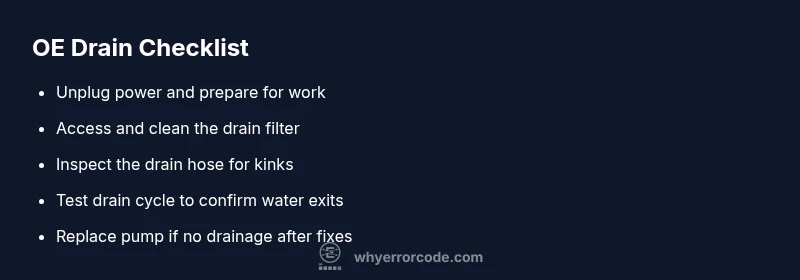
- Safety first: unplug the machine, shut off the water supply, and place towels to catch spills.
- Access the drain area: open the front panel or the filter door and locate the drain filter and pump screen.
- Clean the filter and screen: remove debris, rinse under running water, and reassemble.
- Inspect the drain hose: look for kinks, crimps, or clogs; straighten the hose and ensure it reaches the drain without being crushed.
- Run a drain test: with the door closed, run a short drain cycle to verify water exits the tub.
- Observe for leaks: if you see water pooling, recheck connections and hoses for tightness. If OE returns after these steps, you may have a more serious drain pump issue or control fault.
How the drain system works in your LG washer
Water exits the tub through the inner drain, flows to the drain pump impeller, and is pushed through a drain hose to the household drain. The pump and hose must be clear of debris and freely movable for efficient drainage. A clogged filter traps hair and lint that can choke the impeller; a clogged pump screen can reduce suction and slow draining. The drain hose should have a smooth path to the floor drain or wall outlet, with no sharp bends. A malfunctioning pump or trapped air can trigger the OE code even if the visible components look fine. If you notice unusual noises, buzzing, or the pump not engaging, the drain system is a likely culprit.
Step-by-step overview of the most common fix (filter and hose)
This section outlines the high-lidelity approach to the most frequent OE cause: a blocked filter and drain hose. It is designed to be followed in sequence to maximize the likelihood of a successful repair without major parts replacement. Start with simple, safe actions and document each step so you can reference it if you need professional help later.
Other possible causes if OE persists
If cleaning the filter and hose does not resolve OE, consider these potential issues: a failed drain pump or worn impeller, a faulty pressure or water level sensor that misreads the tub, damaged wiring to the pump, or a controller board fault that prevents the pump from receiving a drain command. Overloading the drum or improper cycle selection can also confuse the control logic and trigger drainage warnings. In such cases, part testing with a multimeter and diagnosis using the service manual is advised, and replacement parts may be required.
Safety cautions and when to call a professional
Working on laundry equipment involves both electrical and water hazards. Always unplug the unit before any internal work. If you are uncertain about testing the pump, replacing parts, or accessing internal components, contact a licensed technician. For out-of-warranty machines, repair costs may include parts, labor, and a diagnostic fee; expect ranges that reflect your region and technician experience. If the unit is under warranty, consult LG support to avoid voiding coverage. A pro should be called if you hear grinding from the pump, see burning smells, or cannot access the drain system safely. Estimated typical repair ranges: parts 60–240, labor 50–180.
Maintenance tips to prevent OE
Regular maintenance can reduce drainage faults. Schedule a monthly check of the drain filter and pump screen, especially in households with pets or long-haired occupants. Use a lint catcher or pre-filter in the detergent dispenser area to minimize debris reaching the filter. When draining, avoid forcing water through the hose; ensure the hose is properly secured and laid out with gentle slopes to the drain. Finally, avoid overloading the washer; a balanced load improves spin efficiency and reduces wear on the drain system.
Steps
Estimated time: 45-90 minutes
- 1
Power off and prepare
Unplug the washer, turn off water, and place a shallow pan and towels under the service area to catch any residual water.
Tip: Have a friend help steady the panel and keep the work area dry. - 2
Access the drain filter
Open the lower front access panel, locate the drain filter, and place a towel beneath. Slowly loosen the filter to release trapped water.
Tip: Keep the container close to catch splashes; avoid forcing the filter. - 3
Clean the filter and screen
Remove the filter and pump screen, remove hair and lint, and rinse under running water. Reinstall after dry fit.
Tip: Inspect seals around the filter for wear; replace if damaged. - 4
Inspect the drain hose
Trace the hose from the unit to the drain; straighten any bends, and ensure it sits securely without crimping.
Tip: Do not insert the hose too far into the drain; maintain an air gap to prevent siphoning. - 5
Run a drain cycle
With the panel closed, run a short drain or spin cycle to observe drainage. Listen for pump operation or abnormal sounds.
Tip: If there is no water movement or you hear buzzing, the pump may need replacement. - 6
Evaluate
If OE persists, prepare for a possible pump or controller repair and gather part numbers for a professional quote.
Tip: Document symptoms and steps taken to speed up service.
Diagnosis: Water remains in the tub or drains very slowly after a wash cycle
Possible Causes
- highClogged drain filter or pump screen
- highKinked or blocked drain hose
- mediumDrain pump failure or impeller wear
Fixes
- easyClean the drain filter and pump screen to remove debris
- easyInspect drain hose for kinks and clear the drainage path
- hardTest the drain pump operation and replace if faulty
Frequently Asked Questions
What does OE mean on LG WM2016CW and is it serious?
OE signals a drainage fault. While not immediately dangerous, it prevents the washer from draining properly and should be addressed promptly to avoid water damage or mold growth.
OE means the washer cannot drain properly. Address it quickly to prevent water damage and mold.
What are the first things to check for OE?
Start with the drain filter and pump screen, then inspect the drain hose for kinks or blockages. Run a drain cycle to confirm drainage behavior.
Begin with checking the filter, hose, and pump; then test the drain cycle.
Can a full load cause OE?
Yes, an overloaded drum can affect the drain cycle. Remove excess items and try draining again before deeper diagnostics.
Overloading can hinder drainage; reduce the load and test again.
Should I replace the drain pump for OE right away?
Only if testing shows the pump is faulty or there is no evidence of blockage after cleaning. Replacement may be necessary; costs vary by model and region.
Pump replacement is only needed if tests confirm the pump is faulty.
Is professional service always required for OE?
Not always. Start with quick fixes; if the code persists, a technician can test the pump, sensor, and control board and perform safe replacements.
If the basic fixes don’t work, a pro should diagnose pumps, sensors, and controllers.
What are typical repair costs for OE?
Repair costs vary by region and part; expect a range that covers parts and labor, with pump replacements typically higher than filter cleanups.
Costs vary by region; generally expect parts plus labor, with pump replacement being more expensive.
Watch Video
Top Takeaways
- OE indicates a drainage fault on LG WM2016CW
- Start with simple checks: filter, hose, and pump
- Clean filters and inspect pump for debris
- Ensure the drain path is clear and hoses are not kinked
- Call a professional if OE persists after basic fixes