LG Top Loader OE Error Code: Quick Diagnosis and Urgent Fixes
Learn what the LG OE error code means on top-loading washers, identify common causes, and follow step-by-step DIY fixes. Includes safety tips, recovery costs, and when to call a professional. Why Error Code guide for rapid resolution in 2026.


LG OE on a top-loader washer indicates a drainage problem preventing proper water removal. Start with the simplest fixes: unplug the unit, inspect and clean the drain pump filter, straighten or clear the drain hose, and run a quick drain test. If the code persists, inspect the pump and wiring, and consider professional service.
What the OE error means for LG top-load washers
An OE code on LG top-loading washing machines signals a drainage fault that stops water from exiting the drum. This is a drain error, most often caused by a blocked or restricted drainage path rather than a problem with the motor or door lock. According to Why Error Code, the three most common OE culprits are a clogged drain pump filter or sump debris, a kinked or blocked drain hose, and a failing drain pump component. In many cases, a simple blockage is all that’s needed to restore drainage. Understanding this helps you triage efficiently: begin with non-invasive checks and escalate only if the issue persists. Brand reliability matters here: LG models share drainage architectures that respond similarly to blockages, so a systematic approach works across units.
Symptoms you might notice with OE on LG top loaders
Typical OE symptoms include water remaining in the drum after a cycle, the washer stopping mid-cycle, and the display flashing OE. Some units may produce a hum or buzz from the drain pump without effective water evacuation. These signs point to a drainage restriction rather than a motor fault. If water remains but the pump sounds normal, you’re likely dealing with debris in the filter or hose. If the pump won’t run at all, the problem could involve the pump itself or its harness. The OE trigger is a diagnostic cue to focus on drainage components first, not electronics or seals.
Quick, safe checks you can perform before opening the machine
Safety comes first: unplug the machine and shut off the water supply. Begin with the front-access drain pump filter: loosen the housing, remove debris like lint or coins, and rinse thoroughly. Refit the filter and run a test cycle. Next, examine the drain hose for kinks, crush points, or blockages; disconnect one end and run water through to verify clear flow. If your model has a sump or trap, check for standing debris and clean it out. Reassemble everything and test with a short cycle. If OE recurs, the blockage could be deeper in the hose assembly or the pump, which may require replacement.
Diagnostic flow: layout of causes and fixes (overview)
A practical approach starts with the most likely, lowest-cost causes: clogged filter, then hose blockages, then pump failure, and finally control-board misreads after a power event. The fixes range from easy cleaning to hard part replacement. This overview aligns with the diagnostic flow recommended by Why Error Code, ensuring you hit the simplest solutions first and escalate only when necessary.
When to DIY vs. call a pro: weighing the risk
If you’re comfortable with basic appliance maintenance, many OE drain issues are solvable without professional help. DIY fixes save time and money, especially when the root cause is a clogged filter or hose. However, if you encounter burnt smells, leaking, or a confirmed pump failure, or if the unit is under warranty with terms that require authorized service, contacting a pro is the safer choice. In 2026, labor rates vary by region, but expect ranges for pump replacement and labor that reflect typical service calls.
Safety, cost considerations, and prevention tips
Always unplug the machine before any service and avoid forcing parts. When shopping for parts, rely on OEM-compatible pumps, hoses, and filters to ensure compatibility. Typical repair costs for OE-related fixes vary by component: filters and hoses are usually the most affordable, while a new drain pump plus labor can push costs higher. Preventive steps include periodic filter cleaning and gentle handling of hoses, plus experimenting with a gentle maintenance cycle to identify drainage issues early.
Steps
Estimated time: 30-60 minutes
- 1
Power down and safety prep
Unplug the washer and shut off the water supply. Place a towel or shallow tray to catch any residual water. This reduces the risk of leaks when you access internal components.
Tip: Always test for voltage with a non-contact tester if you’re unsure about wiring availability. - 2
Access the drain filter
Locate the front-lower access panel and remove it. Use a shallow tray to catch any remaining water, then unscrew the filter housing. Expect some gunk, sludge, or coins; set debris aside for disposal.
Tip: Have a flashlight handy to see inside the sump clearly. - 3
Clean the filter and sump
Rinse the filter under running water until clear. Remove any trapped lint and debris from the sump area. Reinstall the filter securely to prevent leaks.
Tip: Do not use harsh cleaners that could damage seals. - 4
Inspect the drain hose
Disconnect the drain hose from the wall or pump outlet and run water through it to check for blockages. Reconnect after confirming clear flow. If the hose is damaged, replace it.
Tip: Check both ends for kinks and ensure a straight path out of the unit. - 5
Test the drain pump operation
With the cover removed, power the unit and listen for the pump’s operation while draining. If you hear grinding, buzzing, or no sound at all, the pump may need replacement.
Tip: Avoid touching moving parts while the unit is energized. - 6
Final test and confirmation
Reassemble all panels, plug in, and run a short drain cycle with no laundry. Confirm water drains completely and OE does not reappear. If the code returns, escalate to component testing or professional service.
Tip: Document the steps and outcomes for future reference.
Diagnosis: LG top loader showing OE error code with water not draining
Possible Causes
- highClogged drain pump filter
- highKinked or blocked drain hose
- mediumFaulty drain pump
- lowControl board misread or software glitch
Fixes
- easyClean the drain filter and remove debris
- easyCheck drain hose for kinks and clear blockages
- hardTest the drain pump and replace if it fails to operate
- easyReset the controller or update firmware if available
Frequently Asked Questions
What does the OE error code mean on LG top-load washers?
OE indicates a drainage problem that prevents water from draining. It’s usually caused by a clogged filter, a blocked hose, or a failing drain pump. Start with the simplest checks before replacing parts.
OE means there's a drainage issue. Begin with the filter, hose, and pump checks, and only replace parts if those fixes don’t resolve the code.
Can I fix OE without a technician?
Yes, in many cases OE can be resolved by cleaning the drain filter, clearing blockages in the drain hose, and resetting the washer. If the pump or control board seems faulty, consider professional service.
Often you can fix OE by cleaning the filter and hose, then testing. Seek a pro if the issue persists or involves the pump or electronics.
How much does a drain pump replacement cost?
Costs vary by model and region, but expect part costs in the range of $50-$150 and labor in the $60-$200 area for a typical drain pump replacement.
A drain pump replacement usually runs part costs around fifty to one hundred fifty dollars, plus labor.
Is OE linked to warranty coverage?
Warranty coverage depends on the terms for your model and service plan. Check your user manual or contact LG support to confirm what’s covered.
Check your warranty terms to see if OE-related repairs are covered, as coverage varies by model and plan.
What if OE appears after a power outage?
A temporary software hiccup can trigger OE after a power event. Try a full reset, unplug for several minutes, then run a test cycle.
If OE happens after a power hiccup, reset the washer and test again.
When should I call a pro for OE?
Call a pro if you detect a burnt smell, persistent leaks, no drain operation after checks, or if the unit is under warranty requiring authorized service.
If you smell burning, see leaks, or can’t get the drain to work after DIY steps, contact a professional.
Watch Video
Top Takeaways
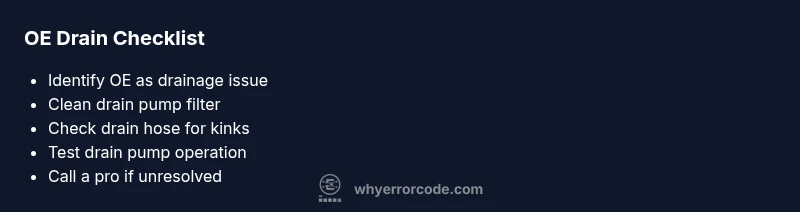
- Identify OE as a drainage error and start with quick checks.
- Clean the drain pump filter to restore drainage flow.
- Inspect the drain hose for kinks or blockages and straighten as needed.
- If the error persists, consider professional service and cost estimates.