Voltas E2 Error Code: Quick Diagnosis and Fixes
Learn how to diagnose and fix the voltas e2 error code quickly with practical steps, common causes, safety tips, and expert guidance from Why Error Code.


The voltas e2 error code signals a drainage or sensor-related fault that stops the washer mid-cycle. It commonly points to a clogged drain, blocked filter, or a failing drain pump. Start with the simplest checks: unplug the machine, clean the drain filter, and inspect the drain hose for kinks, then reset the unit to clear the code if possible.
What voltas e2 error code means
The voltas e2 error code on Voltas washing machines generally indicates a drainage issue or a sensor fault that prevents the machine from completing a cycle. While the exact diagnosis can vary by model, the most frequent triggers are related to how water is drained from the drum. This guide from Why Error Code aims to translate the E2 signal into actionable steps, so you can decide whether a quick DIY fix is enough or professional service is needed. Understanding that E2 is a drain-oriented fault helps you focus your troubleshooting on hoses, filters, pumps, and related sensors rather than chasing unrelated electronics.
When you see E2: Symptoms and initial checks
Seeing E2 means the washer detected a drainage problem. Common symptoms include the door remaining locked after a wash, water standing in the drum, or the display flashing E2 at the end of a cycle. Before you do anything, unplug the unit and pull it away from the wall to access the back panel or front access panel as required by your model. Perform these quick checks: ensure the drain hose is not kinked or crushed, verify the drain pump and filter are accessible, and confirm there are no clogs in the drum or pump housing. If you notice visible leaks or the hose is damaged, stop and call a professional.
Most common causes in order of likelihood
- High: Drain filter clogged or debris blocking the filter basket. A blocked filter prevents water from exiting, triggering E2. - Medium: Drain pump failure or impeller obstruction; a failing pump struggles to push water out, causing the code to appear. - Medium: Kinked, crushed, or blocked drain hose that halts water flow. - Low: Sensor or control board fault that misreads water level or drainage status. In many cases, multiple small issues combine to produce E2, so address them in sequence.
Quick fixes you can try safely
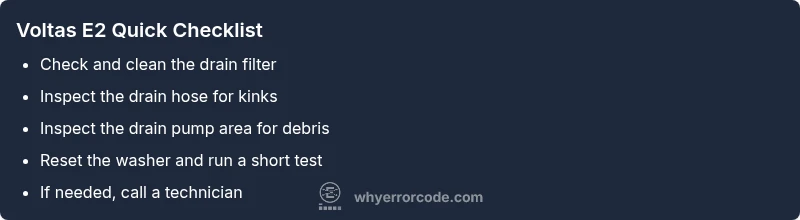
- Unplug the machine and set it on a dry, stable surface. - Open the access panel and locate the drain filter; remove and rinse it under running water to clear hair, lint, and debris. - Inspect the drain hose for kinks or bends; straighten and re-seat the hose, ensuring it sits properly in the drain standpipe or sink. - Check the drain pump area for obstructions and remove any visible debris that could impede operation. - Reassemble, plug in, and run a short test cycle to see if E2 clears. If it reappears, proceed with the diagnostic flow below.
Safety first: when to stop and call a professional
If you notice exposed wiring, burnt smells, a burning plastic odor, or if water leaks from the unit during attempts to fix E2, power down immediately and contact an appliance technician. Electrical components and water create a dangerous combination. Also, if your unit is under warranty, consult the manufacturer’s service policy before performing any internal checks that could void coverage.
Prevention: reducing the chances of voltas e2 occurring again
Regular maintenance helps prevent E2: clean the lint filter after every few cycles, inspect hoses for wear every 3–6 months, avoid overloading the drum, and run the machine with a routine drain-cleaning cycle if your model supports it. Keeping the drain path clear reduces the likelihood of clogs and pump strain, which are common precursors to E2.
Steps
Estimated time: 60-90 minutes
- 1
Power down and unplug
Unplug the washer and disconnect it from power. Move the unit to access panels safely, and ensure the area is dry. This initial safety step prevents shock while you inspect the drainage system.
Tip: Use a dry cloth to wipe away moisture around connectors before touching any wiring. - 2
Access and clean the drain filter
Open the filter housing (usually at the bottom front). Remove the filter and rinse under running water to clear lint, fabric fibers, and small objects. Reinstall securely.
Tip: Place a shallow tray underneath to catch water spills. - 3
Check the drain hose
Inspect the hose for kinks, cracks, or obstructions. Detach if necessary, rinse out, and re-seat into the drain or standpipe. Ensure the hose end is not submerged too deep in the sink.
Tip: Never crush the hose with clamps or zip ties; create a gentle bend instead. - 4
Inspect the drain pump area
Look for visible debris around the pump impeller. If you can access the pump safely, remove any obstructions that could block water flow. Do not force components beyond their mounting.
Tip: Wear gloves to protect fingers from sharp edges. - 5
Reset and test
Reconnect power and run a short cycle to test drainage. If E2 remains, power off and move to the next diagnostic steps or consider professional help.
Tip: Run a rinse cycle first to observe drainage behavior without a full load. - 6
Decide on next action
If the code reoccurs after a clean, you may have a failing pump or sensor. Document symptoms and consider scheduling a service visit for a precise diagnosis and replacement parts.
Tip: Keep your model number handy when calling for service.
Diagnosis: Washer displays voltas e2 error code and won't drain or complete cycle
Possible Causes
- highDrain filter clogged with hair or lint
- mediumDrain pump failure or impeller obstruction
- mediumKinked or blocked drain hose
- lowSensor or control board fault
Fixes
- easyClean the drain filter and remove debris
- easyInspect drain hose for kinks; straighten and reseat
- hardTest or replace the drain pump if accessible
- mediumReset the control board or seek professional service for sensor faults
Frequently Asked Questions
What does voltas e2 error code mean on a washing machine?
E2 typically indicates a drainage or sensor fault. Start with the drain path—filter, hose, and pump—before considering more complex electronics. If the issue persists, a professional diagnosis may be required.
E2 usually means a drainage or sensor fault. Begin with the drain path first, and contact a technician if it continues.
Can I fix voltas e2 myself?
Yes, for common tasks like cleaning the drain filter and inspecting hoses. Avoid touching high-voltage components. If the problem remains after basic checks, seek professional help.
Yes, you can DIY basic checks like cleaning the filter and inspecting hoses. If it stays, call a pro.
How much does a voltas e2 repair typically cost?
Repair costs vary by cause. A simple filter cleaning is inexpensive, while pump or sensor replacements can cost more. Expect a broad range, typically estimated by local service providers.
Costs vary, from inexpensive filter work to more for pumps or sensors. Get a local estimate.
Should I reset the washing machine to clear E2?
Resetting can clear the code if it was a temporary glitch, but it won't fix a hardware fault. After a reset, test a cycle to confirm whether the error recurs.
Reset may clear a temporary glitch; test a cycle to see if E2 returns.
What if E2 keeps coming back after fixes?
If E2 returns, document symptoms and contact a certified technician. Recurrent drainage faults may indicate a failing pump, sensor, or control board.
If E2 keeps coming back, call a technician; recurring drainage faults often indicate a pump or sensor issue.
Is voltas e2 related to water leaks?
E2 is mainly a drainage/sensor fault; leaks are a separate concern. If you notice water pooling, address potential hose or seal leaks with care.
E2 mainly concerns drainage; leaks are a separate issue. Check hoses and seals if you see water.
Watch Video
Top Takeaways
- Address drainage issues first when E2 appears
- Clean filters and check hoses as a first-line fix
- If E2 persists, escalate to pump or sensor testing
- Practice safety: unplug, inspect, and avoid electrical hazards
- Regular maintenance reduces future voltas e2 errors