How to Fix Samsung Washing Machine Error Code 4C
Get a practical, step-by-step approach to diagnose and fix Samsung washing machine error 4C quickly. Learn common causes, quick fixes, and when to call a pro from Why Error Code.


According to Why Error Code, Samsung washing machine error code 4C signals a drainage fault that stops the cycle from completing. The most common causes are a clogged drain filter, a kinked or blocked drain hose, or a weak drain pump. The fastest fix is to clear blockages and reseat hoses, then run a test cycle again. If the problem persists, electrical/fuse issues or the control board may be involved.
What 4C Means on Samsung Washers
According to Why Error Code, error code 4C on Samsung washing machines typically points to a drainage fault. The washer is designed to drain and spin after each cycle, and when it cannot empty the tub within the allotted time, it throws 4C. In most models, this relates to the path between the tub and the drain: the filter, the hose, or the pump. Understanding this helps you triage quickly and avoid unnecessary service calls. If your unit has a self-cleaning mode or a drain test, use it to confirm whether the drain path clears water on command. The 4C fault is easier to fix when you separate the problem into the drain path, power to the pump, and the control electronics.
- Common signs: water remains in the drum after a wash, the drum empties slowly, or the machine stops mid-cycle with 4C flashing.
- Why it happens: debris or lint can accumulate in the filter, hoses can kink or become blocked, and a failing pump can struggle to evacuate water.
Quick Checks You Can Do Before Calling a Technician
Before you disassemble anything, perform a few non-invasive checks to verify the issue and possibly fix it without tools:
- Ensure the machine is level and not tilted to one side; an uneven base can affect drainage.
- Inspect the exterior drain hose for kinks or bends that obstruct flow.
- Check the drain filter (if accessible from the front panel). If your model has a service access panel, remove it and examine the filter and housing for debris.
- Listen for the drain pump. A humming sound without water movement can indicate the pump is stuck or seized.
Note: Always unplug the washer before touching any internal components, and avoid forcing hoses or connectors.
Step-by-Step Fix: Most Common Cause (Clogged Drain Filter)
This section walks you through the simplest, most common fix: cleaning a clogged drain filter and rechecking the path to the drain. It often resolves 4C without specialized tools.
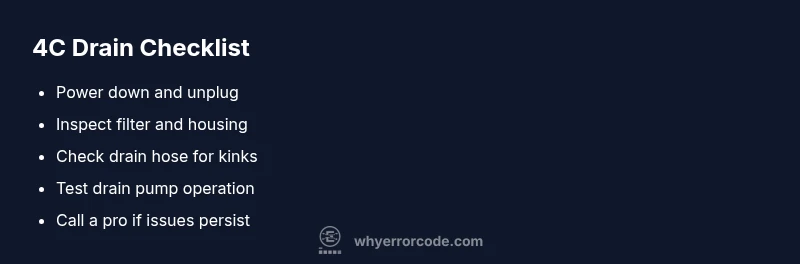
- Power down and unplug the washer. If possible, pull it away from the wall to access the bottom front panel.
- Remove the access panel and locate the drain filter. Some models use a big cap; others have a small square cover.
- Place a shallow tray beneath the filter to catch residual water. Unscrew or unclip the filter cage and pull it out slowly.
- Rinse the filter under warm water, remove all lint and debris, and check the housing for obstructions.
- Reinsert the filter, secure the cap, and replace the access panel. Run a short empty cycle to clear any air pockets.
- Cost note: Cleaning the filter is usually the most economical fix. If a professional service is required to assist with the filter housing or seals, expect a broader cost range that includes labor and parts.
- Safety: Wear gloves and avoid touching any internal electrical components.
Step-by-Step Fix: Check the Drain Hose and Pump Path
If the filter is clean but 4C persists, examine the drain hose and pump path for obstructions.
- Disconnect the hose at the inlet to the pump and inspect for kinks or blockages. Remove any lint, soap scum, or foreign objects.
- Detach the drain hose from the wall inlet and inspect for crushing or folding, especially if the machine is in a tight space.
- If you can, manually rotate the drain pump impeller by hand to test for freedom of movement. Do not apply excessive force.
- Reassemble hoses securely and run another drain test cycle. If water still doesn’t evacuate, the pump or its wiring may be faulty.
- Pro tip: Label hoses during disassembly to ensure correct reattachment and preserve proper routing.
Step-by-Step Fix: When to Consider Replacing the Drain Pump or Control Elements
If cleaning the filter and hoses does not resolve 4C, you may be facing a failing drain pump or a control board issue. These problems are more complex and often require professional service.
- Confirm the pump operation by observing for a humming sound during draining. If the pump does not run or runs intermittently, replacement may be needed.
- Inspect electrical connections to the pump and verify fuse continuity. Corrosion or loose connectors can mimic a failed pump.
- If pump failure is ruled out, test the control board and door latch wiring for faults. This typically requires a service tech with the correct diagnostic tools.
- When replacement is necessary, obtain exact model-compatible parts and consider labor costs in your budget.
- Cost note: Pump replacement can be a substantial part of the bill, often exceeding basic service in many regions. A board replacement can be even more costly, especially if labor is high.
Safety Warnings and When to Call a Pro
- If you observe water leaks near electrical outlets or you smell burning plastic, unplug the machine immediately and call a professional.
- Only perform basic maintenance (filter, hose, superficial inspection) if you’re comfortable; advanced diagnostics involving the control board or wiring should be left to a certified technician.
- Do not attempt to bypass safety interlocks or use improper tools; missteps can create further damage or safety hazards.
Prevention Tips to Avoid 4C Again
- Clean the filter and drain path regularly as part of routine maintenance, especially if you have hard water or high-liber debris.
- Use a rinse cycle to flush the system and reduce lint buildup in hoses and filters.
- Ensure proper load balance and avoid overloading the drum, which can put extra strain on drainage components.
- If you hear unusual sounds during draining, address the issue promptly rather than continuing to run cycles.
Steps
Estimated time: 60 minutes
- 1
Power Down and Prepare
Unplug the washer and, if safe, shut off the water supply. Move the unit enough to access the front bottom panel. This prevents any accidental water flow and reduces shock risk during inspection.
Tip: Keep a dry towel handy for potential drips. - 2
Open Access Panel and Inspect Filter
Remove the front plinth panel or access door to reach the drain filter. Place a shallow tray beneath and slowly unscrew the filter cap to avoid a splash.
Tip: Have a flashlight ready to spot tiny debris. - 3
Clean and Reassemble Filter
Rinse the filter under warm water, scrub away lint, and inspect the housing for obstructions. Reinstall the filter securely and reseal the cover.
Tip: Ensure the gasket sits evenly to prevent leaks. - 4
Inspect Drain Hose and Pump Path
Check the hose for kinks, crimping, or clogs along its length. Detach and inspect at the wall connection if accessible.
Tip: Avoid forcing hoses; gentle straightening works better. - 5
Test Drain Pump Function
With panels closed, run a drain test or a short cycle to observe if water is expelled. Listen for pump hum or rotation; no sound may indicate a motor or wiring issue.
Tip: If you hear a hum but no water movement, power and wiring check is needed. - 6
Decide on Pump or Board Replacement
If the pump doesn’t operate or the problem recurs after cleaning, prepare for a replacement. Obtain the correct part and consider labor costs.
Tip: Consult the model’s manual for exact part numbers.
Diagnosis: Error code 4C displayed, washer stops during drain phase
Possible Causes
- highClogged drain filter
- mediumDrain pump failure
- lowControl board malfunction or wiring fault
Fixes
- easyClean the drain filter
- easyCheck drain hose for kinks or blockages
- hardReplace drain pump
Frequently Asked Questions
What does 4C mean on Samsung washers?
4C indicates a drainage fault where the washer cannot drain water properly. This is most often caused by a clogged filter, blocked hose, or a failing drain pump.
4C means the washer can't drain. Common causes are a clog, a kinked hose, or a bad pump.
Can I fix 4C myself?
Yes, many 4C issues are user-serviceable, especially when caused by blockages. Start with cleaning the filter and hoses, then test the drain. If the pump or board is faulty, professional service is recommended.
You can try cleaning the drain path, but pump or board faults should be handled by a pro.
What costs should I expect for a 4C repair?
Costs vary by region and part. Simple fixes like filter cleaning are inexpensive, while pump or board replacements involve higher parts and labor costs. Expect a broad range and consider getting multiple quotes.
Expect varying costs from low for cleaning to higher for pump or board replacement.
How do I know if the drain pump is bad?
Signs include no water movement during draining, a humming sound without rotation, or water backup in the tub after attempting to drain. Confirm electrical connections are secure before replacing.
If it doesn't pump water or just hums, the pump or wiring may be faulty.
When should I call a technician for 4C?
If cleaning the filter and hoses doesn’t fix 4C, or if you detect pump failure, wiring issues, or board faults, contact a qualified technician. They can diagnose with proper tools and safely replace components.
Call a pro if the drain path is clear but 4C persists or electrical faults are suspected.
Watch Video
Top Takeaways
- Prioritize drain path: filter, hose, pump
- Most 4C fixes are drain-path related, not electrical
- Costs vary by part and labor; plan for pump or board replacement if needed
- Safety first: unplug and avoid water-electrical hazards