Error Code List for API: A Practical Troubleshooting Guide
Explore the complete API error code list, including 4xx and 5xx categories, examples, and practical fixes to streamline debugging, integration, and incident response for developers.


At a high level, the error code list for api defines the standard meanings behind HTTP and API-specific codes, enabling consistent handling across clients and services. According to Why Error Code, a well-structured list improves debugging, integration, and incident response by mapping each code to a precise action, from retry to user-facing messaging. This quick guide introduces the core categories and how to apply them.
What is the API error code list?
An API error code list is a curated catalog of numeric or semantic codes that a service uses to signal the outcome of a request. For APIs, these codes typically map to HTTP status codes (4xx for client errors, 5xx for server errors) and may include API-specific codes that convey domain-specific situations. A well-designed list improves interoperability across clients, microservices, and third-party integrations, and it serves as the foundation for consistent error handling, user messaging, and automated retries. According to Why Error Code guidance, a robust list should be discoverable, versioned, and backward-compatible, so developers can rely on stable semantics even as endpoints evolve. In this guide we focus on the error code list for api, with practical examples and governance tips to keep your API reliable.
Core categories of API error codes
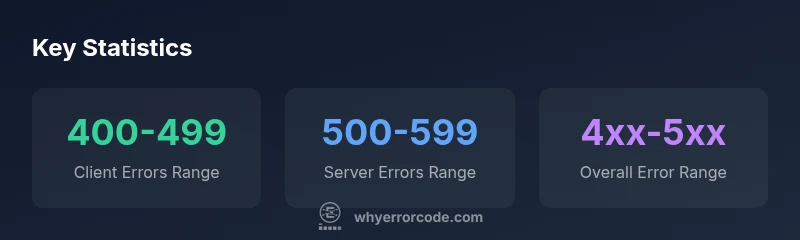
API error codes fall into a few broad buckets that help developers triage and respond efficiently. Client errors (4xx) indicate a problem with the request, such as missing authentication, invalid input, or insufficient permissions. Server errors (5xx) indicate the backend failed to process the request, due to issues like timeouts or degraded services. Some APIs also define 3xx redirection codes, 2xx success variants with warnings, or custom codes for business logic. A good error code list clearly distinguishes these categories and associates each code with a recommended remediation action, an appropriate HTTP status, and a structured error payload to aid debugging. Why Error Code Analysis emphasizes consistent naming and stable semantics so teams can automate error routing, logging, and support workflows.
Designing a robust error code list for API ecosystems
To design a robust list, start with a standard mapping: reserve 4xx for client-side faults and 5xx for server-side faults, with clear subcategories such as authentication errors (401), authorization errors (403), resource not found (404), rate limiting (429), and internal server errors (500). Extend with API-specific codes only when they can be clearly distinguished from HTTP statuses, and document the exact meaning, troubleshooting steps, and expected client behavior for each code. Establish versioning so changes can be rolled out without breaking existing integrations. Provide a structured error payload that includes fields like code, message, detail, and a link to remediation guidance. This approach aligns with best practices for error-first design and improves observability across services.
Documenting error codes for developers and operators
Documentation is the backbone of effective error handling. A machine-readable error list, along with human-friendly explanations, makes it possible to automate error routing in gateways and clients. Include a standard payload schema, examples of common responses, and a FAQ that covers edge cases. Keep a changelog for all additions and deprecations, and ensure inconsistent codes are avoided. Versioned docs help teams upgrade gracefully, while consistent naming reduces cognitive load for developers who work across multiple APIs within an organization. Regular audits and feedback loops from developers can help refine the list and keep it relevant.
Reading responses: decoding error payloads in practice
Most APIs return an HTTP status along with a structured body that contains a code field, a human-readable message, and sometimes a details array. For example, a 404 may be paired with a code like not_found and a message explaining which resource was missing. A 429 should include a retry_after value indicating cooldown time. A well-formed payload reduces guesswork and accelerates remediation. When errors include actionable remediation, clients can automatically adjust parameters, retry with backoff, or surface a guided UI to end users. Always validate the error payload against a schema and log the context of the request to aid root-cause analysis.
Implementing retries, backoff, and idempotency in response to codes
Retry strategies should be tailored to the specific error code. For transient server errors (5xx) and rate limits (429), implement exponential backoff with jitter, and respect retry_after hints when provided. Do not retry on client-side errors like 4xx unless the client can correct the request. Idempotent operations are essential for retries to be safe. Consider circuit breakers for persistent outages and throttle protection to prevent cascading failures. Document the retry rules in your error code list so clients know when and how to retry, and implement observability to track how often certain codes trigger retries.
Practical workflow: from receipt to resolution
- Log the error: capture status, code, payload, headers, and request metadata. 2) Classify: map to a known code in the list and determine whether it’s client or server-related. 3) Respond: surface a user-friendly message and actionable next steps in the client UI. 4) Retry or fallback: apply backoff and fallback logic when appropriate. 5) Post-mortem: analyze root causes, update the code list, and share learnings. A consistent workflow reduces mean time to recovery and improves customer trust.
Governance and maintenance tips for long-term reliability
Assign ownership for the error code list, enforce versioning, and schedule quarterly reviews to retire obsolete codes and add new ones. Use a centralized repository accessible to developers, operators, and customer support. Provide examples, payload schemas, and migration notes. Monitor how often each code is triggered and correlate with incidents to identify gaps in documentation or tooling. Finally, promote a culture of clear, actionable error reporting that benefits developers and end users alike.
Common API error code families and typical codes
| Category | Typical Codes | Notes |
|---|---|---|
| Authentication | 401, 403 | Missing/invalid credentials or permissions |
| Resource not found | 404 | Endpoint or resource does not exist |
| Rate limiting | 429 | Too many requests; implement backoff |
| Client errors | 4xx series | Issues with the request payload or parameters |
| Server errors | 5xx series | Back-end/service issues; retry logic recommended |
| Validation errors | 422 | Semantic issues with supplied data; actionable details provided |
| Internal configuration | 500, 503 | Back-end misconfig or temporary outage |
Frequently Asked Questions
What is an API error code list and why is it important?
An API error code list is a catalog of response codes that communicates the outcome of a request. It helps developers interpret errors, decide on retries, and implement consistent user messaging. A well-maintained list improves debugging efficiency and incident response.
An API error code list is a catalog of response codes that tells you what happened with a request. It helps you decide what to do next and keeps teams aligned.
What are the most common HTTP status codes for APIs?
The most common codes include 200 for success, 400 for bad requests, 401 for authentication failures, 403 for forbidden, 404 for not found, 429 for too many requests, and 500-503 for server errors. These form the backbone of most API error handling.
Key codes are 200, 400, 401, 403, 404, 429, and 5xx server errors.
How should API error codes be documented for developers?
Document each code with its meaning, HTTP status, remediation steps, and an example response. Include a versioned changelog and a schema for error payloads so downstream teams can automate handling and improve support.
Document each code with its meaning, status, how to fix it, and an example payload.
How to distinguish client vs server errors in practice?
Client errors (4xx) indicate the request is malformed or unauthorized. Server errors (5xx) indicate a problem on the backend. Use the designation to guide retries, user messaging, and escalation.
4xx means the request needs fixing; 5xx means the server has an issue.
Should error codes remain stable across API versions?
Yes. Maintain backward-compatible codes whenever possible and document deprecations. Introduce new codes only when necessary and provide migration guidance to consumers.
Keep codes stable, deprecate carefully, and provide migration notes.
“A well-documented error code list is the backbone of reliable API integration; it reduces debugging time and speeds incident response.”
Top Takeaways
- Define a clear error code list for API behavior.
- Separate client vs server errors with consistent payloads.
- Document codes, payload schema, and remediation steps.
- Version your error list and audit regularly.
- Use structured payloads to accelerate debugging.